
10 Amazing Lion Facts
Lion – Panthera Leo is a large cat of the genus Panthera, native to Sub – Sarahan Africa and India. Throughout history, African lions have been admired as symbols of courage and strength. These iconic animals have powerful bodies in the cat family, they are only second to tigers in size. One of the fascinating things about lions is their roar that can be heard from five miles away.
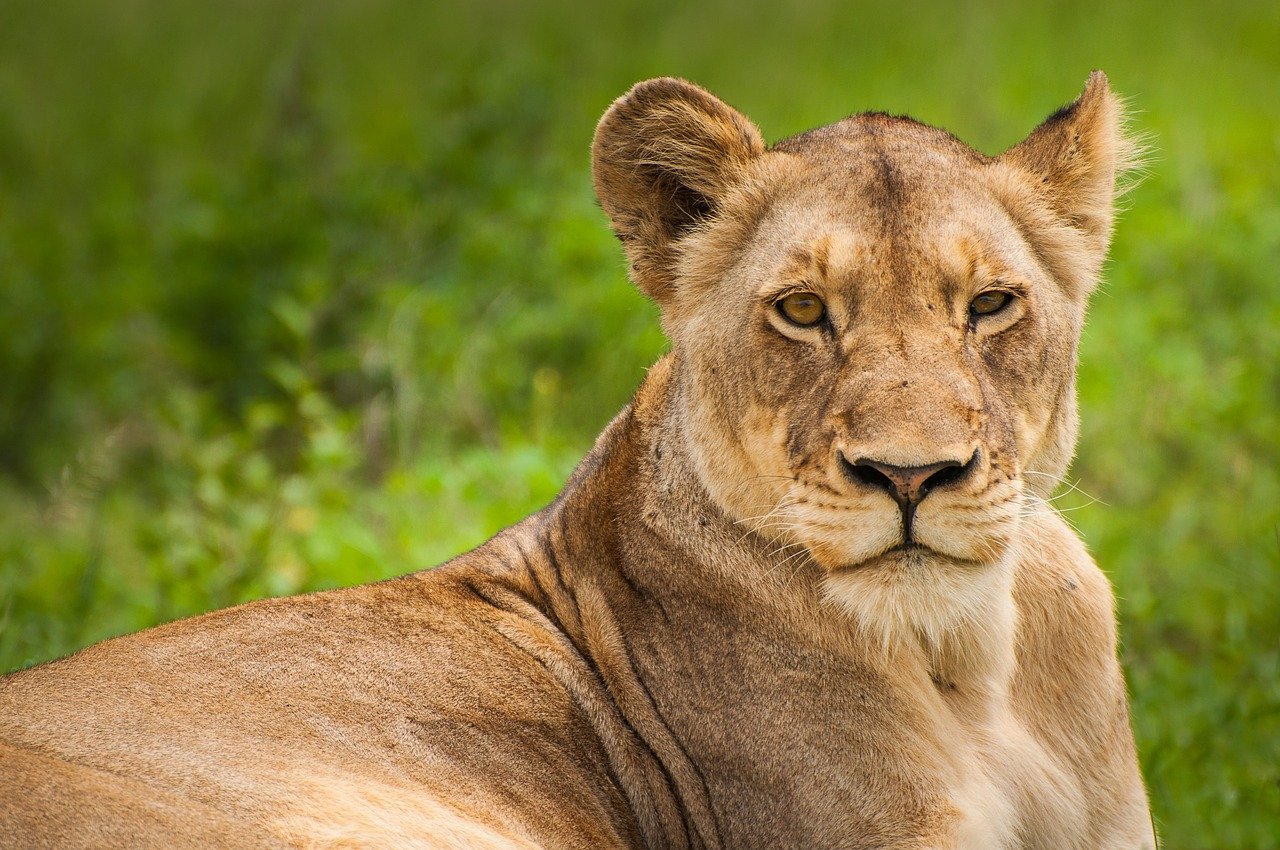
An adult lion’s coat is yellow-gold, and juveniles have some light spots that disappear with age. Only male lions typically boast manes, the impressive fringe of long hair that encircles their heads.
Nothing symbolizes Africa’s untamed beauty quite like the lion. As one of the most iconic animals of the Big Five, lions represent strength, courage and power. Whether roaming the vast plains of Serengeti National Park and Ngorongoro Conservation Area in Tanzania, Masai Mara National Reserve in Kenya and Queen Elizabeth National Park and Murchison Falls National Park in Uganda. These big cats are an unforgettable sights on an East African safari.
In this blog, we explore the 10 amazing lion facts, the most iconic animal of Africa’s Big 5.
-
Lions are Social Cats
Unlike tigers and leopards, lions are highly social animals. They live in prides of 10 – 15 members, though some super prides can number 40 lions or more. Each pride consists of related females, their cubs, and a few dominant males who protect their territory.
-
Lions need to eat everyday
Lions can survive without drinking water for up to four days, but they must eat daily. Lionesses consume 11 pounds of meat per day, while males require 16 pounds or more. They primarily hunt large prey like zebra, wildebeests, and buffalo, but they will also snack on smaller animals like hares, birds and reptiles.
-
Lionesses do the hunting
Females are the primary hunters, using teamwork and agility to take down prey. However, despite their hunting prowess, male lions eat first, followed by lionesses and finally the cubs.
-
Lions are built for the hunt
Lions are stealthy ambush predators, they fan out in a semi-circle, driving prey towards waiting hunters. Their night vision is six times stronger than a human’s giving them an edge after dark.
A lion can sprint 50 mph and leap up to 36 feet, making them one of Africa’s most efficient hunters. The hunting for lions is facilitated by their claws that reach up to one and a half inches in length, allowing for incredible control when going in for a kill. Lions can reach speeds of up to 50 miles per hours and can jump up to 36 feet.
-
Lions do not live in Jungles
Despite being called the “King of the Jungle” Lions in Africa inhabit savannahs and open plains, not dense forests. Tanzania safari destinations like Serengeti National Park and Masai Mara National Reserve, lions are often spotted lounging under acacia trees or roaming the golden grasslands.
-
Lions communicate in many ways
Lions communicate through different ways including roar, growl, grunt, and plurr. Their mighty roar, which warns rivals and marks territory, can be heard up to 5 miles away. Also, they use scent markings, mane darkness, and affectionate head rubs to bond with pride members.
-
Lions raise their cubs
Lionesses give birth around the same time, allowing them to co-raise their cubs. At around two years old, male cubs are forced out of the pride to form their own coalitions. While male lions don’t directly parent, they fiercely protect the pride’s cubs from threats.
Fun Facts about Lion Cub
- Lion cubs are born blind and they open their eyes at three weeks old
- Lionesses hide their cubs for six weeks to keep them safe
- Cubs spend their early years playing, wrestling, and practicing hunting skills.
-
Lions are the second largest big cat
Lions are only slightly smaller than Siberian tigers. Males can weigh up to 550 pounds, while females can reach 390 pounds. Unlike other big cats, lions rely on teamwork rather than solitary hunting.
-
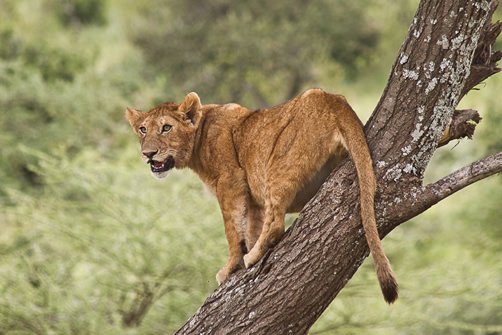
Some lions can climb trees
Lions are not known for climbing trees but in Tanzania’s Lake Manyara National Park, Tarangire National Park and Serengeti National Park, and Ishasha Sector of Queen Elizabeth National Park you may spot tree-climbing lions.
For a lion to successfully climb a trees, it has to be a certain type of tree horizontal branches that aren’t too far above ground seem to be idea.
-
Lions hunt during storms
Lions do most of their hunting at night, their eyes have adapted to the dark which gives them a huge advantage over their prey. Interestingly though, lions also hunt during storm. The noise, rain and or wind make it harder for prey to see and hear them, increasing their chances of a successful hunt.
When hunting, lionesses have specific roles. Some play the roles of the centre and others the role of wing. The wings chase the prey towards the centres.
Did You Know? – Lions spend up to 20 hours a day resting. When they are not snoozing under the African sun, they engage in social behaviors like grooming, head-rubbing, and purring that even kings need downtime.


