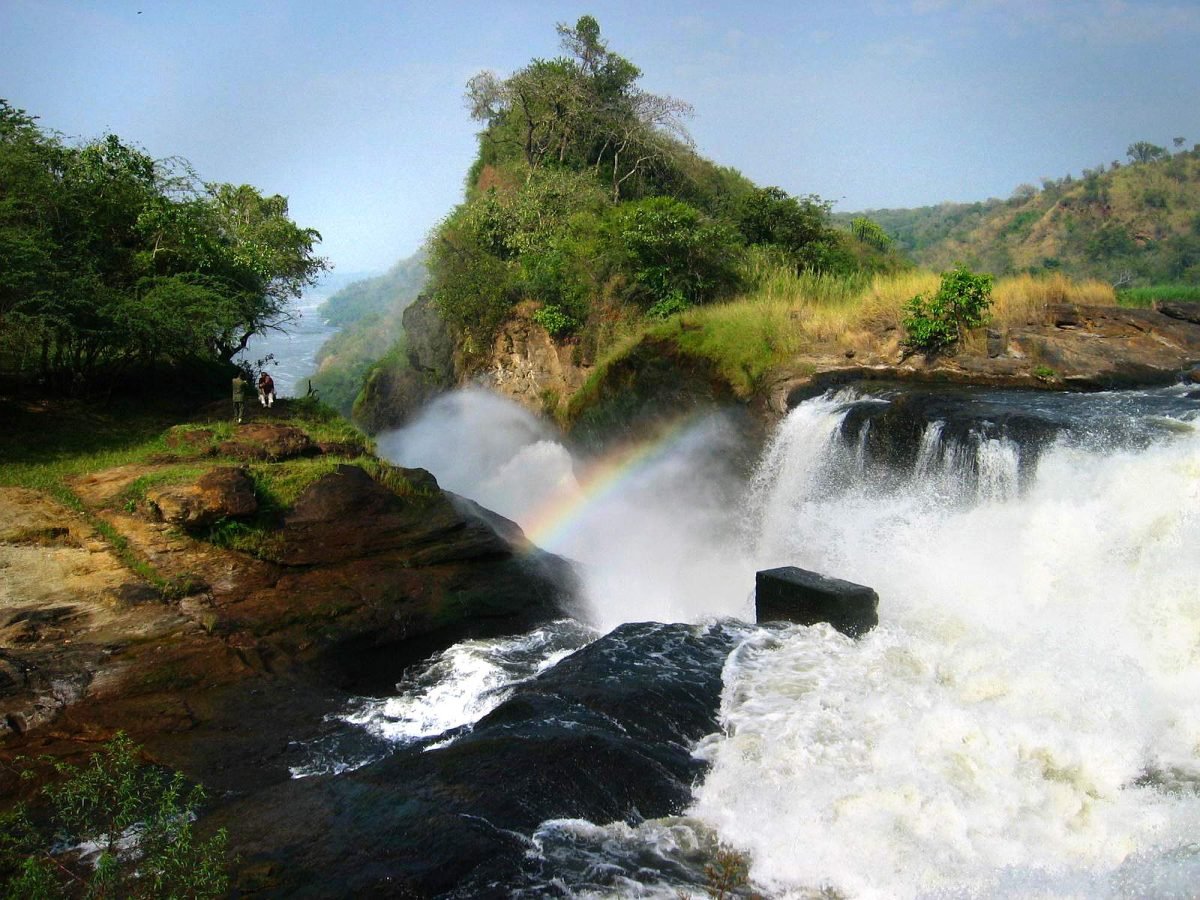
10 reasons to visit Murchison Falls National Park
Murchison Falls National Park is the largest and most exciting game park in Uganda, located in the North – west Uganda, lying within the East Africa Rift, and shares a border with Lake Albert. The Victoria Nile flows through the middle of the park, emptying into Lake Albert, creating a delta. En-route, River Nile hurtles over Murchison Falls – the most powerful falls on earth.
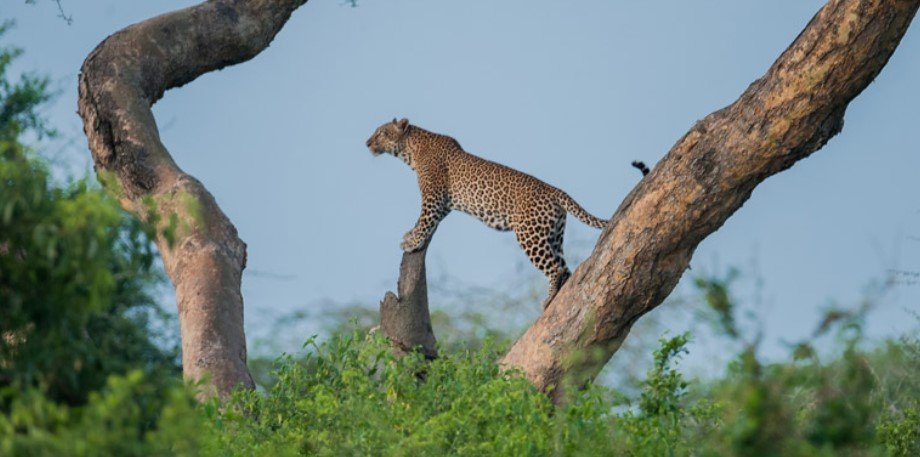
Murchison Falls National Park encompasses a variety of beautiful landscapes, a variety of wildlife including lions, leopards, giraffes and herds of elephants. The park also boasts iconic birds like the grey crowned crane and shoebill.
As you are planning a Uganda Safari, here are the 10 reasons to visit Murchison Falls National Park
-
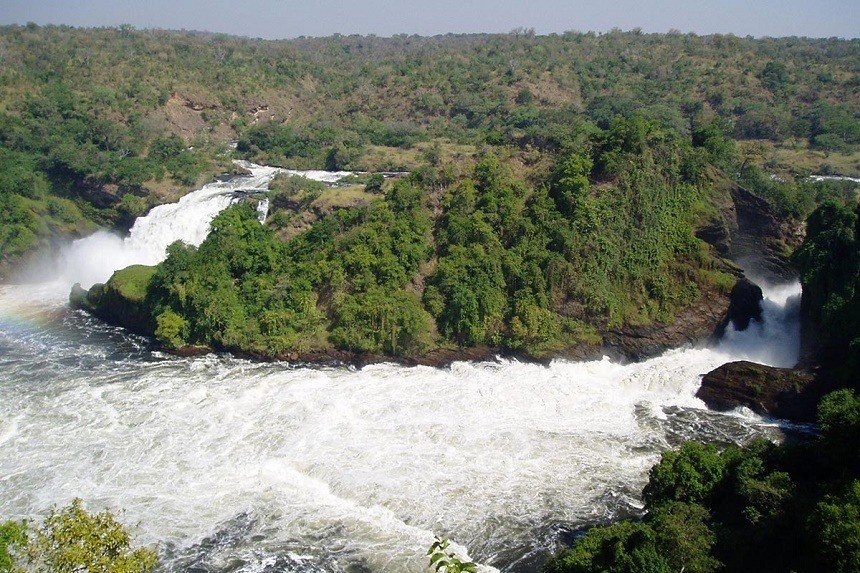
Murchison Falls
Murchison Falls – the most power waterfall in the world is formed as a result of the relatively wide and fast-flowing Victoria Nile is forced more or less in the middle of Murchison Falls National Park, to tighten up and squeeze through a narrow, seven –metre gap on the edge of an escarpment.
This forces the water to charge over the edge and create a fierce, white – water waterfall. While the drop is only 43m (141 ft.), the force and power of the falls, as well as the dense jungle setting, making it a jaw-dropping sight to behold.
In 1954, Ernest Hemingway famously crashed his plane just down river from Murchison Falls.
Murchison Falls actually consists of two waterfalls: the main drop and a smaller, more vertical one just to the north called Uhuru Falls.
Murchison Falls is the largest waterfall anywhere along the Nile and its various branches.
-
The Scenery is varied and beautiful
The landscape of Murchison Falls National Park is bisected by the Victoria creating a northern sector and southern sector. The northern half is known for its tall grasslands – interspersed with Borassus palms, acacia trees and riverine woodland.
The Southern sector of Murchison Falls has wooded savannah and dense tropical forest. In the west, where the Victoria Nile empties into Lake Albert, there is an extensive wetland.
Murchison Falls National Park has many varied and beautiful landscapes and ecosystems.
The views throughout the park are beautiful and at times surprising. It is a great place for landscape photographers to flex their muscles. The twin waterfalls that constitute Murchison Falls are a gorgeous scene most commonly associate with the park. Also, the riverbanks and the Victoria Nile data, both of which teem with waterbirds wader and other wildlife.
-
The game spotting is excellent
Murchison Falls National Park is home to at least 109 species of animals according to a 2015 survey. Many of them are large mammals that are favorites to safari goers like lions, leopards, antelopes and elephants.
The existence of the Victoria Nile in the park is a major reason for the abundant wildlife, wallowers and other thirsty animals flock to the river and its wetlands. When you head to the water, you can expect to see hippos, crocodiles, herds of elephants and buffaloes and more other exciting wildlife.

The most commonly sighted wildlife in Murchison Falls National Park
- Bush elephants
- Lions
- Leopards
- Cape buffaloes
- Rothschild’s giraffes
- Spotted hyenas
- Patas monkeys
- Vervet monkeys
- Anubis baboons
- Jackson’s hartebeests
- Uganda kobs
- Defassa waterbucks
- Grey duikers
- Bushbuks
- Bohor reedbucks
-
Patas monkeys can be seen in the hundreds
The Patas monkeys are found in the savannah of west, central and Eastern Africa. This fur on its head, back and flank is a distinct primate with a few names, including wadi monkey, and hussar monkey. Its belly and legs are mostly whitish.
Male Patas monkeys are much larger than the female of the species. The average weight of the males is around 12kg while adult females only average around 6.5 kg.
Murchison Falls National Park is one of the best places in Uganda to see pantas monkeys.
Unlike most monkeys, Patas monkeys live their lives primarily on the ground. In Murchison Falls National Park, they are seen in abundant numbers, enjoying the open savannah section of the park, they are commonly seen in troops of around 60 individuals.
-
There are tree-climbing lions
Murchison Falls National Park is one of the few places in Africa where the rare tree climbing lions are seen, these lions like to climb and hang out in trees. They enjoy splayed trees such as sycamore figs and acacias as these trees have long plain branches that are comfortable to lay down.
-
Rare Rothschild’s giraffes live in the park
The Rothschild’s giraffes are the endangered giraffe species and another great drawcard of Murchison Falls National Park. These giraffes are a subspecies of the northern giraffes and are about 1,500 individuals and can only be seen in Uganda and a small portion of Southern Kenya.
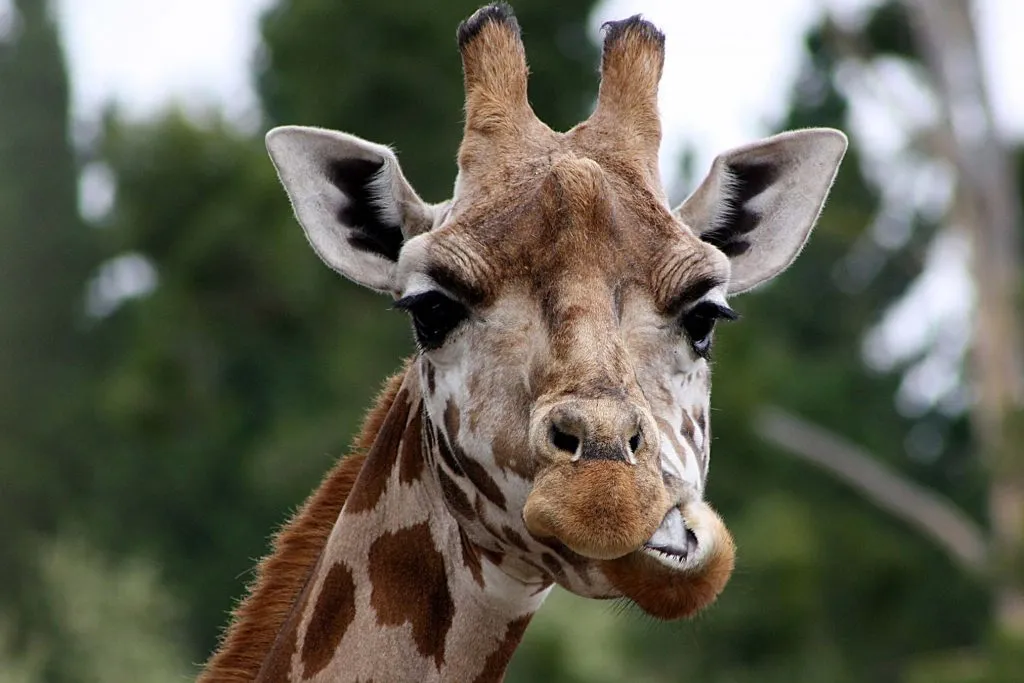
One of the distinguishing features of the Rothschild’s giraffe is its ossicones, which are the skin-covered bony protuberances on its head. It has five ossicones, which are more than any other giraffe, the two parietal ossicones on top of the head are the tallest, and all giraffe species have these. But Rothschild’s giraffes also have a smaller one behind each ear and one in the middle of the forehead.
Murchison Falls National Park is one of the best places to see Rothschild’s giraffes, actually it is home to well over half of all of such giraffes.
-
Uganda Kobs live here in great numbers
Uganda kobs resemble the impalas, but are more sturdily built.
Uganda Kobs are a highlight of Uganda safari and that is because of its limited range, they can only be found in Uganda and small portions of South Sudan and the DR.Congo. Also, they are the most famous of Uganda’s antelopes, it even appears on the country’s coat of arms.
Uganda Kobs are often mistaken for impalas, and yes, the two species do indeed look similar. But interestingly, impalas and kobs are not part of the same genus. The Ugandan Kob is a Kobus, while the impala is the sole member of the genus aepyceros.
The Ugandan Kob lives in open and wooded savannah, as well as grassland. Murchison Falls National Park has a large population of Ugandan Kobs, so you should be ready to see these graceful creatures on your Uganda safari.
-
Abundant wildlife including the Pre-historic Shoebill
Also known as Whaleheads, the shoebills are large, distinctive and not particularly attractive birds. The iconic large beak seems oversized to say the least. But they are fascinating birds (perhaps partly for the reason).
Murchison Falls National Park is listed among the best places to see shoebills in Africa.
Shoebills like to hang around in swamps, which is where they catch their prey. They are incredible hunters, going after animals that are only a little smaller than them, such as monitor eels, lizards and even baby crocodiles.
Murchison Falls National Park is home to around 500 bird species, including
- Abyssinian ground hornbills
- Blue-headed coucals
- Red-winged grey warblers
- White-crested turacos
- Red-headed lovebirds
- Shoebills
- Black-billed barbets
- Red-throated bee-eaters
- Grey-headed, woodland and giant kingfishers
- Grey crowned cranes
- Speckle-fronted weavers
- Black-headed lapwings
- Palm-nut vultures
- Senegal thick-knees
- Squacco and goliath herons
- Denham’s bustards
- Black-headed and papyrus gonoleks
- Silverbirds
- grey crowned crane – the national animal of Uganda
-
You can go on a boat safari
Boat Cruise on the Victoria is a special experience in Murchison Falls National Park, allowing you to see and appreciate different animals and aspects of the park. The boat cruise starts 15 km downstream from Murchison Falls at Paraa, which means “the place of hippos” in Luo. The most popular option is a cruise that takes you upriver through Fajao Gorge.
The thickly forested walls rise up to enclose the river and remove the outside world from your mind. You feel you are escaping into a remote and secret world of primeval rhythms and cycles. Then when you hear pounding water and by and by are rewarded with a view of the stunning Murchison Falls.
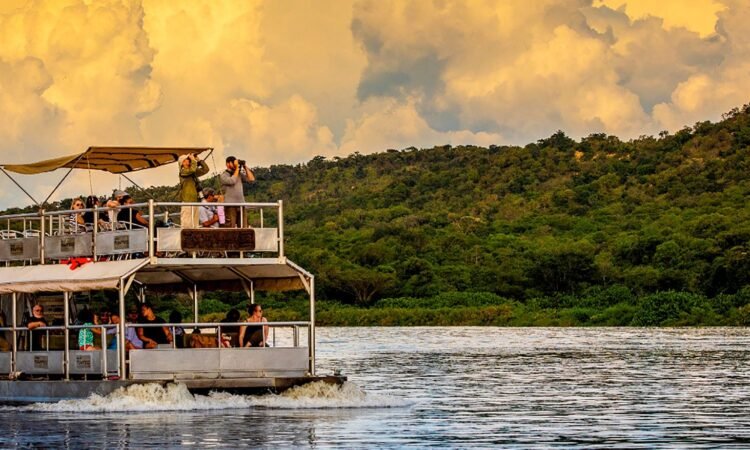
Also, you can go on a boat cruise about 15km down river to the delta where the Nile enters Lake Albert. This area is attract numerous bird species as well as game, and is incredibly lush and beautiful. After the boat cruise, you will be driven back to park headquarters at Paraa
Boat Cruise in Murchison Falls National Park is offered ass group as well as private boat safari tours. The boats have roofs, which is handy for protecting you from sun. There are a handful of different cruise departure times on offer, both in the morning and afternoon. For visitors who are keep can opt for a sundowners cruise and do their safari viewing with a vino in hand.
-
You can hike to the top of the waterfall
If the conditions are favorable, you can climb from the River up to the Top of the Falls Viewpoint on the river’s south bank. This hike is steep, but one that rewards you with an unparalleled view, a deafening soundtrack and a refreshing spray.
To access the start of the trail leading to the Top of the Falls Viewpoint, you must take a boat cruise. You then hike for a round an hour to reach the view site. Most then catch a 4×4 ride back to Paraa. If you don’t like hiking, no worries, the road that takes you back to Paraa can also of course take you to the Top of the Falls Viewpoint.