10 Reasons to visit Murchison Falls National Park

10 reasons to visit Murchison Falls National Park

Murchison Falls National Park is the largest and most exciting game park in Uganda, located in the North – west Uganda, lying within the East Africa Rift, and shares a border with Lake Albert. The Victoria Nile flows through the middle of the park, emptying into Lake Albert, creating a delta. En-route, River Nile hurtles over Murchison Falls – the most powerful falls on earth.
10 reasons to visit Murchison Falls National Park
Wildlife in Murchison Falls National Park

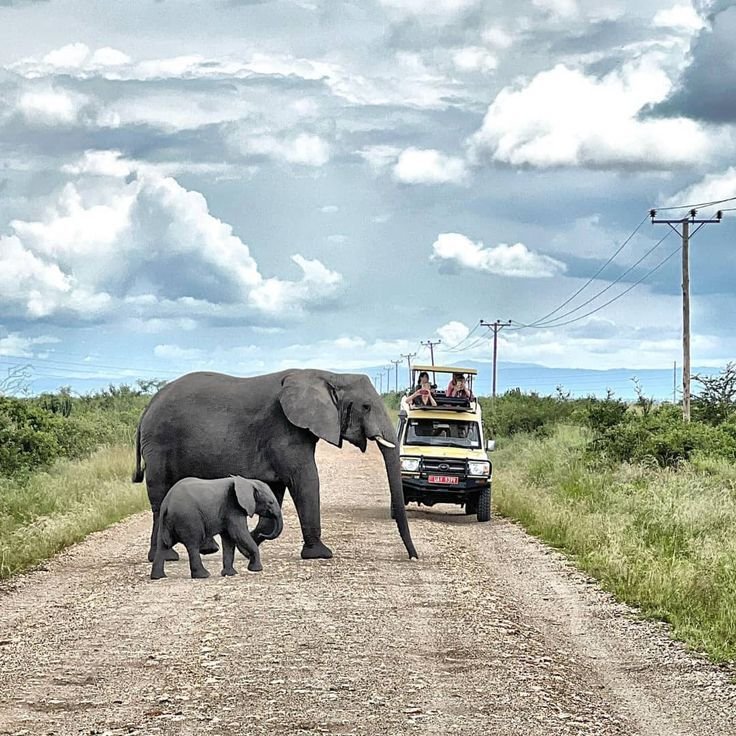
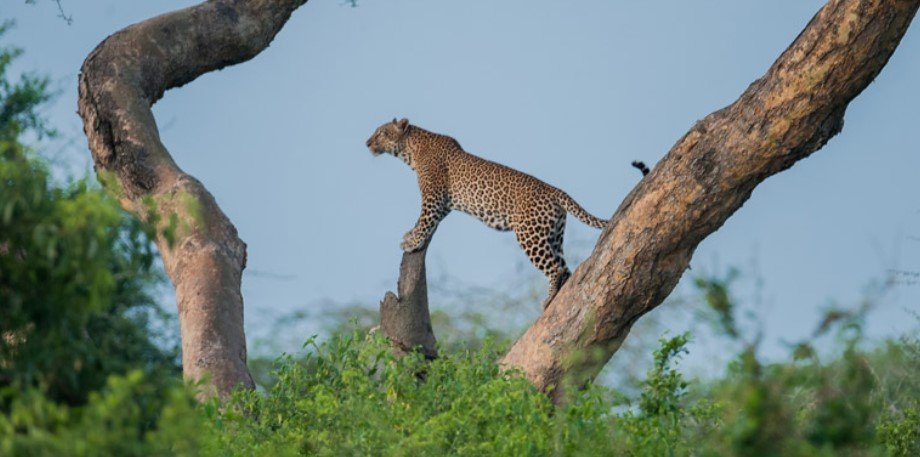
Murchison Falls National Park encompasses a variety of beautiful landscapes, a variety of wildlife including lions, leopards, giraffes and herds of elephants. The park also boasts iconic birds like the grey crowned crane and shoebill.

As you are planning a Uganda Safari, here are the 10 reasons to visit Murchison Falls National Park

  1. Murchison Falls

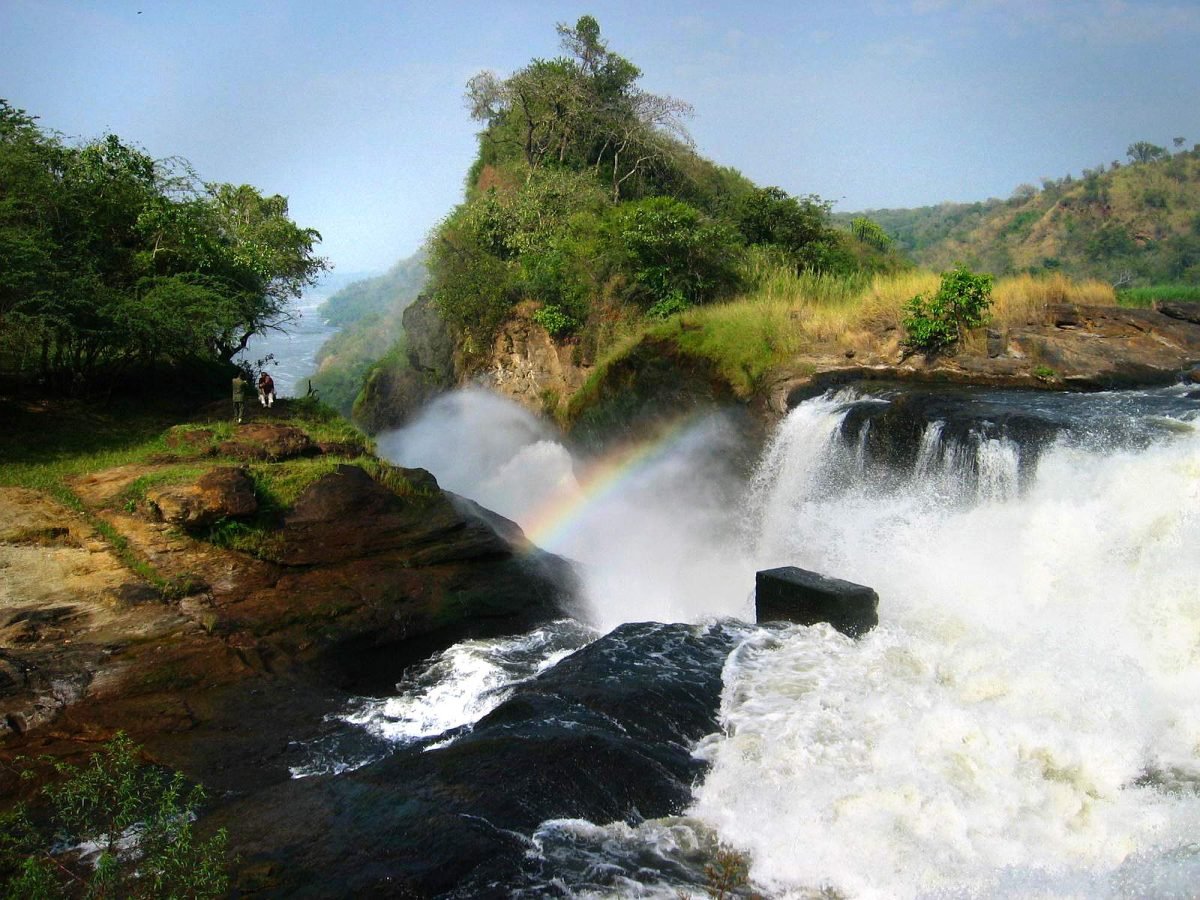
Murchison Falls – the most power waterfall in the world is formed as a result of the relatively wide and fast-flowing Victoria Nile is forced more or less in the middle of Murchison Falls National Park, to tighten up and squeeze through a narrow, seven –metre gap on the edge of an escarpment.

This forces the water to charge over the edge and create a fierce, white – water waterfall. While the drop is only 43m (141 ft.), the force and power of the falls, as well as the dense jungle setting, making it a jaw-dropping sight to behold.
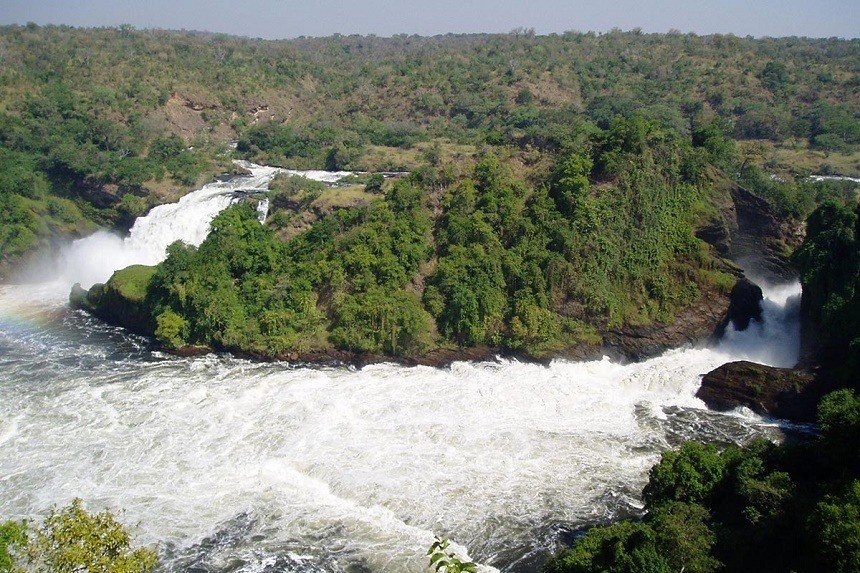
10 reasons to visit Murchison Falls National Park
Murchison Falls

In 1954, Ernest Hemingway famously crashed his plane just down river from Murchison Falls.

Murchison Falls actually consists of two waterfalls: the main drop and a smaller, more vertical one just to the north called Uhuru Falls.

Murchison Falls is the largest waterfall anywhere along the Nile and its various branches.

  1. The Scenery is varied and beautiful

The landscape of Murchison Falls National Park is bisected by the Victoria creating a northern sector and southern sector. The northern half is known for its tall grasslands – interspersed with Borassus palms, acacia trees and riverine woodland.

The Southern sector of Murchison Falls has wooded savannah and dense tropical forest. In the west, where the Victoria Nile empties into Lake Albert, there is an extensive wetland.

Murchison Falls National Park has many varied and beautiful landscapes and ecosystems.

The views throughout the park are beautiful and at times surprising. It is a great place for landscape photographers to flex their muscles. The twin waterfalls that constitute Murchison Falls are a gorgeous scene most commonly associate with the park. Also, the riverbanks and the Victoria Nile data, both of which teem with waterbirds wader and other wildlife.

  1. The game spotting is excellent

Murchison Falls National Park is home to at least 109 species of animals according to a 2015 survey. Many of them are large mammals that are favorites to safari goers like lions, leopards, antelopes and elephants.

The existence of the Victoria Nile in the park is a major reason for the abundant wildlife, wallowers and other thirsty animals flock to the river and its wetlands. When you head to the water, you can expect to see hippos, crocodiles, herds of elephants and buffaloes and more other exciting wildlife.

10 reasons to visit Murchison Falls National Park
Wildlife in Murchison Falls National Park

The most commonly sighted wildlife in Murchison Falls National Park

  • Bush elephants
  • Lions
  • Leopards
  • Cape buffaloes
  • Rothschild’s giraffes
  • Spotted hyenas
  • Patas monkeys
  • Vervet monkeys
  • Anubis baboons
  • Jackson’s hartebeests
  • Uganda kobs
  • Defassa waterbucks
  • Grey duikers
  • Bushbuks
  • Bohor reedbucks


  1. Patas monkeys can be seen in the hundreds

The Patas monkeys are found in the savannah of west, central and Eastern Africa. This fur on its head, back and flank is a distinct primate with a few names, including wadi monkey, and hussar monkey. Its belly and legs are mostly whitish.

Male Patas monkeys are much larger than the female of the species. The average weight of the males is around 12kg while adult females only average around 6.5 kg.

Murchison Falls National Park is one of the best places in Uganda to see pantas monkeys.

Unlike most monkeys, Patas monkeys live their lives primarily on the ground. In Murchison Falls National Park, they are seen in abundant numbers, enjoying the open savannah section of the park, they are commonly seen in troops of around 60 individuals.

  1. There are tree-climbing lions

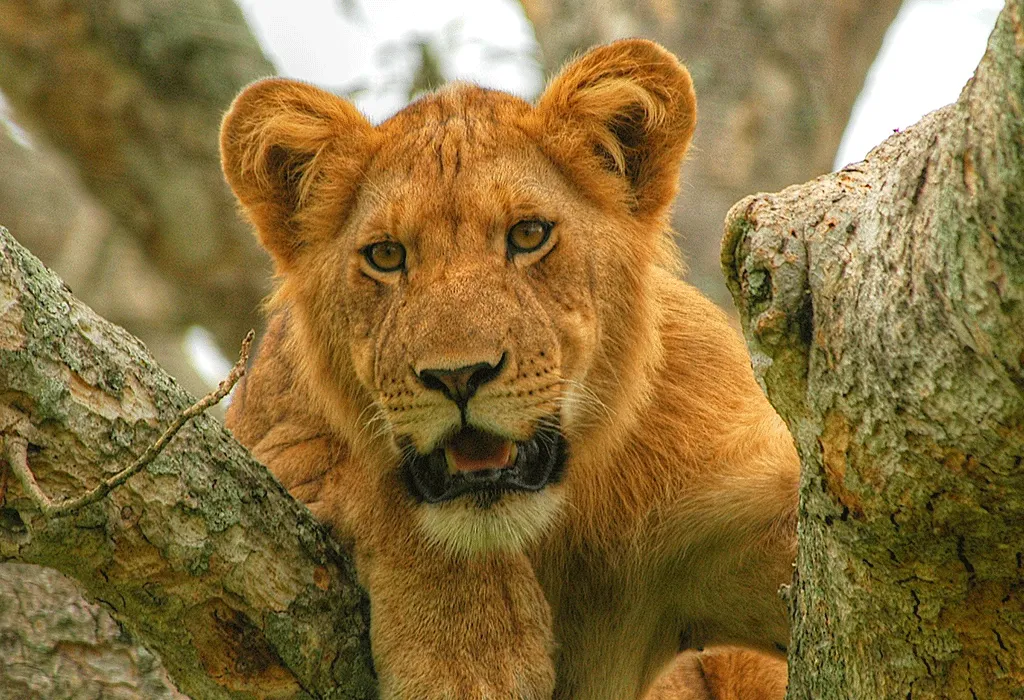
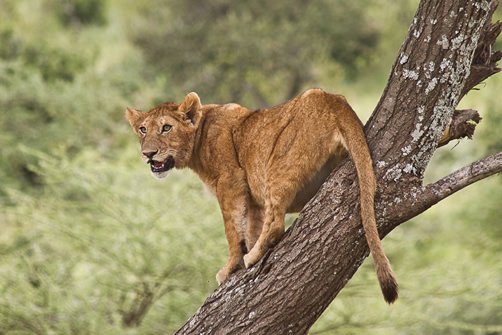
 Murchison Falls National Park is one of the few places in Africa where the rare tree climbing lions are seen, these lions like to climb and hang out in trees. They enjoy splayed trees such as sycamore figs and acacias as these trees have long plain branches that are comfortable to lay down.

  1. Rare Rothschild’s giraffes live in the park

The Rothschild’s giraffes are the endangered giraffe species and another great drawcard of Murchison Falls National Park. These giraffes are a subspecies of the northern giraffes and are about 1,500 individuals and can only be seen in Uganda and a small portion of Southern Kenya.
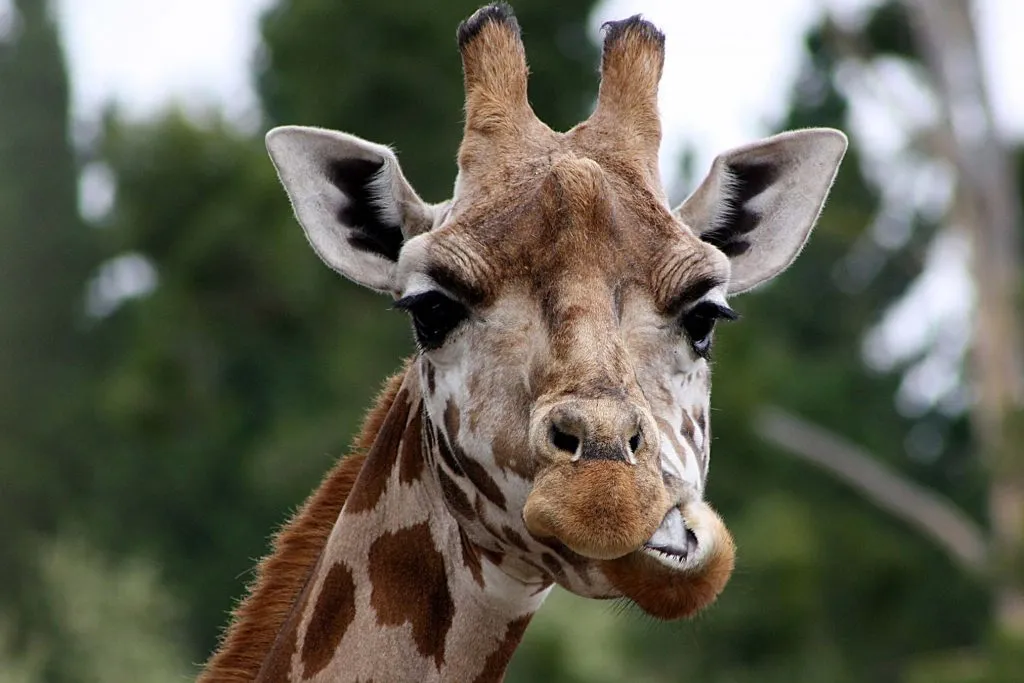
Rothschild Giraffe in Murchison Falls National Park

One of the distinguishing features of the Rothschild’s giraffe is its ossicones, which are the skin-covered bony protuberances on its head. It has five ossicones, which are more than any other giraffe, the two parietal ossicones on top of the head are the tallest, and all giraffe species have these. But Rothschild’s giraffes also have a smaller one behind each ear and one in the middle of the forehead.

Murchison Falls National Park is one of the best places to see Rothschild’s giraffes, actually it is home to well over half of all of such giraffes.

  1. Uganda Kobs live here in great numbers

Uganda kobs resemble the impalas, but are more sturdily built.

Uganda Kobs are a highlight of Uganda safari and that is because of its limited range, they can only be found in Uganda and small portions of South Sudan and the DR.Congo. Also, they are the most famous of Uganda’s antelopes, it even appears on the country’s coat of arms.

Uganda Kobs are often mistaken for impalas, and yes, the two species do indeed look similar. But interestingly, impalas and kobs are not part of the same genus. The Ugandan Kob is a Kobus, while the impala is the sole member of the genus aepyceros.

The Ugandan Kob lives in open and wooded savannah, as well as grassland. Murchison Falls National Park has a large population of Ugandan Kobs, so you should be ready to see these graceful creatures on your Uganda safari.

  1. Abundant wildlife including the Pre-historic Shoebill

Also known as Whaleheads, the shoebills are large, distinctive and not particularly attractive birds. The iconic large beak seems oversized to say the least. But they are fascinating birds (perhaps partly for the reason).

Murchison Falls National Park is listed among the best places to see shoebills in Africa.

Shoebills like to hang around in swamps, which is where they catch their prey. They are incredible hunters, going after animals that are only a little smaller than them, such as monitor eels, lizards and even baby crocodiles.

Murchison Falls National Park is home to around 500 bird species, including

  • Abyssinian ground hornbills
  • Blue-headed coucals
  • Red-winged grey warblers
  • White-crested turacos
  • Red-headed lovebirds
  • Shoebills
  • Black-billed barbets
  • Red-throated bee-eaters
  • Grey-headed, woodland and giant kingfishers
  • Grey crowned cranes
  • Speckle-fronted weavers
  • Black-headed lapwings
  • Palm-nut vultures
  • Senegal thick-knees
  • Squacco and goliath herons
  • Denham’s bustards
  • Black-headed and papyrus gonoleks
  • Silverbirds
  • grey crowned crane – the national animal of Uganda


  1. You can go on a boat safari

Boat Cruise on the Victoria is a special experience in Murchison Falls National Park, allowing you to see and appreciate different animals and aspects of the park. The boat cruise starts 15 km downstream from Murchison Falls at Paraa, which means “the place of hippos” in Luo. The most popular option is a cruise that takes you upriver through Fajao Gorge.

The thickly forested walls rise up to enclose the river and remove the outside world from your mind. You feel you are escaping into a remote and secret world of primeval rhythms and cycles. Then when you hear pounding water and by and by are rewarded with a view of the stunning Murchison Falls.
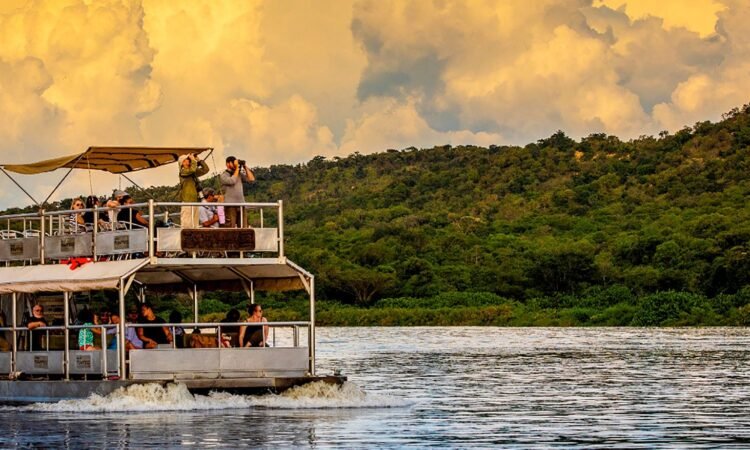
10 reasons to visit Murchison Falls National Park
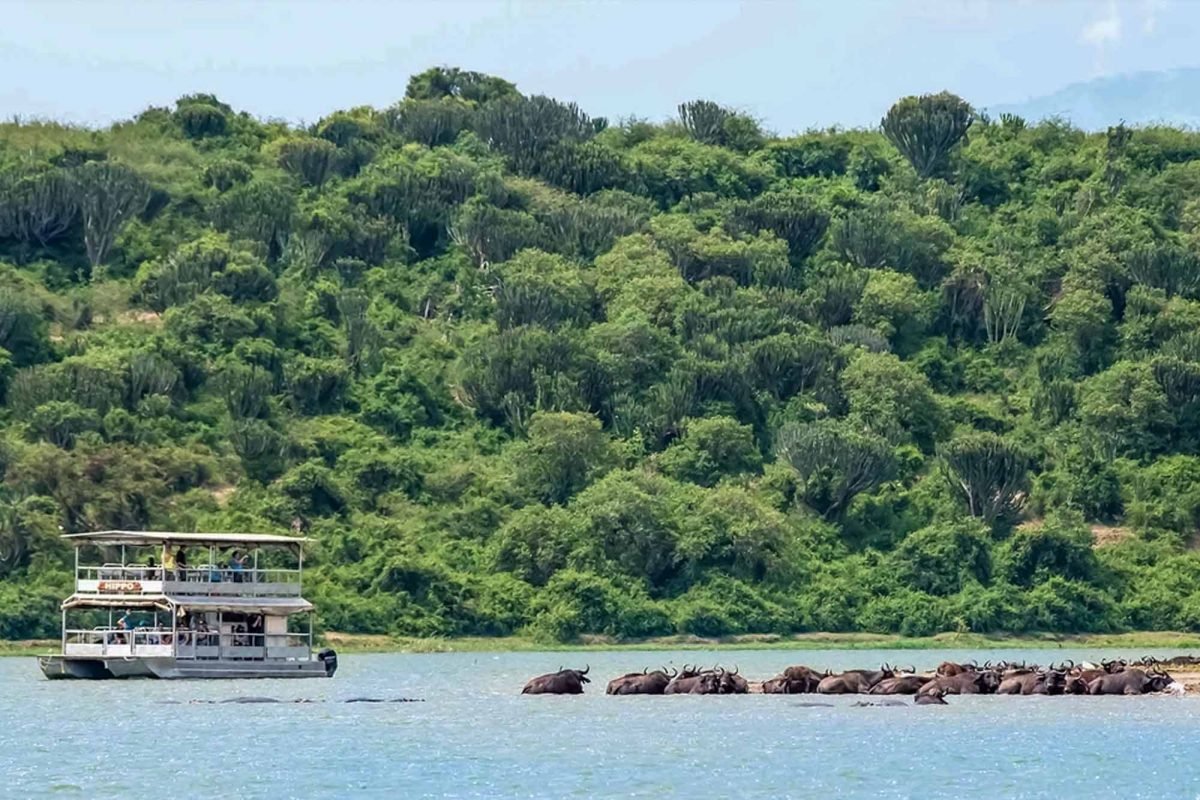
Boat Ride in Murchison Falls on the Nile

Also, you can go on a boat cruise about 15km down river to the delta where the Nile enters Lake Albert. This area is attract numerous bird species as well as game, and is incredibly lush and beautiful. After the boat cruise, you will be driven back to park headquarters at Paraa

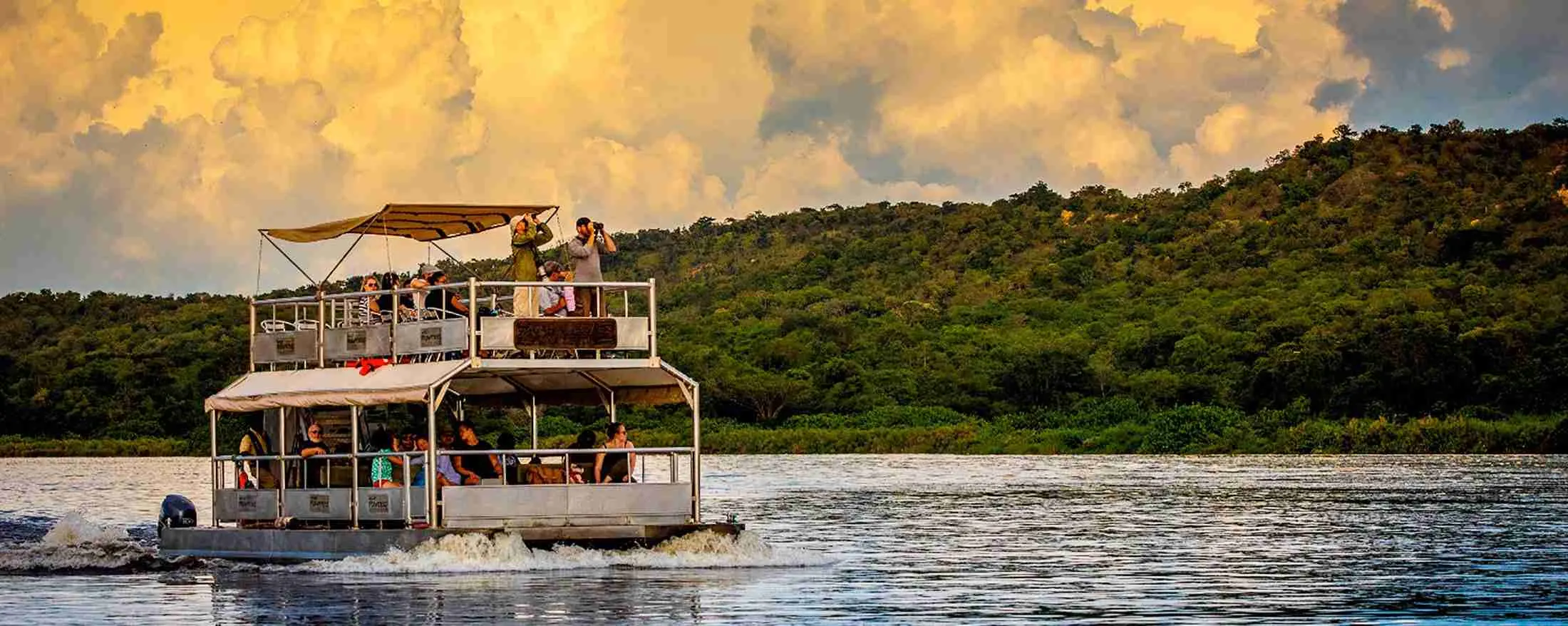
Boat Cruise in Murchison Falls National Park is offered ass group as well as private boat safari tours. The boats have roofs, which is handy for protecting you from sun. There are a handful of different cruise departure times on offer, both in the morning and afternoon. For visitors who are keep can opt for a sundowners cruise and do their safari viewing with a vino in hand.

  1. You can hike to the top of the waterfall

If the conditions are favorable, you can climb from the River up to the Top of the Falls Viewpoint on the river’s south bank. This hike is steep, but one that rewards you with an unparalleled view, a deafening soundtrack and a refreshing spray.

To access the start of the trail leading to the Top of the Falls Viewpoint, you must take a boat cruise. You then hike for a round an hour to reach the view site. Most then catch a 4×4 ride back to Paraa. If you don’t like hiking, no worries, the road that takes you back to Paraa can also of course take you to the Top of the Falls Viewpoint.
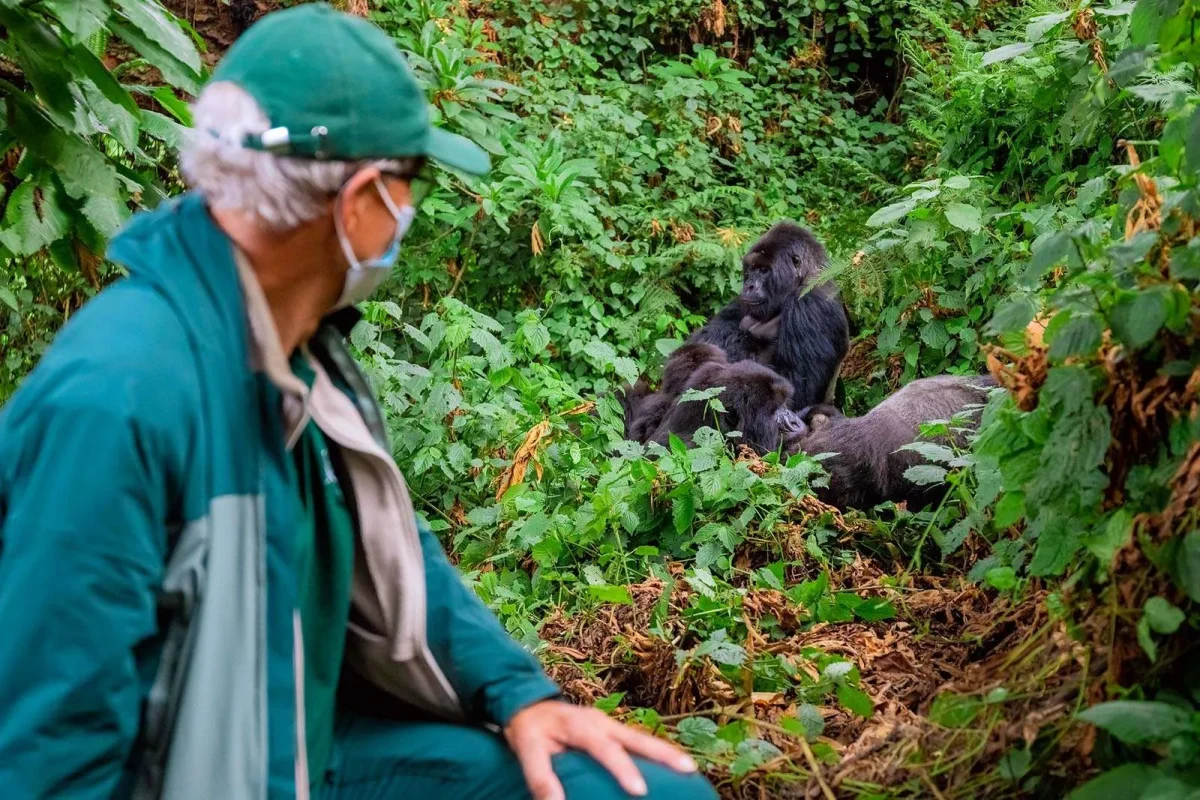
Best Time to See Gorillas

The Best Time to See Gorillas

When to go gorilla trekking in Uganda & Rwanda

“The best time to see gorillas in Uganda and Rwanda are during the dry (but hot) seasons between June – September, and December – February.”

High / peak season: June-August.

Low season: April-May and September to November.

Best weather: Between June-September, and between December-February.

Worst weather: Between March-May and September-November.

Best Time to See Gorillas
Gorilla Trekking in Rwanda

The best time to see gorillas in Uganda and Rwanda? – Climate, seasons and best months to visit.

Gorilla trekking conditions, climate, and tourism seasons are more or less the same in both Uganda and Rwanda. Gorilla trekking is a year-round activity, but there are some important consideration when timing your trip.

Generally, the best weather is during the two dry seasons, which run from June – September, and December – February. Still, you can still expect some rain during these periods, but conditions are generally more comfortable and the trails less muddy.

Of the two, June – September are the driest, with light showers during December – February.

The rainy seasons, from March – May and September – November, can be very soggy. March – May brings the heaviest rains, and the going can be tough – especially in Uganda’s Bwindi Impenetrable Forest, which is generally steeper, muddier and more dense than in Rwanda’s Volcanoes National Park.

That said, gorilla tourism remains open year-round. During the rainy/off season, it will be much quieter and you might find some good deals. Normally lodges offer discounted rates as well as tour operators.

Best Time to See Gorillas
Gorillas in Volcanoes National Park

The Best Time to See Gorillas in Rwanda

Gorilla trekking in Rwanda can be done year-round, however, rainfall is heavier in September – November and March – May when paths can become muddy and difficult to hike.

Always remember that you are visiting a rainforest, so by definition it will be wet all year round. That said, there is still a marked difference between the dry and rainy seasons. The weather is generally drier and hotter between June and September, and again from December to February. These are travellers preferred months to go gorilla trekking in Rwanda.

During March and May, and again from December to November you can expect more frequent and heavier rain showers. Muddy roads and paths can become tricky to handle.

Temperatures are fixed year round between 21°C (70 F) and 30°C (86 F), dropping to 10°C (50 F) at higher altitudes. Although chilly at night, the exertion of hiking and climbing will keep you warm during the day.

The advantages of visiting in the dry season are less muddy paths, easier hiking and clearer views of the wildlife. The disadvantages is that this is peak gorilla tracking season and therefore availability for gorilla permits is lower. You will need to book well in advance.

Peak Season and when to book

Peak tourism seasons in Rwanda are June to August and around Christmas and New Year. If you plan to go gorilla trekking in Rwanda during peak season or if you are in large group, you should book six months or more in advance. The earlier you book the more choice you have on where you trek and where you stay. Last minute bookings may be possible during low season or with smaller groups.

Aside from more choice in permit and accommodation availability, there are some other pros to visiting during rainy season – not least that smaller group sizes allow a more intimate tracking experience.

If you have little time it is, in theory, possible to see mountain gorillas in Rwanda in just one day. If you fly in very early in the morning. However, it is strongly recommended to spend at least two or three days in the region. The altitude and exertion of the climb can be unpleasant when rushed, and it is worth spending some time acclimatizing. And besides, there is so much more to Rwanda than just one hour with the gorillas.

Best Time to See Gorillas
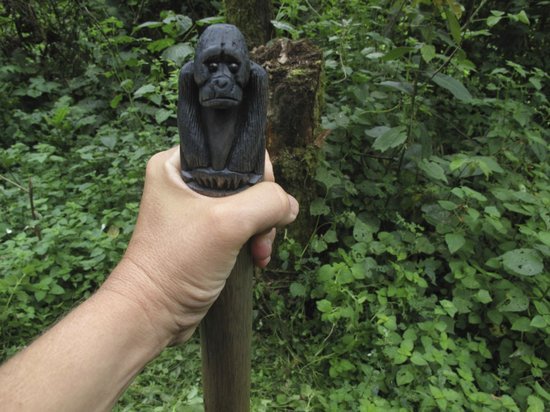
Gorilla Walking Stick

The Best Time to See Gorillas in Uganda

Following Rwanda’s almost doubling the price of gorilla trekking permits, it has become more difficult to secure gorilla permits in Uganda.

If you plan to travel during peak season or if you are in a large group. I strongly recommended you book six months or even a year in advance. Peak seasons are June to October and Christmas and the New Year. The earlier you book the more choice may be possible during low season or with smaller groups, but cannot be guaranteed.

You can track gorillas in Uganda throughout the year, however, rainfall is heavier in November and April/May. During these times, it can be very muddy underfoot. The advantage is that permits are a little easier to obtain plus you may find fewer tourists on your trail which some travellers prefer.

Gorilla Permit Availability

Gorilla permits and accommodation during the peak season months of June – August sell out a long way in advance. If you are set on visiting during the peak months, you need to book at least a year in advance.


Age limit for trekking gorillas

Age limit for trekking gorillas

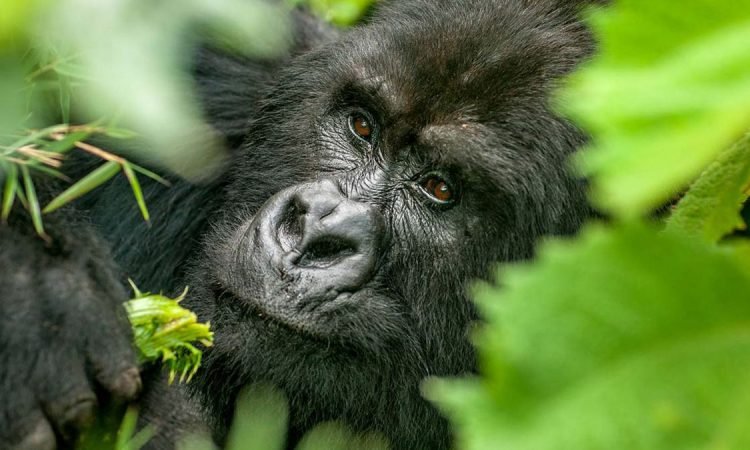
With only about 1,064 mountain gorillas left on earth, trekking into their native forests is the only way to see these critically endangered gorillas, as they cannot survive in captivity. Gorilla trekking in the emerald rainforests of Africa and observing the everyday interactions of mountain gorillas is arguably one of greatest privileges of life.

Age limit for trekking gorillas
Gorilla Trekking Experience

Follow a habituated gorilla family as they go about their daily lives. Observe how gorilla groom, how a mother tenderly feeds her young while being cognizant of the cautious star from a 200kg silverback as he keeps a protective eye over his troop.

Looking eyes of with our closest relative is a profound experience that makes spending time with gorillas in Africa an unsurpassable wildlife encounter. Gorilla trekking is only possible in three countries that is Uganda, Rwanda and DR.Congo, currently this mind-blowing experience is possible in Volcanoes National Park, Bwindi Impenetrable National Park and Mgahinga Gorilla National Park.

Gorilla trekking is a very critical experience government by a set of rules and regulations and one of them is the age limit for individuals. The age limit for gorilla trekking is 15 years as set by Uganda Wildlife Authority in Uganda and Rwanda Development Board in Rwanda.

The age limit for trekking gorillas was set at 15 years protection for gorillas as well as visitors below the age of 15 who considered as children who may not be able to deal with any negative reactions from the mountain gorillas.

Mountain gorillas are very calm and gentle in nature, however they can become aggressive when they feel threatened or misinterpret the action of the young trackers. In this occasion, children may not stay calm or lay low as required when a might silverback approaches them or appears aggressive. Actions like screaming and running away could attempt the silverback to run after the youngsters thus putting them in danger. The only way to contain an aggressive or charging gorilla is to act submissive by crunching low.

In the event of a gorilla charging, the mature travelers are better at controlling their emotions as well as actions. They are also less likely to get carried away and can follow the gorilla trekking rules and regulations without fail than the younger trekkers.

“The gorilla trekking rules and regulations include no littering in the forest, keeping a distance of at least 7 meters from the gorillas and avoid any abrupt action and noises.”

To add on, youngsters may not be mentally ready of the adventure physically. The time an adult decides to go for gorilla trekking, they know what they are getting into. Children ten to go for safaris only to accompany their parents and in some cases, they might not be as excited about gorilla trekking as their parents. Completing a gorilla trek requires determination especially if it involves following a habituated gorilla group that is far away from the starting point.

Also, children tend to get easily infested with communicable diseases like cough and flu which gorillas are prone to. If they get infected with flu or cough, it can be a great danger to the gorilla population.

The above reasons together with the guidance of primate searchers where based on to set the age limit for trekking gorillas at 15 years.

Age limit for trekking gorillas
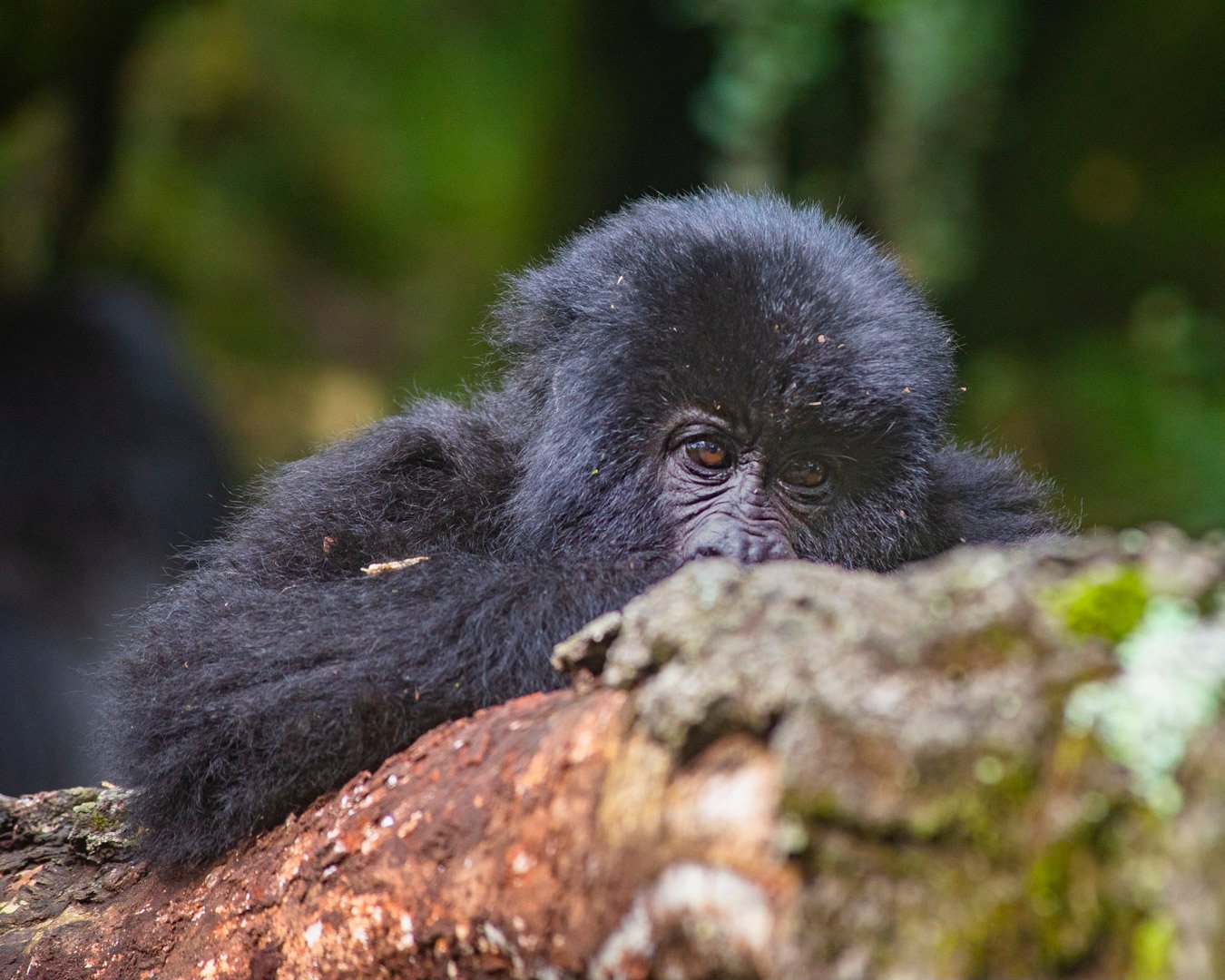
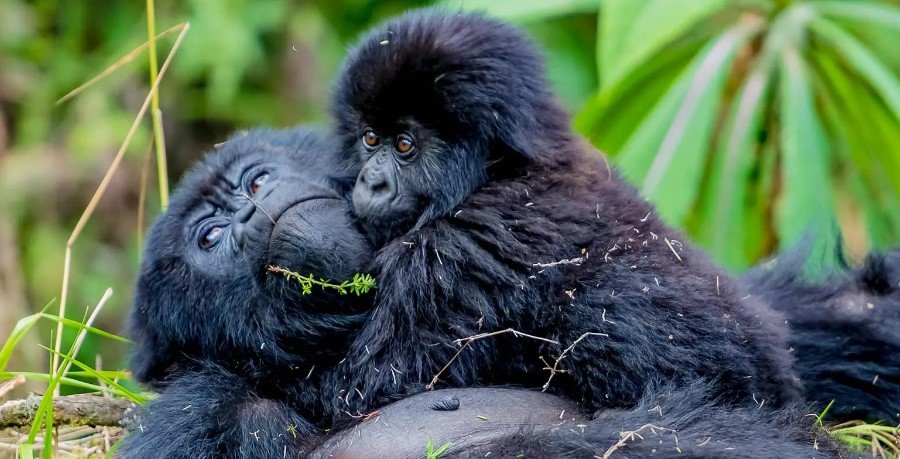
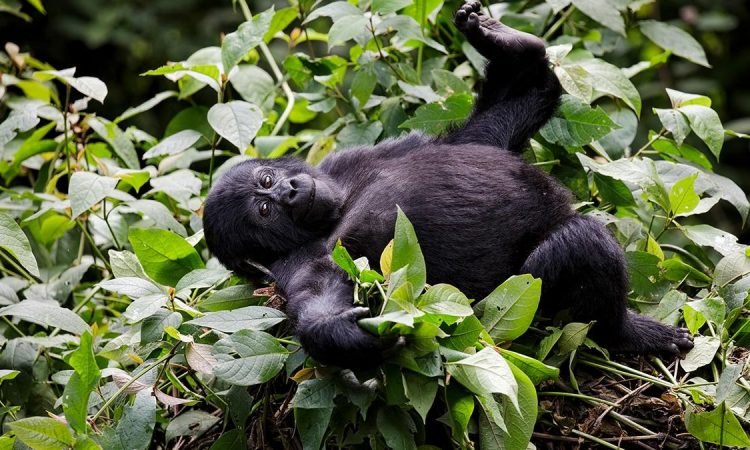
Baby Gorilla

Circumstances under which children may be allowed to track gorillas

Yes, the age limit for trekking gorillas in both Rwanda and Uganda is set at 15 years, however there are changes for a child below the age of 15 years to be allowed access to the gorilla destination and trek mountain gorillas, this exception can be made for a 14 year old child who is about to make 15 years in the year of trekking.

This exception is only possible in Uganda’s Bwindi Impenetrable National Park, also the child must be physically fit and mature enough to follow gorilla trekking rules and regulations.

In terms of landscape, Bwindi Impenetrable National Park is less steep and has more forest cover which help shield trekkers from direct sunlight. This is not the same case to Mgahinga Gorilla National Park in Uganda and Volcanoes National Park in Rwanda.

In order to qualify for this exception, parents of the child in question may be required to provide pictures to Uganda Wildlife Authority with information about their physical fitness and maturity. The child must be about to make 15 years and to prove this, a valid passport cop must be provides together with current photos.

As already noted, a child below the age of 15 years may be allowed to do gorilla trekking that if they are accompanied by parents. The Uganda Wildlife Authority will require that the parent signs a consent/indemnity form to protect the organization from the responsibility in case of any form accident happens during a gorilla trekking. The park warden will ensure that the child is allocated a gorilla group which is closest to the starting point.

As a parent, you can make the whole process smooth for the child by hiring extra porters to carry them in a sedan chair whenever they get tired.

What to do if your child is too young for gorilla trekking

In case you are traveling with children who are too young to take part in gorilla trekking that is 13 years and below. There are lots of interesting activities that children can do as the elders go out to search for mountain gorillas.

The lodge staff can stay with the children and keep them engaged with games and children’s movies. Also, they can be taken for guided nature walks, cultural visits or touring nearby local schools.

Additional information about eligibility for gorilla trekking

As you are planning a gorilla safari to Africa, it is important to note that anyone above 15 years can trek mountain gorillas. There is no maximum age limit for gorilla trekking.

Note: Before issuing the gorilla permit, the park authorities that is Uganda Wildlife Authority in Mgahinga Gorilla National Park and Bwindi Impenetrable National Park, and Volcanoes National Park will require that you send a copy of your passport before issuing out the gorilla permit. Even if you manage to get a gorilla trekking permit without a passport, you will still be required to show it during the registration at the park headquarters.

The passport helps the park authorities know if the child is eligible to take part in the gorilla trek.

What Makes A Gorilla Beat Its Chest and Charge?

What Makes A Gorilla Beat Its Chest and Charge?

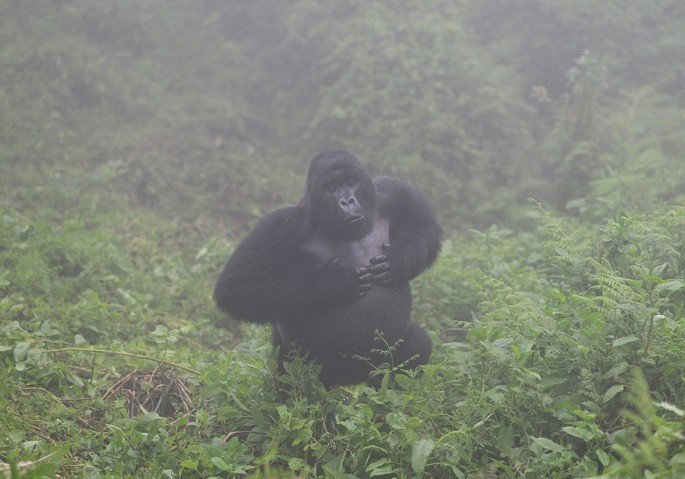
Chest beating in mountain gorillas is one of the most iconic and powerful sights in the wild on a gorilla trekking adventure, a deep, thunderous display that echoes through the forest. Often followed by a dramatic mock or real gorilla charge, this behavior captivates and sometimes intimidates the lucky visitors witnessing it.

What Makes A Gorilla Beat Its Chest and Charge?
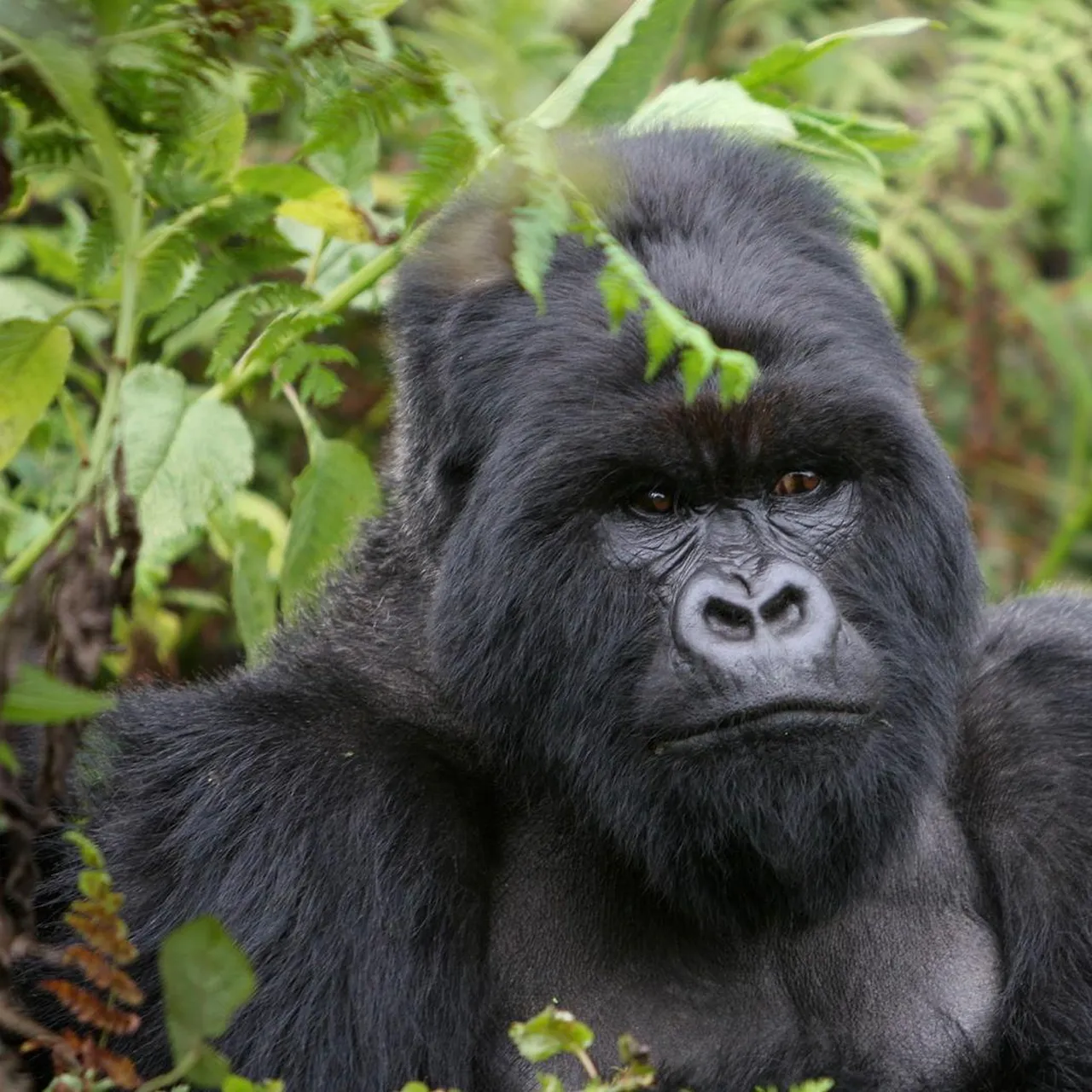
Silverback beating his chest

The question is what does it really mean?

The Meaning Behind Chest – Beating

Chest beating in mountain gorillas is a form of non-verbal communication used by gorillas to convey strength, confidence, or alertness. Its most often associated with the silverback males, though younger gorillas and even females occasional do it.

Reasons gorillas beat their chests include

There are many means to chest beating in mountain gorillas and here are the reasons to why gorillas beat their chests

  • Asserting dominance over others in the group or in nearby groups
  • Intimidating rivers without engaging in physical conflict
  • Signaling readiness to mate or attracting females
  • Deterring predators or intruders, including humans.

The sound from the chest beat is produced by rapidly slapping the chest with open hands, and the deep, resonating noise is amplified by the air sacs in their chest and neck. It is so loud that it can be heard up to 1 km (0.6 miles) away in dense forest.

Why Do Gorillas Charge?

When a gorilla charges, it is be taken as a mock charge or a real one, and understanding the difference is crucial especially during a gorilla trekking adventure in Uganda and Rwanda.

Gorilla Charges occur when
  • A silverback perceives a threat to high group
  • Humans or animals get too close or act aggressively
  • Another male challenges his authority
  • The silverback wants to demonstrate strength without a fight.

Most charges are bluff displays, the gorilla will sprint forward, beat its chest, and stop short without making contact. It is a warning, not an attack.

What Makes A Gorilla Beat Its Chest and Charge?
The dominant silverback
How to Reach During a Gorilla Charge

If you are trekking gorillas in Uganda, Rwanda or the DR.Congo, and a gorilla beats its chest or charges, follow your guide’s instructions. The general safety tips are

  • Stay still and low – Crouch down and avoid direct eye contact
  • Do not run – sudden movements can escalate the situation
  • Remain calm – most charges are not followed by physical aggression

Trained guides are experts at reading gorilla behavior and will keep you safe during close encounters.

The science behind and chest beat

According to recent researches, the chest beating sound varies in frequency and rhythm based on the gorilla’s size and status. Larger males produce lower, deeper beats, which signal their dominance and discourage rival from challenging them.

This vocal – less communication method helps gorillas maintain social order without unnecessary conflict.

In conclusion a gorilla’s chest and charge are not just dramatic displays, they are complex forms of communication rooted in emotion, social structure, and evolution. Whether it is a warning, a show of power, or way to impress a mate, these behaviors reflect the intelligence and emotion depth of mountain gorillas.

Mountain Gorilla Reproduction – Mating Behaviors & Life Cycle

Mountain Gorilla Reproduction – Mating Behaviors & Life Cycle

With not more than 1,064 individuals remaining in the wild, mountain gorillas are some of the rare and endangered primate species only found in the tropical rainforests of three countries, Uganda, Rwanda and Democratic Republic of Congo.

Mountain Gorilla Reproduction – Mating Behaviors & Life Cycle
Gorillas Mating

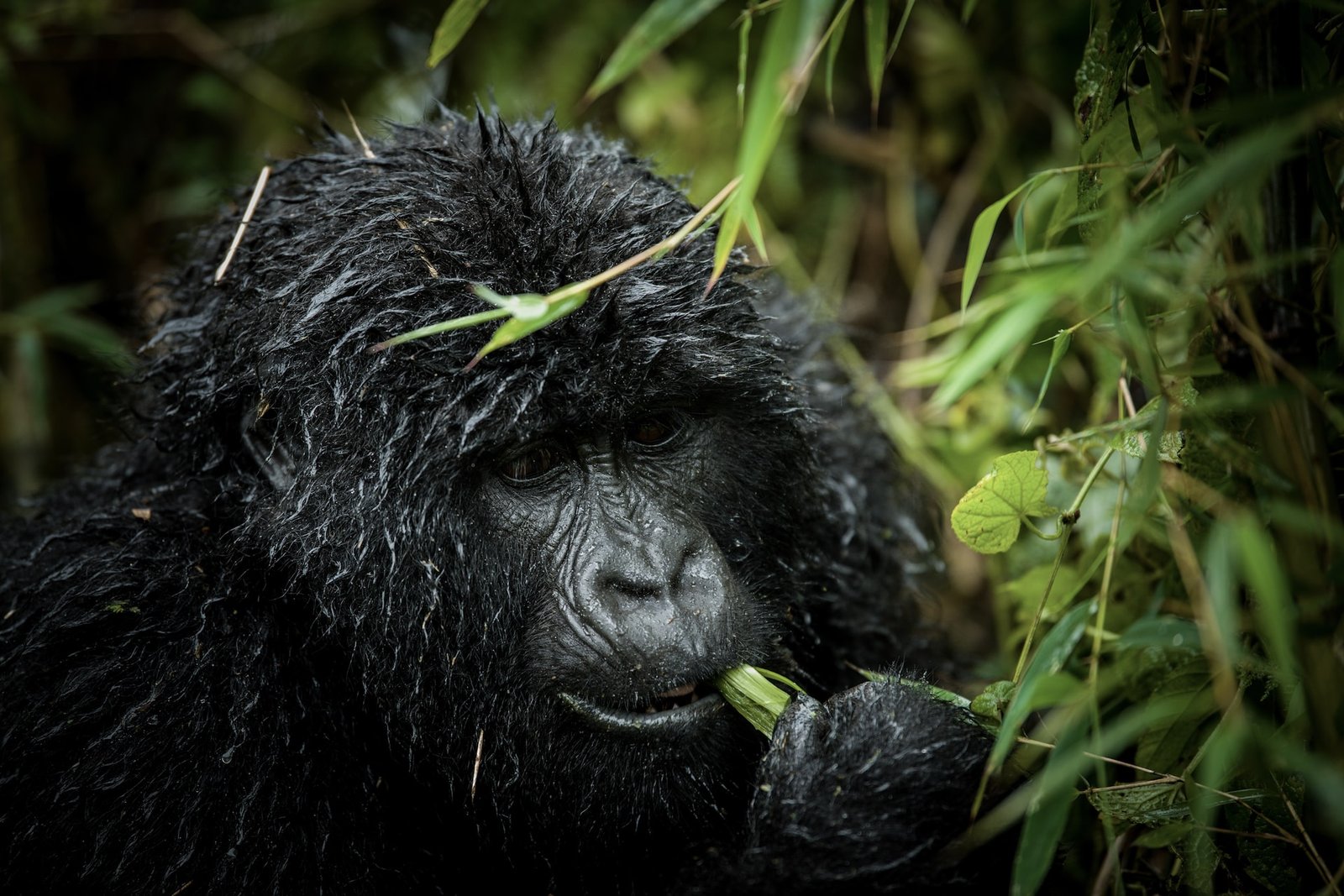
Mountain gorillas are a subspecies of the Eastern Gorilla, physically characterized by their large body size. Males weigh about 400 pounds, and females weigh about 200 pounds. They have longer, thicker, and darker fur, a saddle-shaped patch of silver hair on their backs, unique nose prints, strong teeth, broad foreheads, and opposable thumbs.

Mountain gorillas live in the rainforest mountainous areas at altitudes of 8,000 to 13,000 feet. These huge primates feed on vegetation such as leaves, shoots, roots, stems, fruits and bamboo.

Due to poaching, diseases, and habitat loss, mountain gorillas are one of the most endangered primates on the planet.

Mountain Gorilla Production and Mating Habits                                   

Female mountain gorillas reach sexual maturity at the age of 10 t 12 years, although they can have their first ovulation at 8 years. Males reach sexual maturity at the age of 11 to 13 years.

Usually females produce on infant or sometimes twins after a period of 4 years. This is because female gorillas wait until the infant is fully independent, which happens around the age of 4. Female gorillas are in heat for 1 to 2 days in a month and they attract males through body movements, uninterrupted eye contact and puckering lips.

Gorillas do not have a specific mating season and can mate at any time of the year.

The gestation period for mountain gorillas is about 8.5 months. After giving birth, they wait for 4 years to conceive again until the infant is fully grown. This means they have a low reproduction rate.

Female mountain gorillas have a menstrual cycle of about 28 years, and the fertile period is usually 3 days when they can easily conceive.

Mountain gorillas are polygamous, the dominant silverback can mate with all the females in the family. Mountain gorillas have a low birth rate, which greatly affects their population growth.

Mountain Gorilla Reproduction – Mating Behaviors & Life Cycle
Silverback Gorilla

Sexual Maturity in Mountain Gorillas

Female gorillas reach sexual maturity around 10 – 12 years, while males become sexually active after becoming silverbacks, usually at 11 – 13 years. Young gorillas pass through stages of juvenile and adolescent development before becoming fertile adults.

Courtship and Mating Behavior

Often courtship begins with the female initiating by making gestures or sounds. The silverback may respond with subtle vocalizations or physical displays. There is no fixed breeding seasons, gorillas can mate year-round.

Reproductive Cycle

The female estrous cycle is around 28 – 33 days. Fertility peaks during a 1-2 day window. Unlike some primates, gorillas show subtle signs of estrus. During this time, mating frequency increases.

Copulation and Frequency

Copulation in gorillas is brief and occurs multiple times during a female’s fertile period. The silverback dominates mating opportunities, though subordinate males may mate occasionally with the females.

Parental Investment and Weaning

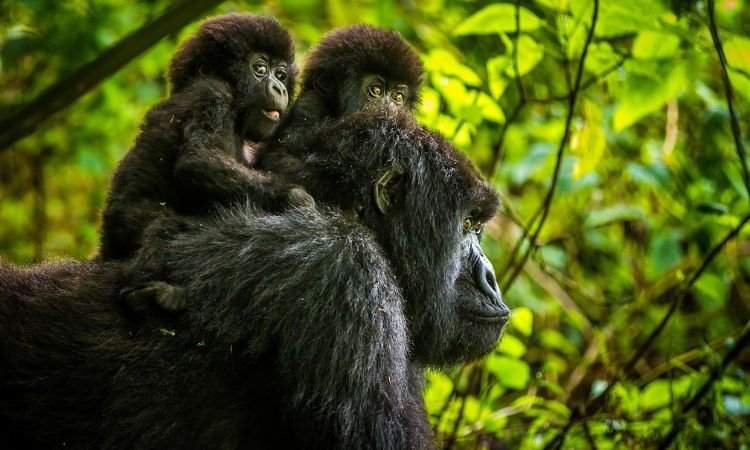
Mothers carry and nurse their infants for over 2 years. Weaning begins around 2.5 – 3 years. Female gorillas have a long interbirth interval 4+years, limiting reproductive output.

Mountain Gorilla Reproduction – Mating Behaviors & Life Cycle
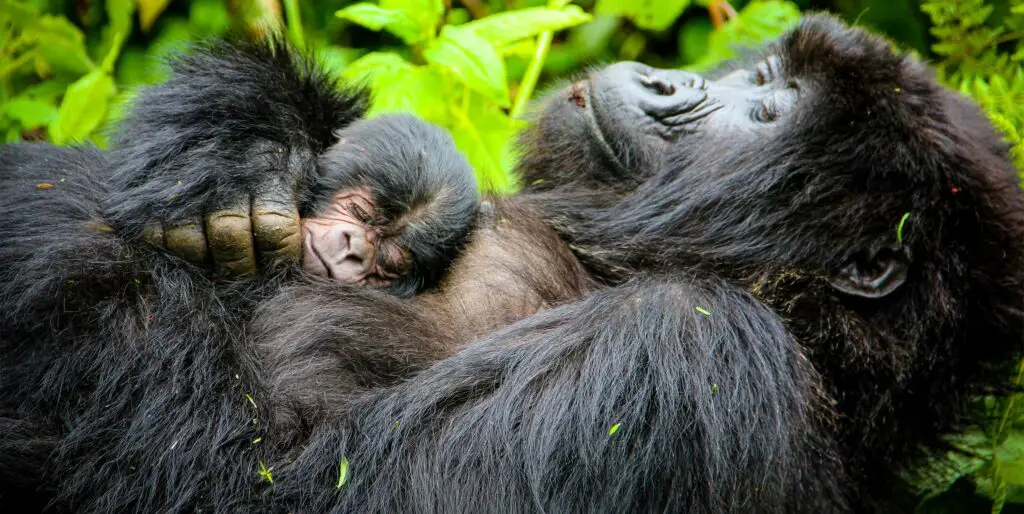
Female Gorilla with her baby
Breeding Intervals and Lifetime Reproduction

Due to the long dependency and recovery time, a female may only have 5-6 offspring in her life time. This slow reproductive rate makes population recovery difficult.

Threats to Gorilla Reproduction

The major threats to gorilla reproduction are infant mortality, diseases, habitat loss, and group takeovers leading to infanticide. Young females often migrate to avoid in breeding, while new males may kill existing infants to mate sooner.

Conservation Implications

Conservation must protect female reproductive health of both sexes and maintain stable, connected habitats. Preventing disruptions and poaching is critical to ensuring successful gorilla reproduction.

In conclusion: Mountain gorilla reproduction and mating is influenced by their structure, slow maturity, and parental investment. Understanding these aspects is vital for effective conservation. With their slow reproductive cycle, any threat can cause lasting harm to populations.

Bwindi Gorilla Trekking Safari

Bwindi Gorilla Trekking Safari

A Bwindi gorilla trekking safari offers a unique opportunity to experience the majestic mountain gorillas up close, in the lush Bwindi Impenetrable Forest.

Bwindi Impenetrable National Park is among the top places to visit in Uganda, the park is an incredible destination of wildlife enthusiasts. The park is located in southwestern Uganda, on the edge of the Rift Valley, it is spread across a landscape of steep ridges and deep valleys, forming a watershed for five major rivers, which flow into Lake Edward. This diverse terrain enhances the park’s rich ecosystems, supporting a wide array of flora and fauna.

Bwindi Gorilla Trekking Safari
Impenetrable Forest of Bwindi

Home to over half of the world’s remaining mountain gorillas, Bwindi Forest is one of Africa’s most ancient and biologically diverse rainforests. Dating back over 25,000 years, this mist-covered jungle is home to incredible flora – 400 plant species as well as some of the world’s rarest wildlife.

Bwindi gorilla trekking is high organized, scientifically sanctioned and strictly guided. The reward of this amazing experience is almost impossible to describe.

Reasons to go on gorilla trekking in Bwindi Impenetrable National Park

  1. Mountain Gorillas in their Natural Habitat

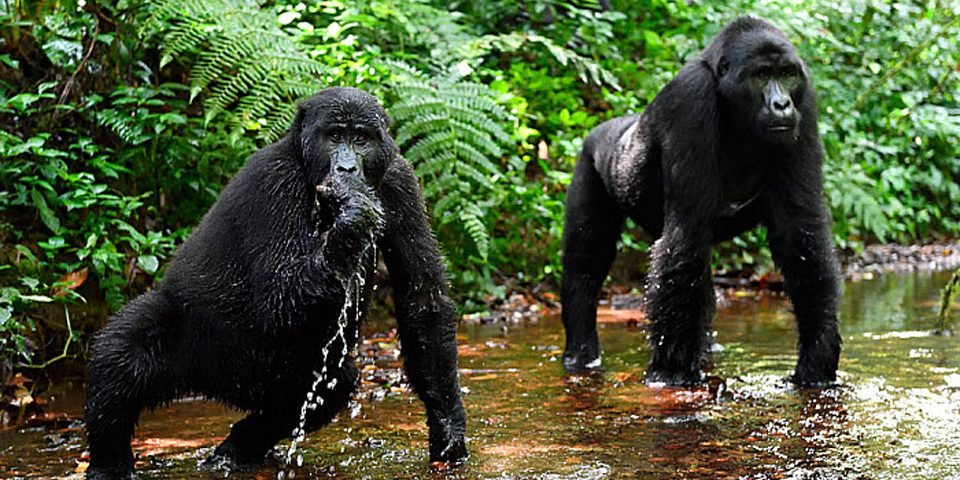
Bwindi Impenetrable National Park is home to around 459 mountain gorillas, the highest concentration of mountain gorillas in the world. Trekking through the forest to witness the creatures is unlike anything else.

Bwindi gorilla trekking safari can be challenging, but the moment you see a silverback in the wild, all effort fades. The intimacy of sharing space with a gorilla family in their natural habitat, hearing their low, rumbling vocalisations and watching them feed, leaves a lasting impression.

Bwindi Gorilla Trekking Safari
Gorilla drinking water
  1. A sense of Adventure

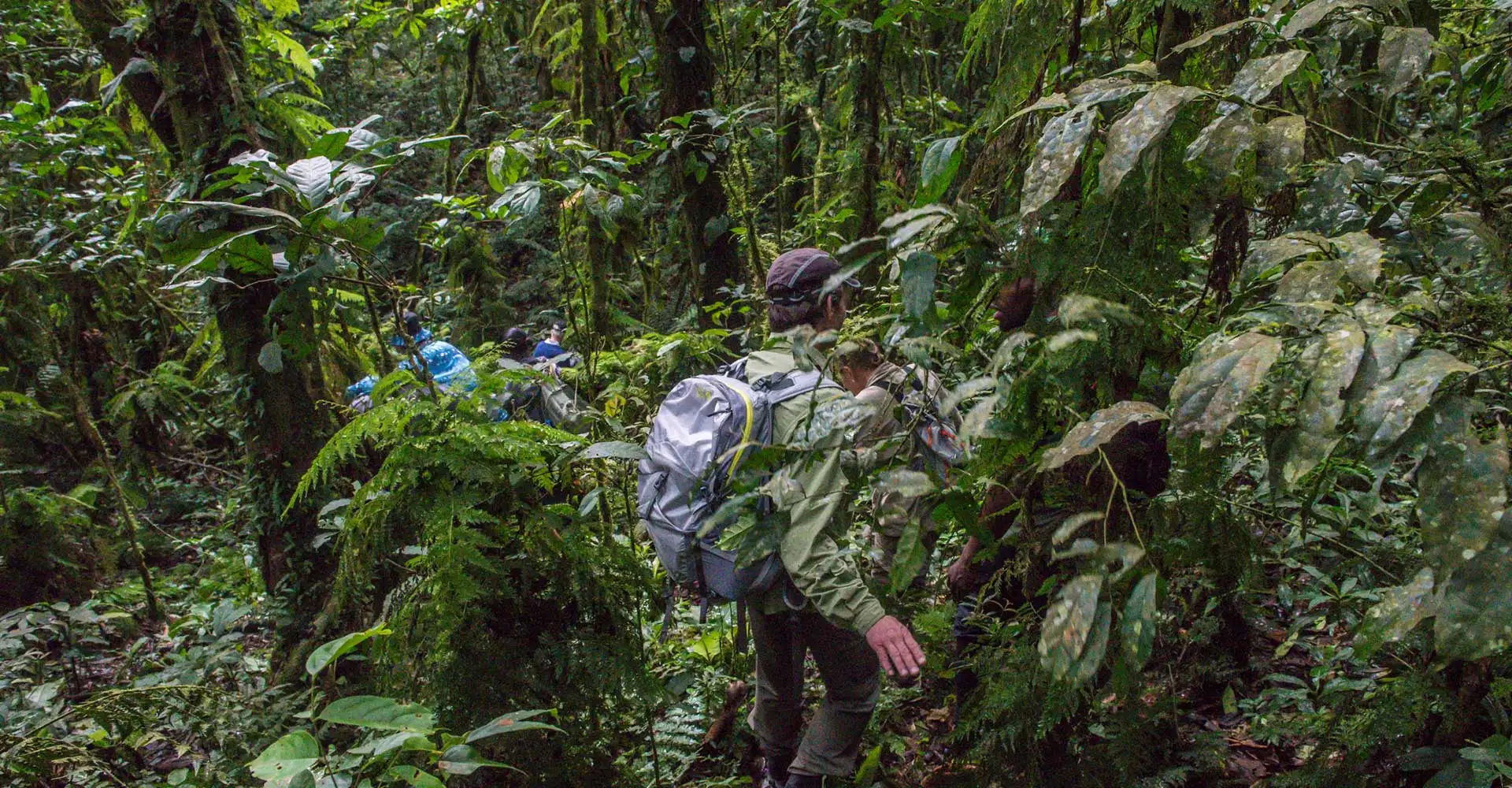
Trekking through Bwindi Forest is a true jungle experience. The trails can be steep and slippery and you will find yourself weaving through thick undergrowth in a true rainforest maze, crossing shallow streams, and clambering up rocky inclines. But that is part of the draw, Bwindi Forest Gorilla Trekking Safari is a true wilderness adventure where each step brings you closer to a remarkable experience

Compared to other gorilla trekking locations – Mgahinga Gorilla National Park, Volcanoes National Park and Virunga National Park, Bwindi Forest offers a raw, immersive jungle experience that is harder to navigate but rewarding for those wanting to feel truly at the heart of an ancient ecosystem.

  1. Biodiversity Beyond Gorillas

Bwindi Impenetrable National Park is not just about mountain gorillas, it is a true biodiversity hotspot, hosting over 120 mammal species, 350 bird species, and an astonishing 1,000 plant species, many found nowhere else on the planet. As you trek through the ancient rainforest, you will be surrounded by a symphony of sounds, from the calls of colorful turacos to the rustling of leaves underfoot.

  1. Sustainable Tourism Efforts

Gorilla trekking in Bwindi Impenetrable National Park greatly contributes to conservation efforts that keep the forest and its inhabitants protected. The local communities around the park are part of the story, benefiting directly from tourism.

Gorilla permits fund conservation, support anti-poaching patrols and research. Every step you take in Bwindi Forest sustains its future, making gorilla trekking experience more meaningful.

  1. Lower Permit Costs

Gorilla trekking in Bwindi is a tightly regulated experience, but gorilla permits in Bwindi are considerably cheaper than in neighboring Rwanda making it the best option for travelers seeking a more affordable experience, or those looking to do multiple treks.

Gorilla permit in Bwindi Impenetrable National Park costs US$ 800 per person per trek, whilst in Rwanda it costs US$ 1,500 per person per trek.

Bwindi Gorilla Trekking Safari
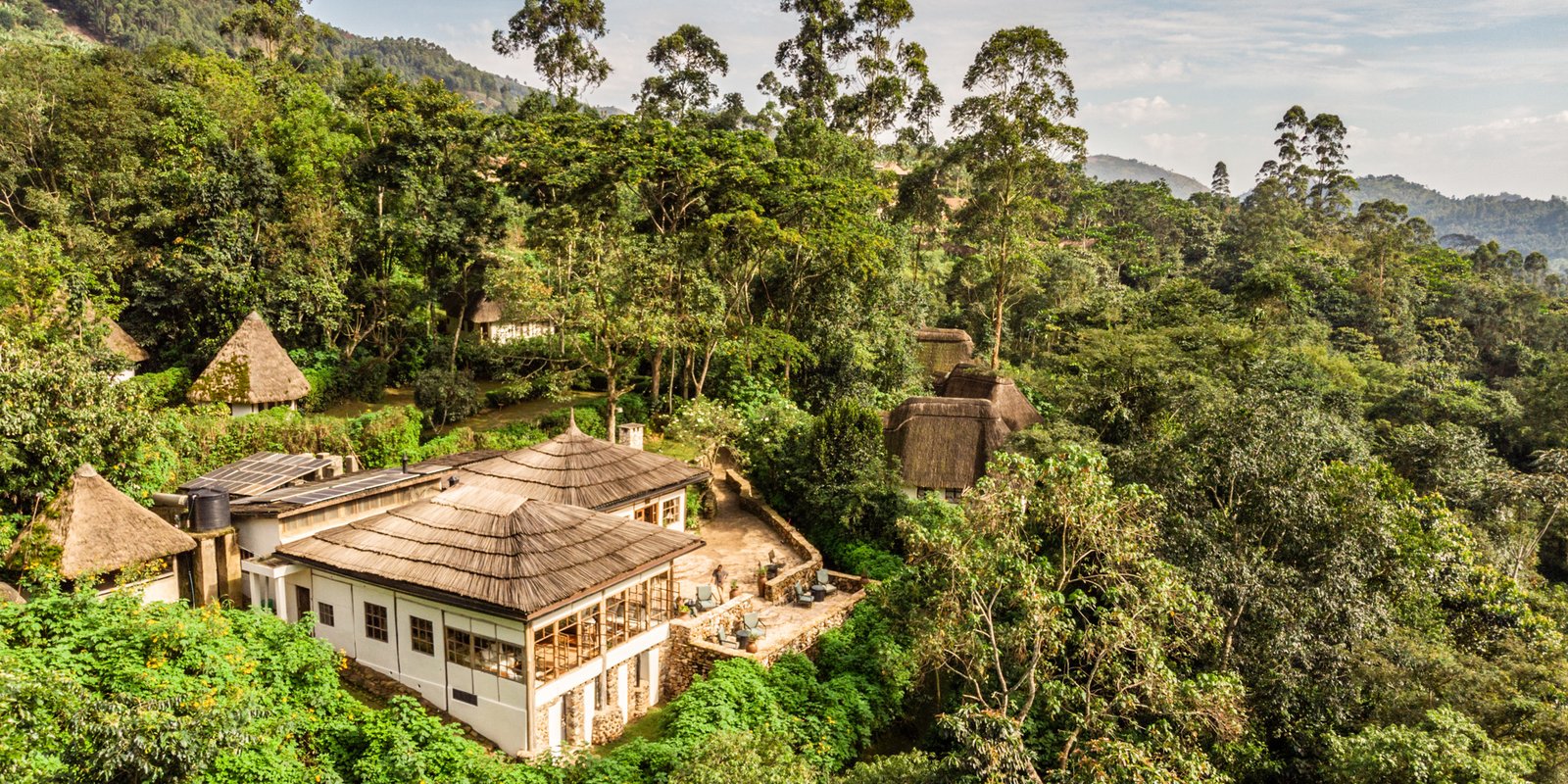
Bwindi Lodge
How to Get to Bwindi Impenetrable National Park

Bwindi Impenetrable National Park is situated in the southwestern region of Uganda, approximately 550 km from Kampala – the capital city of Uganda. The easiest way to get to the park is by flying into either Kihihi or Kisoro airports, which have regular connections from Entebbe International Airport.

From the airstrip, it is a scenic drive through the rolling hills ad verdant landscapes completing the journey to your lodge in Bwindi Impeetrable National Park. The journey also offers glimpses of traditional Ugandan villages and stunning vistas of the Virunga Mountains.

Alternatively, there is an option of a road journey, a 7-8 hours’ drive from Kampala. This journey is best enjoyed with a night or two in Lake Mburo National Park to break the long journey. This takes a route that winds through tea plantations, bustling villages, and the rising terrain of the Kigezi Highlands. The drive may be long, but it is scenic, revealing a side of Uganda that is otherwise seen. Once you reach Bwindi Impenetrable National Park, a network of well-maintained tracks leads you to various lodges and caps, each one is a gateway to the forest’s depths.

Where to stay on a Bwindi Gorilla Trekking Safari

Bwindi Impenetrable National Park has a variety of accommodation options ranging from budget, midrange to luxury and they include

  • Nkuringo Bwindi Gorilla Lodge
  • Gorilla Forest Camp
  • Mahogany Springs Lodge
  • Clouds Mountain Gorilla Lodge
  • Bwindi Lodge
  • Buhoma Lodge
  • Four Gorillas Lodge
  • Buhoma Community Haven
  • Ichumbi Lodge
  • Muanda Lake Resort
  • Chameleon Hill Lodge.
Bwindi Gorilla Trekking Safari
Best Time for a Bwindi Gorilla Trekking Safari

The best time for gorilla trekking in Bwindi Impenetrable National Park is during the dry seasons, from June to August and December to February, when trails are more accessible. Also, the vegetation cover is less thick thus offering clear sights of mountain gorillas.

In conclusion – For travelers having hard to time choosing between Uganda and Rwanda for gorilla trekking, Uganda is a perfect destination with its more affordable permits ad diverse landscapes, making it a must visit for travelers exploring Africa’s natural wonders.

Is Uganda or Rwanda better for Gorilla Trekking?

Is Uganda or Rwanda better for Gorilla Trekking?

For those on a limited time, usually gorilla trekking in Rwanda is recommended. However, the best choice for the more budget conscious travellers, and for those looking for a bigger variety of activities before or after a gorilla trek, Uganda is the better choice.

Is Uganda or Rwanda better for Gorilla Trekking?
Gorilla Trekking in Rwanda

Gorilla trekking in Rwanda is generally more expensive, with the country focusing on high-end, low-impact tourism. Rwanda is a relatively small country that has made huge strides in tourism, it is an up-and-coming destination with big ambitions and a growing list of attractions.

Gorilla trekking in Uganda on the other hand is much cheaper (starting in cheap gorilla permits) and there is a wide range of budget and mid-range accommodation. However, the journey times in Uganda are longer and roads into Bwindi Impenetrable Forest are bumpier. Uganda is a more established destination with a wide variety of additional wildlife, cultural and adventure tourism activities. However, Rwanda’s tourism industry is swiftly developing. A combined Uganda and Rwanda trip is a popular option to experience these two incredible destinations.

In this blog, we list the pros and cons of Uganda and Rwanda for a gorilla trek. This will help you decide “Is Uganda or Rwanda better for gorilla trekking”

Is Uganda or Rwanda better for gorilla trekking

Gorilla Trekking Price

The gorilla trekking experience in Rwanda is more expensive than in Uganda. Gorilla trekking permits, accommodations and services are all costlier in Rwanda, which is part of a concerted government effort to nurture a more exclusive, higher-end tourism industry.

Currently gorilla trekking permit prices are US$ 800 per permit in Uganda and US$ 1,500 per permit in Rwanda.

Gorilla Permits

In Uganda, gorilla permits must be bought from the Uganda Wildlife Authority through a local registered tour operator.

When purchasing a gorilla permit in Uganda, you need specify the gorilla trekking sector and book your accommodation in the similar sector.

In Rwanda you can book a gorilla package including your gorilla permit with a tour operator or buy your permit directly from the Rwanda Development Board via their Irembo platform. There is no need to specify a gorilla family or accommodation.

Trekking Difficulty

In Uganda the terrain is often steep and muddy. Bwindi Impenetrable Forest is as dense as the name suggests. Trekking through the jungle can be tricky and may require your guide to hack a path with machetes. Gorilla families may be spread across larger areas, and treks may be an all-day undertaking. It is certainly more of an adventure but does require a degree of fitness.

Mgahinga Gorilla National Park has lighter, bamboo cover which is similar to Rwanda’s Volcanoes National Park, but tracking is steep in some places.

Rwanda’s Volcanoes National Park has generally easy terrain to climb, expect on the longer tracks which can lead you into dense forest at altitude. The forest is largely bamboo thus creating a less dense canopy. Overall Rwanda is generally easier – going gorilla trekking destination.

Accessibility

Uganda’s Bwindi Impenetrable National Park and Mgahinga Gorilla National Park are approximately 8-10 hour drive from Entebbe International Airport by road. There are fly-in options to local airstrips, these airstrips are within 30 minutes’ drive of Bwindi and Mgahinga.

Transport and access in Rwanda is much easier. It is a two hour drive from Kigali International Airport to Volcanoes National Par. Fly-in options are available to local airstrips, including helicopter transfers, but are infrequently requested thanks to the good roads and comparatively short distance.

A popular option is to fly into Rwanda and drive to Uganda. It takes three to five hours to drive from Kigali International Airport to gorilla trekking destinations in Uganda – Bwindi Impenetrable National Park and Mgahinga Gorilla National Park.

Accommodation

Bwindi Impenetrable National Park is the main gorilla trekking destination in Uganda, with four distinct trailheads into the forest’s interior. The location of your accommodation is therefore very important. It is recommended that you stay in a lodge near your specific starting point, so keep that in mind when you book your permit.

Note: Many roads are steep and rutted so what may appear as short distances can still involve long drives.

Trip Duration

Due to the remote locations in Uganda, you will need a minimum two – night stay in the gorilla tracking area. Stay longer if you can and enjoy Bwindi Impenetrable Forest’s waterfalls and diverse walks, meet the Batwa pyhmy tribe and treasure the beauty of the spectacular rainforest.

In Rwanda, a two-night stay is recommended, although the accessibility of Volcanoes National Park means one night (even a single day) trips are possible – but not recommended. There is a lot more to Rwanda than seeing the gorillas.

Is Uganda or Rwanda better for Gorilla Trekking?
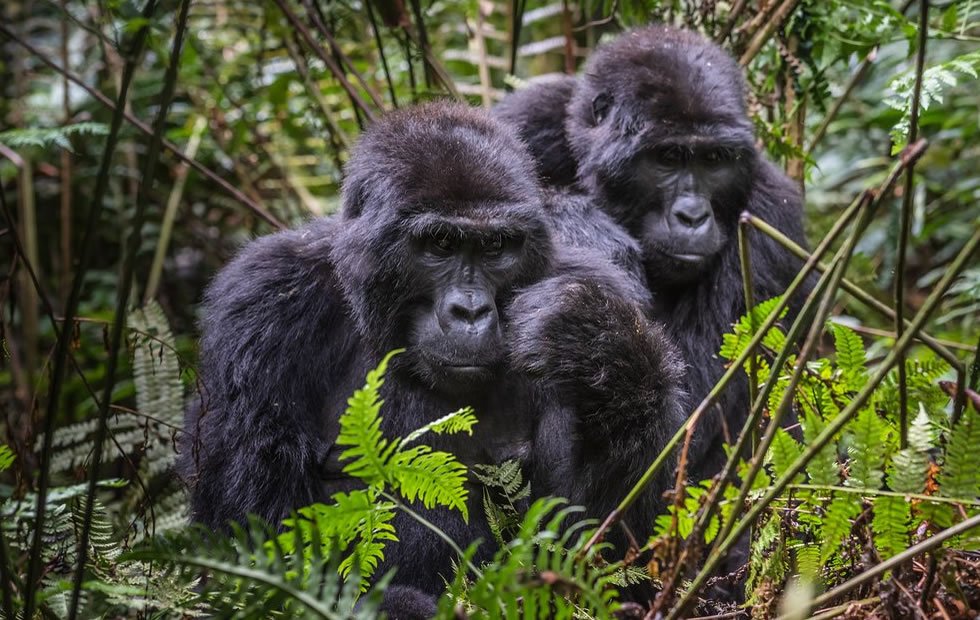
Gorilla Family

Gorilla Families

 Rwanda

Rwanda has 12 habituated gorilla families that can be tracked by tourists, all living in Volcanoes National Park.

Kwitonda is the biggest mountain gorilla group in Rwanda, with 35 members. Previously, the Susa group was the largest, but they have split into three smaller groups. This is not the first time the Susa group has split, and they may regroup to form a larger family again. The Susa inhabit the lower base of Mount Karisimbi and are one of the more difficult groups to trek. If you are after an easier hike, look for the Bwenge family near Mount Visoke, which is relatively easy hike.

The Karisimbi, Amohoro and Karisimbi families are more challenging to track, while Sabyinyo is the nearest and easiest group to reach. The guides will advise you during your morning briefing and you will be assigned to track a gorilla family that matches your group’s fitness and ability.

Uganda

There are 23 habituated gorilla families in Uganda that are open for gorilla trekking, 22in Bwindi Impenetrable National Park and one in Mgahinga Gorilla National Park.

The The Binyindo, Habinyanja, Katwe, Kyaguliro, Mubare, Muyambi and Rushegura families can be tracked from Buhoma in the northern sector of Bwindi Impenetrable Forest. If you have seen videos of human encounters with gorillas in the grounds of a lodge, it is most likely in Buhoma Sector. This is Bwindi’s first and most developed trekking site with a wide range of accommodation and fantastic views of the rainforest. Trekking here is generally easier than it can be from the other three trailheads.

Also, Buhoma is a good base for visits to local communities.

The Bitukura, Mishaya, Mukiza and Oruzogo families lives around Ruhija, on the eastern edge of Bwindi Impenetrable National Park.

Bikingi, Busingye, Bweza, Kahungye, Kutu, Mishaya, Mucunguzi, Nshongi families of Rushaga, and the Bushaho, Christmas and Nkuringo families of Nkuringo are found in the south-west region of Bwindi Impenetrable National Park. Trekking the steep terrain of Nkuringo can be more challenging than at other sites and therefore may take longer. In addition to panoramic views of Bwindi Impenetrable Forest, Nkuringo Sector has views of the dramatic Virunga Volcanoes.

Mgahinga Gorilla National Park is home to more than 80 mountain gorillas but has just one habituated gorilla groups, the Nyakagezi Family.

Because Uganda’s gorilla families are scattered across various locations, it is very important that you book accommodation that is not too far away from the national park entrance, otherwise you may have to drive for an hour or more before your 07:00am registration and briefing.

This is one of the main advantages of using a good tour operator, they know all the lodges and all the gorilla families and can make the best possible match for your interests, budget and hiking ability.

Boat Cruise on Kazinga Channel, Queen Elizabeth National Park

Boat Cruise on Kazinga Channel, Queen Elizabeth National Park

The Kazinga Channel is one of the remarkable attractions in Queen Elizabeth National Park, the most popular game park in Uganda. The channel is a 32-kilometer waterway connecting Lake George and Lake Edward.

Boat Cruise on Kazinga Channel

Boat cruises are the best way to immerse yourself in the plethora of wildlife that lives in and around the Kazinga Channel. In addition to seeing a range of wildlife, you will get a glimpse of the eleven fishing villages that are located within the Queen Elizabeth National Park.

The Kazinga Channel is a popular area for wildlife tourism within Queen Elizabeth National Park. This region is a remarkable area celebrated for its rich biodiversity, boasting one of the largest concentrations of hippos in the world alongside a multitude of Nile crocodiles basing on the shores.

Boat cruises along the Kazinga Channel are a sought-after experience in Queen Elizabeth National Park, with scheduled departures at 11 am, 1 pm, 3 pm and 5 pm East Africa time. As you glide through the waters of the channel, keep your eyes peeled for the diverse array of wildlife that frequents the shores throughout the year. Here, you can see herds of buffaloes and elephants roaming along the shores, particularly in the areas adjacent to the northern plains and Kasenyi.

For tourists eager to increase their chances of observing lions in their natural habitat, the eastern Kasenyi Plains offer prime viewing opportunities. Morning boat cruises provide a serene start to the day, where early risers can enjoy the tranquil waters and the vibrant sounds of nature awakening. The evening boat cruise showcases the stunning sunset over the channel creating a magical atmosphere as nocturnal wildlife begins to stir.

Wildlife in the Kazinga Channel

Kazinga Channel is home to a wide range of animals and birds, including one of the world’s largest concentration of hippos (around 2,000) and countless Nile Crocodiles.

Hippos are the world’s third largest land mammal, and they can be aggressive, so it is important to follow the instructions of your guide. Also, expect to see elephants, buffaloes, and over 100 species of water birds, including the African Skimmer.

Kazinga Channel Features

The Kazinga Channel not only offers a spectacular boat safari, it also acts as a natural divider within Queen Elizabeth National Park, creating two distinct areas teeming with wildlife.

  • South of the Channel

This larger south of the channel is home to the renowned Ishasha Sector, where you can witness the unique spectacle of tree-climbing lions. Also, it encompasses the Kyambura Gorge, the Valley of apes, a lush haven for chimpanzee trekking and nature walks.

  • North of the Channel

While smaller in size, the northern section of Kazinga Channel boasts some of the park’s prime game-viewing areas, including the popular Kasenyi, Katunguru, Katwe Plains, Mweya, Kikorongo, and the Kichwamba Escarpment.

Bridging both sides of the Kazinga Channel is the surfaced Kasese – Ishaka Road, crossing at Katunguru Bridge. This accessibility makes it easy for visitors staying in various lodges and camps throughout the park to reach the Kazinga Channel for their boat cruise. In fact, most camps and lodges in the northern sector are conveniently located along the Mbarara – Kasese highway or within a short drive from it, ensuring that you can reach the channel and embark on your wildlife adventure within an hour.

This division adds another layer excitement to your Kazinga Channel boat cruise experience. Depending on your departure point and the cruise route, you might get a glimpse of wildlife from both sides of the park, further enriching your experience.

Boat Ride Operators

There are two independent boat ride operators, the Uganda Wildlife Authority and Mweya Safari Lodge.

Both trips cost around US$ 30 per person and take 2 hours. Mweya Safari Lodge gives tourists a choice between its comfortable ten-seater boat, The Sunbird, and its stylish twelve-seater boat, the Kingfisher.

Both vessels have experienced guided and crew, but the Kingfisher allows you to travel in luxury, providing refreshments and canopies to protect you from the sun.

Best Time for a Boat Cruise on Kazinga Channel

The dry seasons, from June to August and December to February, are generally considered the best time for a boat cruise on Kazinga Channel. During these months, the weather is pleasant, and the wildlife tends to congregate near the water sources, making them easier to spot. The afternoon, between 1:00 pm and 5:00 pm, is particularly ideal as animals often seek relief from the heat by venturing closer to the channel.

Getting to Kazinga Channel

Queen Elizabeth National Park and the Kazinga Channel, is well connected and accessible via various routes, catering to different travel preferences and travel plans.

By Road

From Kampala, it is a journey of approximately 309 kilometers (192) on well-maintained road, taking about 6-8 hours. You will pass through vibrant towns like Masaka, Mbarara, and Bushenyi, offering glimpses into the local life.

By Air

There domestic and chartered flights to Queen Elizabeth National Park, you can fly from Entebbe International Airport to either Kasese Airstrip or Mweya Airstrip. The flight duration is approximately 1.5 hours. From Kasese, it is a short 40-kilometer drive to the Kazinga Channel, while Mweya Airstrip is even closer, offering almost immediate access to the park.

Things to Do in Queen Elizabeth National Park

Things to Do in Queen Elizabeth National Park

Formerly known as Kazinga National Park, Queen Elizabeth National Park is the most popular savanna park in Uganda and the best place to see wildlife including the rare three climbing lions and four of the Big Five – lion, leopard, buffalo and elephants.

Things to Do in Queen Elizabeth National Park
Lions in Queen Elizabeth National Park

Queen Elizabeth National Park is located in western Uganda in the districts of Kasese, Rukunguri,Kamwenge, and Rubirizi. The park covers an area of approximately 2000 square kilometers in size, comprising of a great diversity of habitats that includes lakes, savannah grasslands, forests and wetlands that serve as home to the biggest variety of large mammals in the country.

Queen Elizabeth National Park is home to abundant wildlife, including 95 mammal species such as African elephant, African buffaloes, Uganda kobs, hippopotamus, topi, chimpanzees, lions, spotted hyenas, leopards and over 600 bird species.

Here are the Things to Do in Queen Elizabeth National Park

Game Drives

Game viewing is the main Uganda safari activity in Queen Elizabeth National Park.

Game drives in Queen Elizabeth National Park are done in the comfort of a 4×4 open sided safari vehicle that accommodates 4 to 6 people, a sure way to offer you a classical safari feeling. Safari game drives are one of the most popular ways to see wildlife in Queen Elizabeth National Park.

There are demarcated routes used in search of wildlife under the guidance of safari guide or a park ranger.

Game drives in Queen Elizabeth National Park last 3-4 hours and from the comfort of your vehicle, you are treated to incredible sightings of several animals including lions, leopards, cape buffaloes, elands, spotted hyenas, elands, warthogs, kobs, bush babies among others.

Most game drives in Queen Elizabeth National Park occur at Mweya Peninsula, the Kasenyi Plains, the Katwe Fields and Ishasha Plains.

Birding

Queen Elizabeth National Park is one of the best birding destinations in Uganda, with over 600 species of birds. The park hosts a high concentration of birds in the world, thus begin a haven for birders.

The park is home to several waterbodies, swamps, forests and other physical features which gives attractions to bird such as African finfoot, African fish eagle, African hobby, African skimmer, Ayres’s hawk-eagle, Black bee-eater, Black-headed gonolek, Black-rumped buttonquail, Blue-breasted kingfisher, Broad-billed roller, Caspian plover, Cassin’s flycatcher, Collared pratincole, Common sand martin, Crab-plover, Great blue turaco, Great white pelican, Grey crowned crane, Grey-winged robin-chat, Heuglin’s gull, Lesser flamingo, Long-crested eagle, Palm-nut vulture, Papyrus canary, Papyrus gonolek, Papyrus yellow warbler, Pel’s fishing-owl, Pink-backed pelican, Red-chested sunbird, Rufous-bellied heron, Shoebill, Spotted redshank, Water thick-knee, Western banded snake eagle, White-backed night heron, White-winged tern, Yellow-bellied wattle-eye, Yellow-billed stork, Yellow-throated cuckoo and Yellow-throated longclaw among others.

On the other hand, Queen Elizabeth National Park hosts migratory bird species, illusive species, endangered bird species as well as the Rift Valley Endemics.

Things to Do in Queen Elizabeth National Park
Hippos in Kazinga Channel

Launch Cruise or Boat Trip on Kazinga Channel

The boat trip within Queen Elizabeth National Park is done on the impressive Kazinga Channel, a 40 kilometer water long natural channel linking Lake Edward to Lake George.

Normally the boat set off every at either 09:00 am local time or at 2.00p, in the afternoon local time. The launch cruise may take anything from 2-5 hours to well explore the channel and see wildlife along the shores.

On the boat, thee are professional guides who will give you all the necessary information pertaining this safari or tour as well as answer any questions that may arise about the wildlife or anything else. Additionally, the professional as well as experienced guides will point out any wildlife which you may have failed to notice.

Things to Do in Queen Elizabeth National Park
Chimpanzees in Kyambura Gorge

Chimpanzee Tracking in Kyambura Gorge

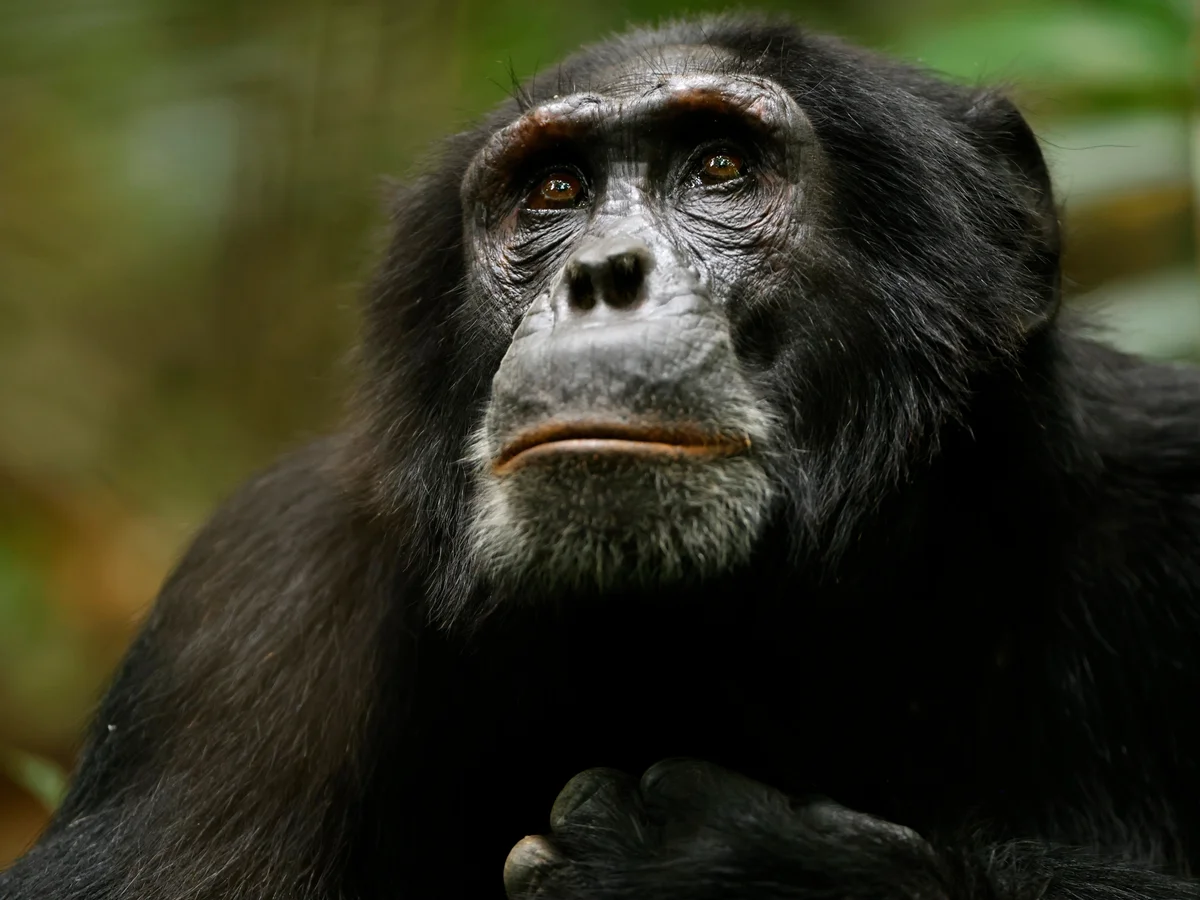
The Kyambura Gorge is one of the best places for chimpanzee trekking in Uganda, the gorge dubbed as The Valley of Apes is a large valley covered by an underground tropical forest with wildlife but chimpanzees are the key attractions.

Chimpanzees are one of the most intelligent animals in the world and our closest relatives as humans along with baboons. Chimpanzees in Queen Elizabeth National Park hide inside the gorge and never come out into savannah for fear of predators.

There was a forest corridor connecting them to chimpanzee communities in Maramagambo and Kalinzu Forest which was cut off by the locals.

Nature Walks in Maramagambo Forest

The Maramagambo Forest is one of the few tropical rainforests left in Uganda, located in southern part of Queen Elizabeth National Park offering incredible guided nature walks.

On the nature walk, you will have an opportunity to spot reptiles, birds, red tailed monkeys, bush babies, vervet monkeys and chimpanzees in Maramagambo which are not habituated. Also, you can use this opportunity to visit the bat and python caves where you can watch the battle between predators and prey from a hidden platform.

Culture Experiences

Witness how the locals and wildlife live in harmony by visiting the local communities living near the park. During the visit you get to learn a lot about the cultural heritage, traditional dances, traditional clothes, traditional food, visiting local schools and projects organisations operating in the area.

The Kikorongo Equator Cultural Group even takes the performances to the lodges and hotels in the evenings.

Lake Katwe Salt Mine Tours

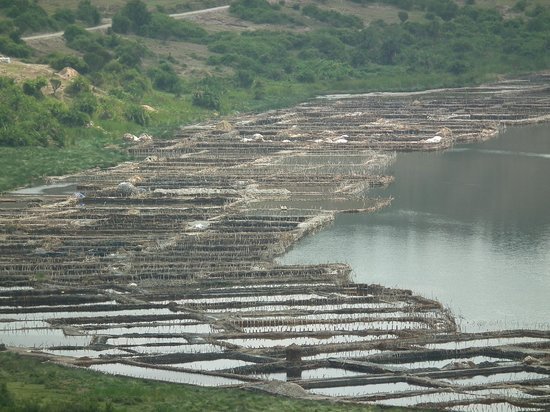
Salt mining has been carried out in Lake Katwe for many years and the most is used in Ugandan homes. Rudimental methods are used by the locals to mine the salt, these methods have been passed down from their ancestors but they can be hazardous to their health.

Most miners do not mind because it is a very profitable business for them.

On your Uganda safari to Queen Elizabeth National Park, you can visit the lake and witness the different processes of mining salt and also to mingle with local people.

Things to Do in Queen Elizabeth National Park
Katwe Salt Works

Getting to Queen Elizabeth National Park

By Road

Most safaris to Queen Elizabeth National Park start from Kampala with arrival at Entebbe International Airport, the journey to the park in western Uganda takes 6 hours along tarmac road. There are two routes from Kampala via Mbarara to the east of the park covering a distance of 250 miles.

Alternatively; Fort Portal to the north which covers 260 miles. Most visitors choose to include stopovers at other parks along the way rather than driving directly from Kampala to Queen Elizabeth National Park. Driving on the Kampala – Masaka – Mbarara – Kasese road giving you a chance to explore the Uganda Equator.

By Air

Queen Elizabeth National Park can be accessed by air from both Entebbe International Airport and Kajjansi Airstrip, flying to Kasese and Mweya Airstrips – the closest to the park.

Flights to Queen Elizabeth National Park take 1-2 hours.

10 Amazing Lion Facts

10 Amazing Lion Facts

Lion – Panthera Leo is a large cat of the genus Panthera, native to Sub – Sarahan Africa and India. Throughout history, African lions have been admired as symbols of courage and strength. These iconic animals have powerful bodies in the cat family, they are only second to tigers in size. One of the fascinating things about lions is their roar that can be heard from five miles away.

10 Amazing Lion Facts
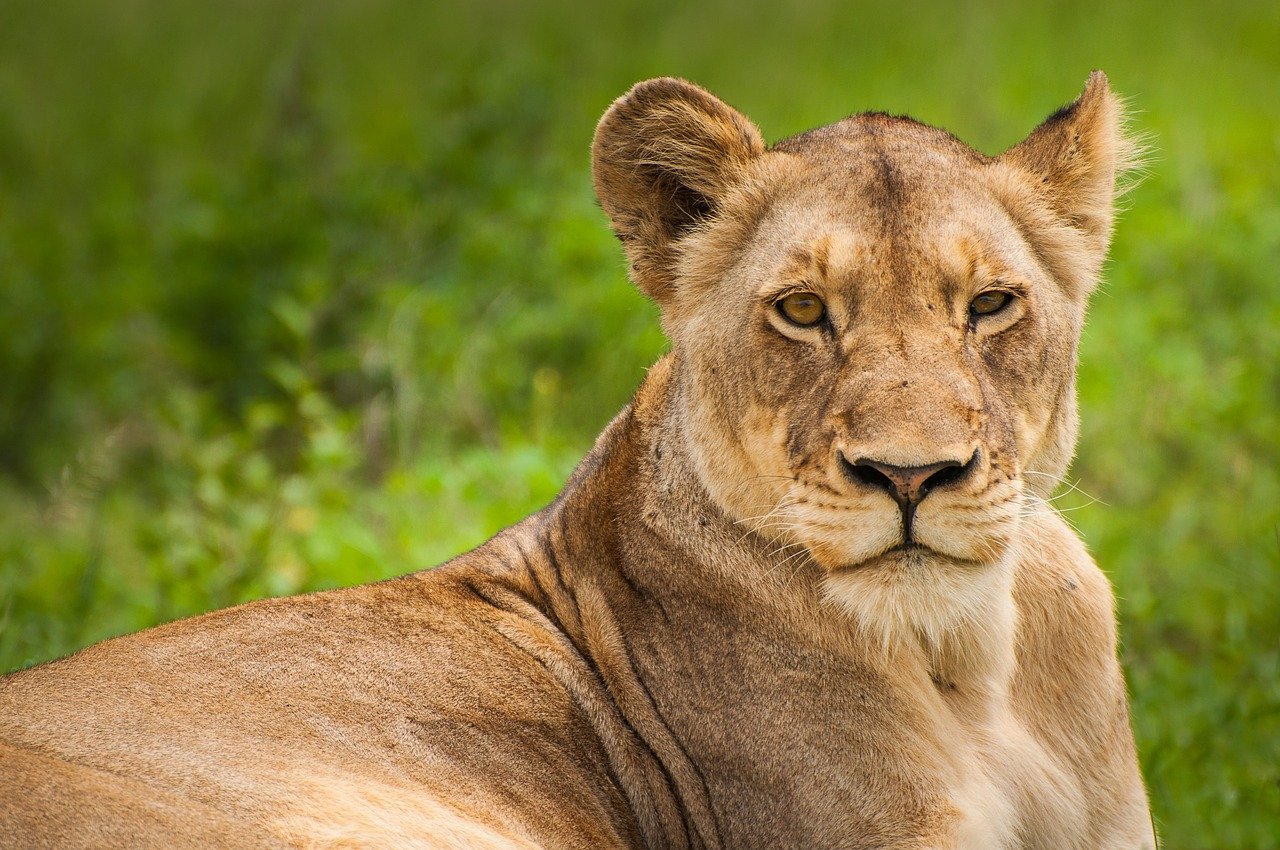
Lioness

An adult lion’s coat is yellow-gold, and juveniles have some light spots that disappear with age. Only male lions typically boast manes, the impressive fringe of long hair that encircles their heads.

Nothing symbolizes Africa’s untamed beauty quite like the lion. As one of the most iconic animals of the Big Five, lions represent strength, courage and power. Whether roaming the vast plains of Serengeti National Park and Ngorongoro Conservation Area in Tanzania, Masai Mara National Reserve in Kenya and Queen Elizabeth National Park and Murchison Falls National Park in Uganda. These big cats are an unforgettable sights on an East African safari.

In this blog, we explore the 10 amazing lion facts, the most iconic animal of Africa’s Big 5.

  1. Lions are Social Cats

Unlike tigers and leopards, lions are highly social animals. They live in prides of 10 – 15 members, though some super prides can number 40 lions or more. Each pride consists of related females, their cubs, and a few dominant males who protect their territory.

  1. Lions need to eat everyday

Lions can survive without drinking water for up to four days, but they must eat daily. Lionesses consume 11 pounds of meat per day, while males require 16 pounds or more. They primarily hunt large prey like zebra, wildebeests, and buffalo, but they will also snack on smaller animals like hares, birds and reptiles.

  1. Lionesses do the hunting

Females are the primary hunters, using teamwork and agility to take down prey. However, despite their hunting prowess, male lions eat first, followed by lionesses and finally the cubs.

  1. Lions are built for the hunt

Lions are stealthy ambush predators, they fan out in a semi-circle, driving prey towards waiting hunters. Their night vision is six times stronger than a human’s giving them an edge after dark.

A lion can sprint 50 mph and leap up to 36 feet, making them one of Africa’s most efficient hunters. The hunting for lions is facilitated by their claws that reach up to one and a half inches in length, allowing for incredible control when going in for a kill. Lions can reach speeds of up to 50 miles per hours and can jump up to 36 feet.

10 Amazing Lion Facts
Tree Climbing Lions in Ishasha Sector
  1. Lions do not live in Jungles

Despite being called the “King of the Jungle” Lions in Africa inhabit savannahs and open plains, not dense forests. Tanzania safari destinations like Serengeti National Park and Masai Mara National Reserve, lions are often spotted lounging under acacia trees or roaming the golden grasslands.

  1. Lions communicate in many ways

Lions communicate through different ways including roar, growl, grunt, and plurr. Their mighty roar, which warns rivals and marks territory, can be heard up to 5 miles away. Also, they use scent markings, mane darkness, and affectionate head rubs to bond with pride members.

  1. Lions raise their cubs

Lionesses give birth around the same time, allowing them to co-raise their cubs. At around two years old, male cubs are forced out of the pride to form their own coalitions. While male lions don’t directly parent, they fiercely protect the pride’s cubs from threats.

Fun Facts about Lion Cub

  • Lion cubs are born blind and they open their eyes at three weeks old
  • Lionesses hide their cubs for six weeks to keep them safe
  • Cubs spend their early years playing, wrestling, and practicing hunting skills.
  1. Lions are the second largest big cat

Lions are only slightly smaller than Siberian tigers. Males can weigh up to 550 pounds, while females can reach 390 pounds. Unlike other big cats, lions rely on teamwork rather than solitary hunting.

  1. Some lions can climb trees

Lions are not known for climbing trees but in Tanzania’s Lake Manyara National Park, Tarangire National Park and Serengeti National Park, and Ishasha Sector of Queen Elizabeth National Park you may spot tree-climbing lions.

For a lion to successfully climb a trees, it has to be a certain type of tree horizontal branches that aren’t too far above ground seem to be idea.

  1. Lions hunt during storms

Lions do most of their hunting at night, their eyes have adapted to the dark which gives them a huge advantage over their prey. Interestingly though, lions also hunt during storm. The noise, rain and or wind make it harder for prey to see and hear them, increasing their chances of a successful hunt.

When hunting, lionesses have specific roles. Some play the roles of the centre and others the role of wing. The wings chase the prey towards the centres.

Did You Know? – Lions spend up to 20 hours a day resting. When they are not snoozing under the African sun, they engage in social behaviors like grooming, head-rubbing, and purring that even kings need downtime.