Bwindi Impenetrable National Park

Bwindi Impenetrable National Park

Bwindi Impenetrable National Park
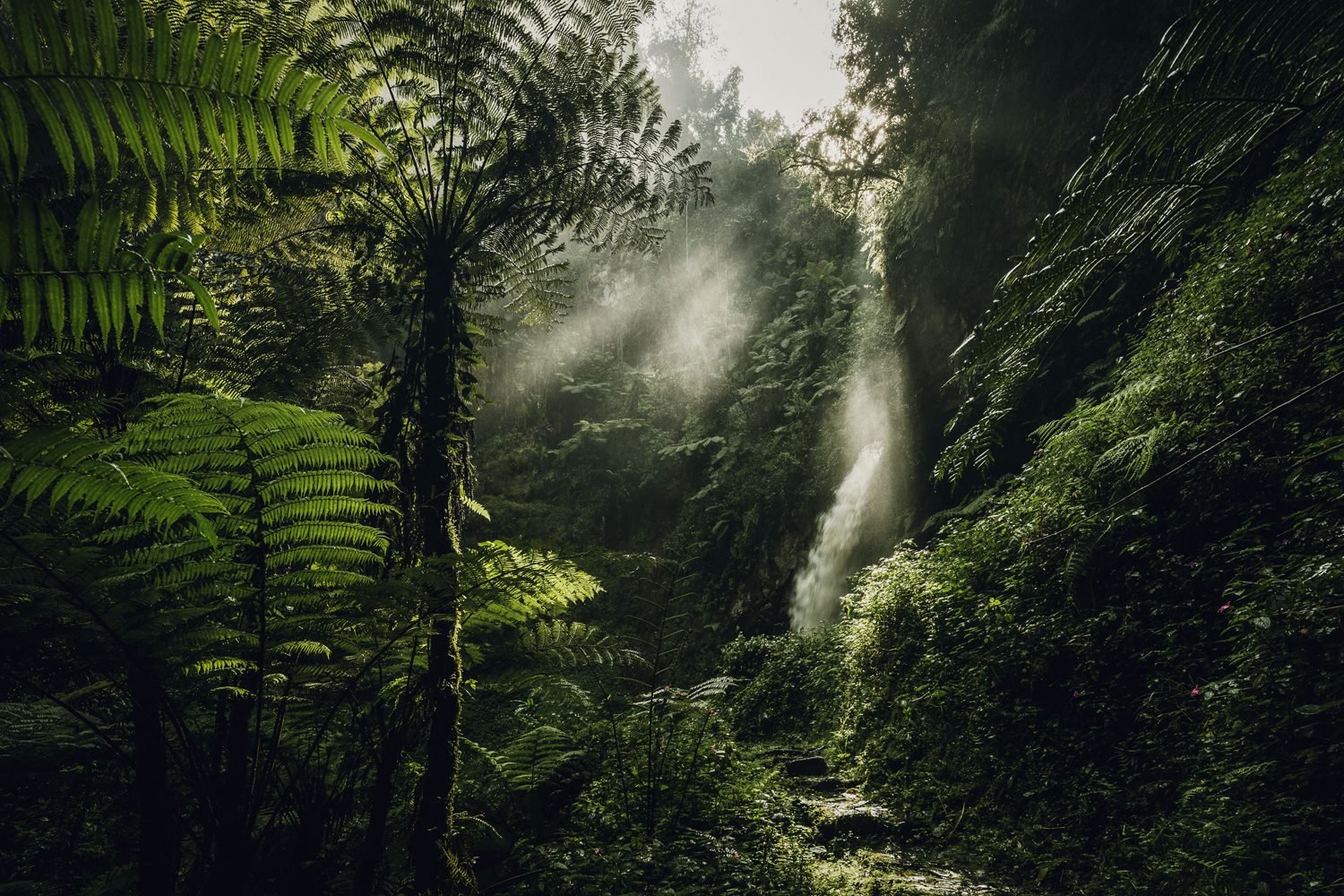
The Impenetrable Bwindi Forest

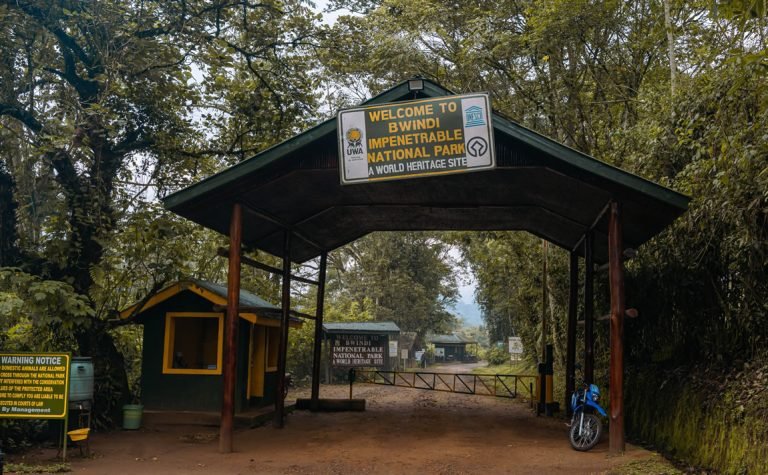
Situated in Southwestern Uganda, Bwindi Impenetrable National Park is the most famous safari destination in Uganda, a UNESCO World Heritage Site and home to the endangered mountain gorillas. The park’s name “Bwindi” means “a place full of darkness” referring its dense foliage. The park comprises of a rugged landscape with varying altitude from 1,160 to 2,607 meters above sea level, its location within the Albertine Rift, a region renowned for its exceptional biodiversity, contributes to its richness of life.

A Uganda safari to Bwindi Impenetrable National Park offers a unique opportunity to experience the majestic gorillas in Africa up close, the park stands out among the top places to visit in Uganda as an incredible destination for wildlife enthusiasts.

Covering 32,092 hectares, Bwindi is one of the oldest surviving habitats weathering even the last Ice Age when most of the other forests vanished. The part is dominated by lush rainforest stretching across a steep ridges and valleys, seamlessly merging Afromontane lowland forest into East Africa’s montane forest belt.

Bwindi Impenetrable National Park is a haven of nature’s abundance, boasting an incredible collection of wildlife species. Over 120 mammal species call this park home, including endangered mountain gorillas, elusive forest elephants, and playful chimpanzees. For birders, Bwindi Impenetrable National Park hosts over 350 bird species and the park’s flora is equally impressive, with over 1,000 flowering plant species, including 163 tree species and 104 fern species.

Bwindi Impenetrable National Park
Mountain Gorillas in Bwindi Forest

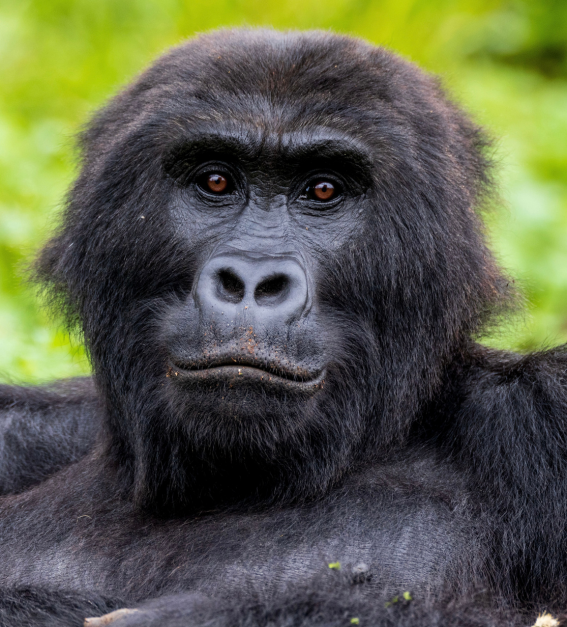
Mountain Gorillas

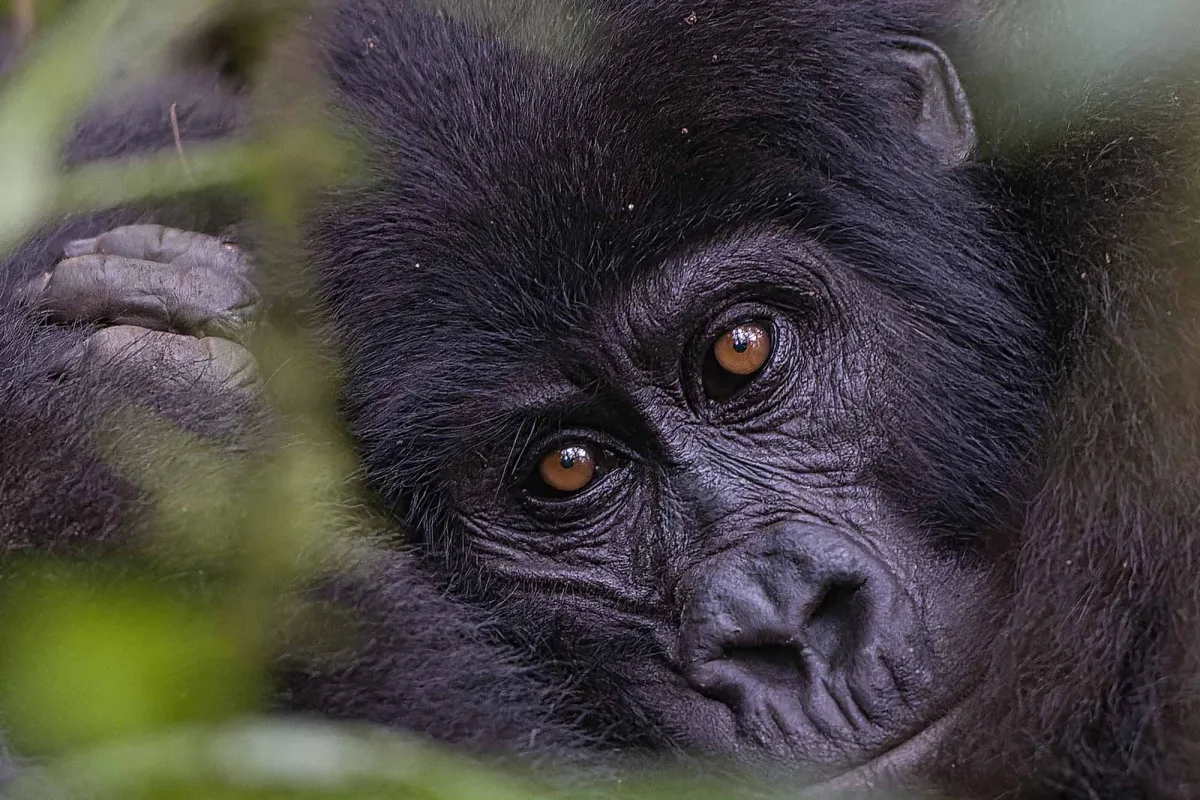
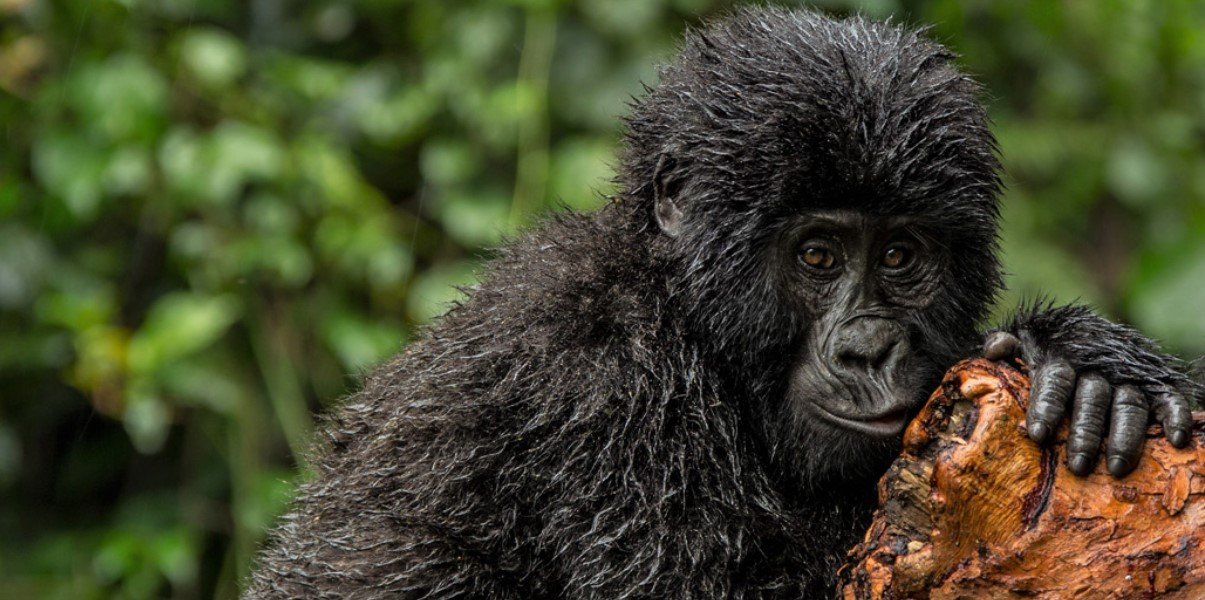
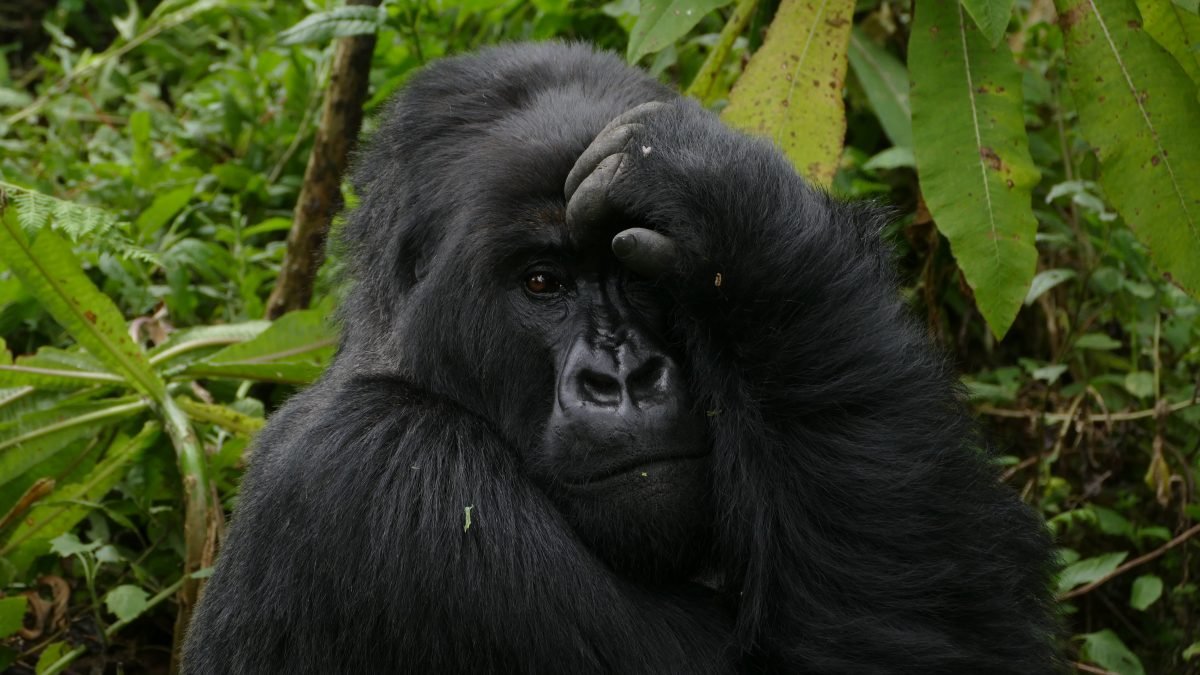
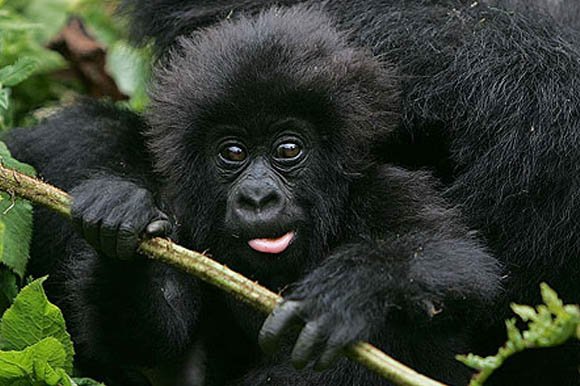
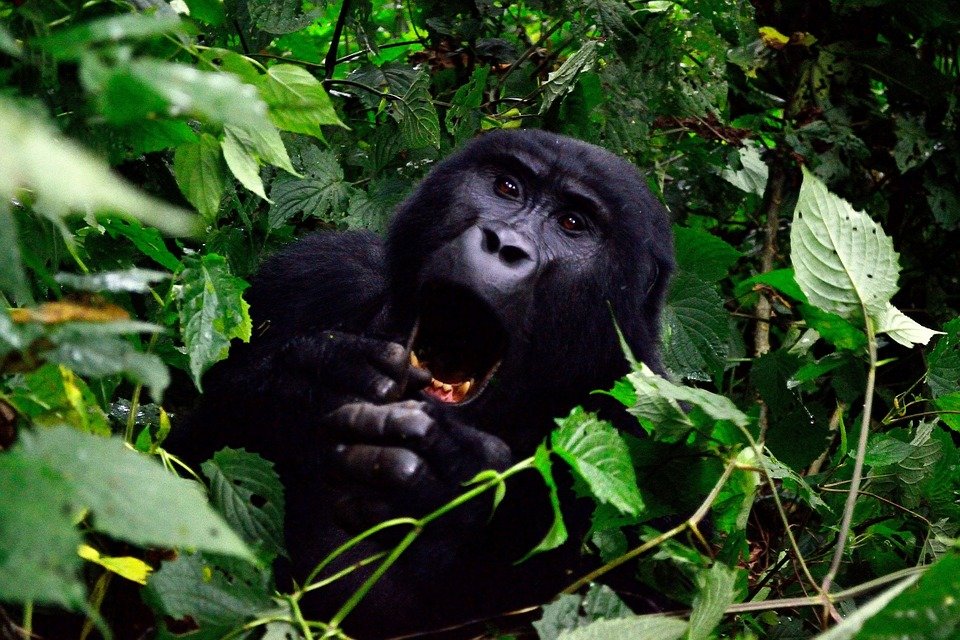
Bwindi Impenetrable National Park is home to approximately 459 mountain gorillas, representing nearly half of the world’s total population of these critically endangered great ape species.

With four gorilla trekking sectors – Ruhija, Rushaga, Nkuringo and Buhoma, Bwindi has 20 successfully habituated gorilla groups open for gorilla trekking. Each of these sectors offers a unique and exciting glimpse into the lives of these gentle apes in their natural habitat.

Undoubtedly, Bwindi Impenetrable National Park is the best place to see mountain gorillas in Africa.

Wildlife in Bwindi Impenetrable National Park

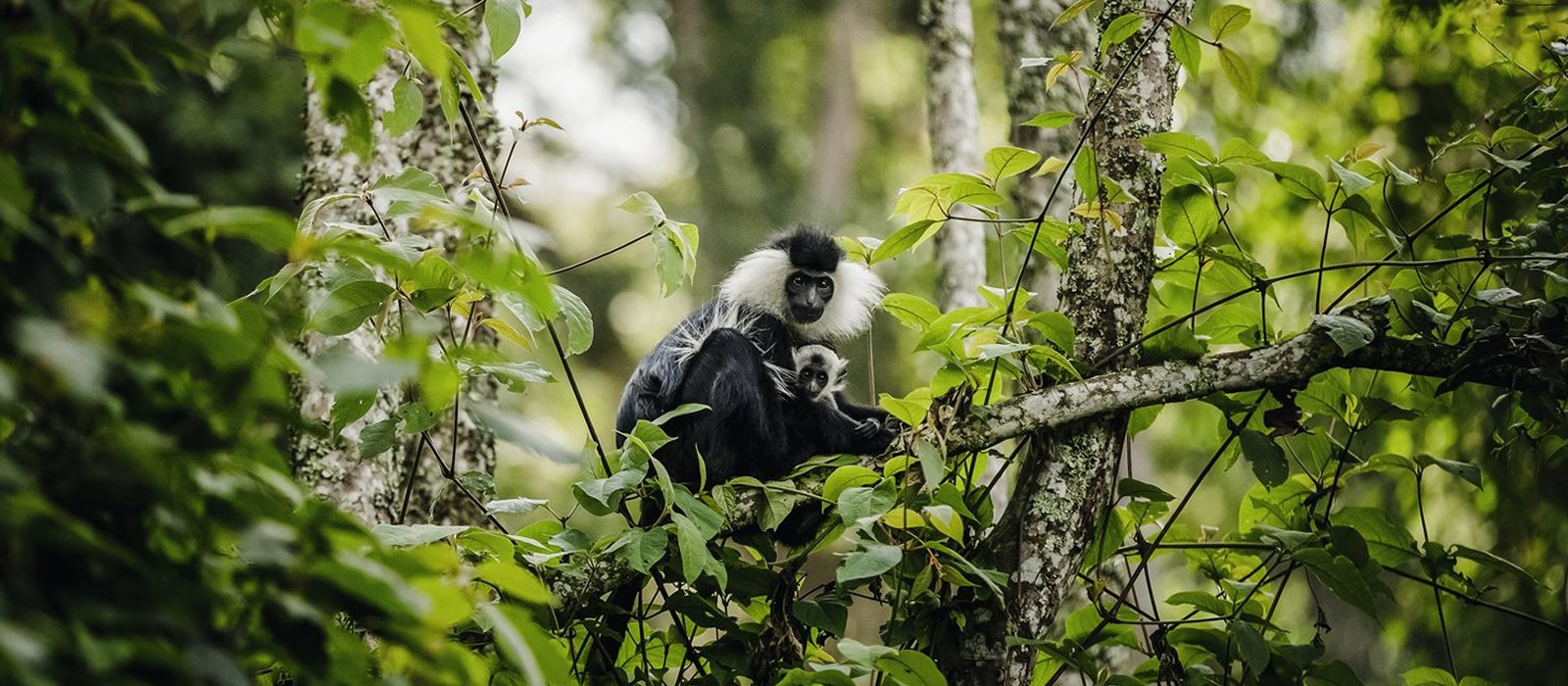
Beyond mountain gorillas, Bwindi hosts other fascinating mammals including forest elephants roaming the dense undergrowth, chimpanzees thriving in the canopy and other several primate species including black and white colobus monkeys and blue monkeys.

In total, Bwindi Impenetrable National Park hosts around 120 mammal species.

Birdlife in Bwindi Impenetrable National Park

Bwindi is a haven for bird watchers, with approximately 350 bird species recorded within the park’s boundaries. Most of these birds are endemic or rare, such as the African green broadbill and Grauer’s swamp warbler among others.

Birds in Bwindi include Little grebe, Pink backed pelican, Black headed heron, Cattle egret, Purple heron, Hammer Kop, Marabou stork, Sacred Ibis, Hadada Ibis, Hottentot Teal, Northern pin tail, black kite, African fish eagle, Palm nut vulture, Brown snake eagle, African goshawk among others.

Safari Activities to do in Bwindi Impenetrable National Park

Gorilla Trekking

Bwindi Impenetrable National Park is the best place to see the endangered mountain gorillas, the park hosts half of the world’s remaining mountain gorillas and 20 habituated gorilla groups open for gorilla trekking and visitors can visit one of these groups.

To take part in gorilla trekking in Uganda’s Bwindi Impenetrable National Park you must purchase a gorilla permit prior to your gorilla trek. Only 8 people aged 15 years and above are permitted to visit each gorilla family in Bwindi.

Bwindi Impenetrable National Park
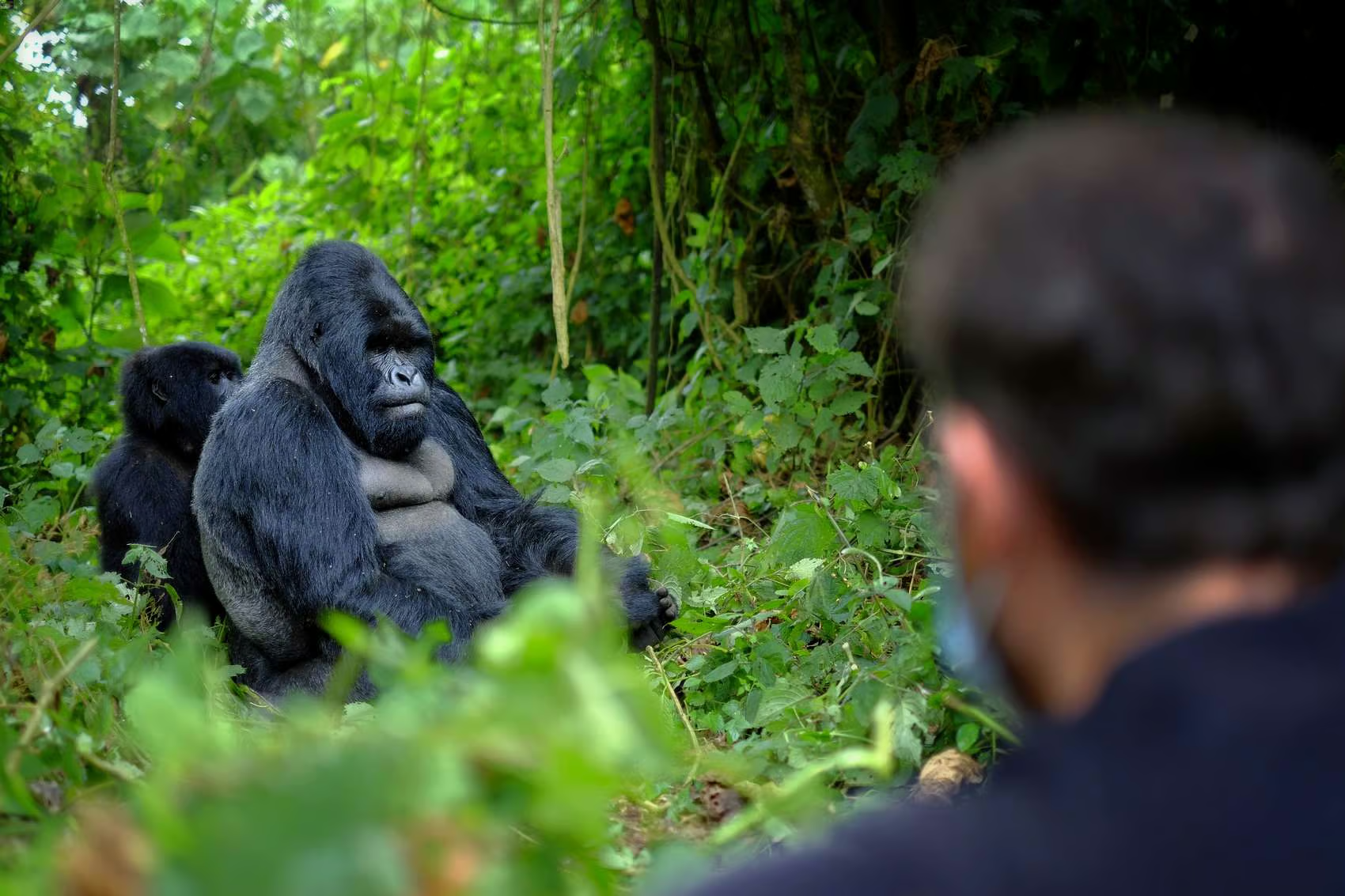
Guest in presence of mountain gorilla

Gorilla trekking experiences starts early in the morning with briefing at the park headquarters where a senior ranger guide from Uganda Wildlife Authority takes you through rules and regulations. Then head into the forest in search for the gorillas, the trek takes approximately 2 to 6 hours depending on the movement of the gorillas and where they spent their previous night. In the duration of one hour you will spend with the gorillas, you will watch them go on with their life the forest, as they feed, play and groom each other.

A gorilla permit in Uganda costs USD 800 per person. 

Gorilla Habituation Experience

For visitors interested in spending more with the mountain gorillas, join the gorilla habituation experience only offered in Bwindi Forest in the whole world. This experience allows visitors to spend more hours (four hours) observing these primates instead of the standard gorilla trekking.

Gorilla habituation experience offers visitors a chance to join researchers and scientists in the process of habituating mountain gorillas to human presence, along the experience scientists share information about the gorilla habituation process and current issues relation to gorilla conservation, get to identify the gorillas individually by their names and characteristics.

Gorilla habituation experience in Bwindi Impenetrable National Park costs $ 1,500 per person. Only four people take part in this experience and a semi-habituated gorilla family is trekked.

Bird watching

Bwindi Impenetrable National Park is a prime birding destinations in Uganda and was named as Africa’s number one birding spot by Africa Bird Club.

Bwindi hosts over 350 bird species including 23 Albertine Rift endemics and 14 of which are not recorded anywhere else in Uganda. Some of the birds you will witness in Bwindi Forest include the African green pigeon, blue-headed sunbird, African harrier hawk, Grauer’s broadbill, and the regal sunbird dancing amidst the foliage. The air resonates with the calls of the handsome francolin, the cinnamon-chested bee-eater, and the majestic crown hornbill among others.

Hiking

Bwindi Impenetrable National Park hosts a great biodiversity and visitors can experience it on hiking and nature walks. There are several trails running through the park allowing visitors to marvel at the forest and its creatures like birds, butterflies and primates.

One of the incredible trails used on hiking and nature walks in Bwindi Impenetrable National Park starts from Buhoma to Nkuringo, from Nkuringo to Lake Mutanda and then from Nkuringo to Kisoro. These trails go through amazing scenery and provide opportunities to interact with the locals.

Batwa Cultural Experience

A Bwindi safari is not complete without a visit to the Batwa people, these forest people are believed to be the oldest indigenous tribe in Uganda. For over 5000 years they stayed in the forest harmoniously with mountains until they were evicted when the forests were designated as protected areas to protect the endangered mountain gorillas.

Visiting the Batwa people offers a unique opportunity to be with a true indigenous African tribe and learn about their ancient culture and way of life. While with the Batwa, visitors are entertained by local dances and drama, witness their skillful hunting, visit the medicine man among others.

Best Time to Visit Bwindi

Bwindi Impenetrable National Park is a year-round destination, however the best time to visit is during the dry seasons from June to August and December to February. This period is often considered the best time as the park experiences relatively less rainfall, resulting in drier trails and easy accessibility to the gorilla trekking areas.

Bwindi Impenetrable National Park
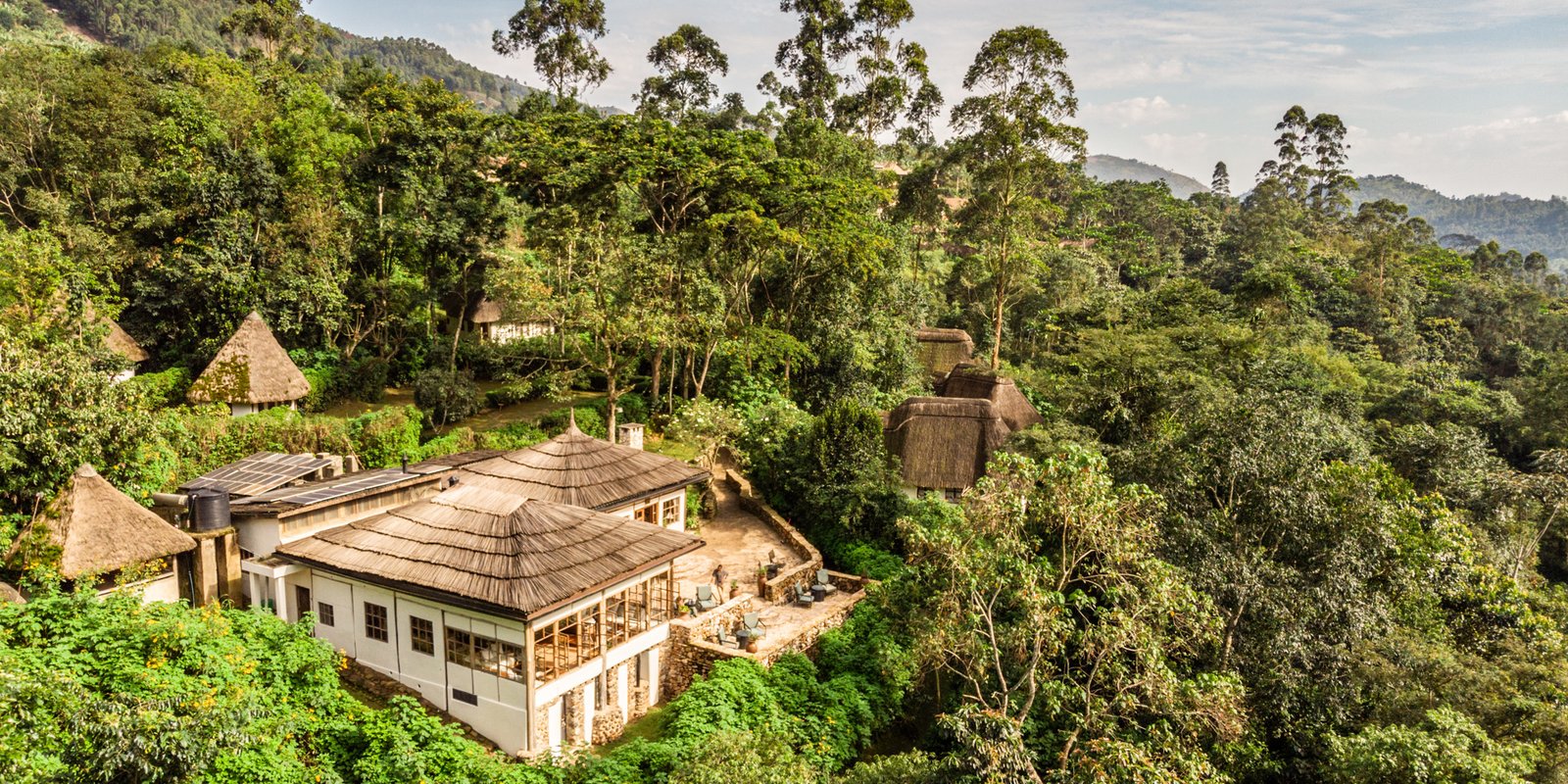
Gorilla Forest Camp
Where to stay in Bwindi Impenetrable National Park

Bwindi Impenetrable National Park offers a range of accommodation options ranging from budget, midrange to luxury. These include

  • Nkuringo Bwindi Gorilla Lodge
  • Sanctuary Gorilla Forest Camp
  • Volcanoes Bwindi Lodge
  • Mahogany Springs Lodge
  • Mutanda Lake Resort
  • Buhoma Lodge
  • Engagi Lodge
  • Chameleon Hill Lodge
  • Rushage Gorilla Havens Lodge
  • Ruhija Gorilla Friends Resort
  • Bakiga Lodge
  • Gorilla Valley Lodge
Getting to Bwindi Impenetrable National Park

Bwindi Impenetrable National Park is a very accessible park from Kampala, the capital city of Uganda and one can get there by air or road.

By Air – This is easiest way to get to Bwindi Impenetrable National Park, there are domestic and charter flights from Entebbe International Airport to either Kihihi or Kisoro Airstrip, the closest airstrips to the park. The flight usually lasts around 1 hours and 10 minutes and they are operated by Aerolink and Bar Aviation among others.

By Road – Traveling by road is the most common way to get to Bwindi Impenetrable National Park. The journey from Kampala, the capital city of Uganda takes 9 to 10 hours, covering approximately 550 kilometers. Also you can access Bwindi from Kigali, Rwanda which is about 3 to 4 hours.

From Kampala, there routes are used to get to Bwindi Impenetrable National Park including Kampala to Kabale to Buhoma, Kampala to Ntugamo to Rukunguri to Kihihi and Kampala to Kabale to Nkuringo.
Accommodation in Akagera National Park

Accommodation in Akagera National Park

Accommodation in Akagera National Park

Akagera National Park is the only Big Five destination in Rwanda located along the Tanzania border in the Northeast of Rwanda, this incredible game destination spans 1,122 square kilometers and is characterized by its diverse landscapes, including savannah, montane forests, and extensive wetlands.

Akagera National Park is the only savannah national park in Rwanda, home to a variety of wildlife including Africa’s most sought after wildlife – The Big Five – lions, leopards, cape buffaloes, elephants and rhinos. Other animals found in Akagera include giraffes, zebras, various antelopes as well as several primate species like olive baboons and vervet monkeys.

In this blog we explore accommodation in Akagera National Park giving you an insight on what to expect on Akagera Safari.

Akagera Game Lodge (Mantis Akagera Eco Lodge)

Akagera Game Lodge by Mantis is the only luxury lodge in Akagera National Park punched on a hill at the southern tip of the Akagera elevated above the savannah with exceptional views of Lake Ihema.

The lodge is approximately 5km from the southern entrance of Akagera National Park and 20 minutes’ drive to Lake Ihema where the boat safari takes place.

With 60 rooms and suites, Akagera Game Lodge accommodates large groups in its 27 standard rooms, 29 Balcony rooms, 1 balcony suite, 2 family suites and one presidential suite. Other facilities at Akagera Game Lodge by Mantis include large pool and pool deck overlooking Lake Ihema, a conference centre, restaurant, and bar.

Akagera Game Lodge is a perfect home base for conference or exploring the conservation treasures of Akagera Game Lodge.

Magashi Luxury Camp

Ruzizi Tented Lodge

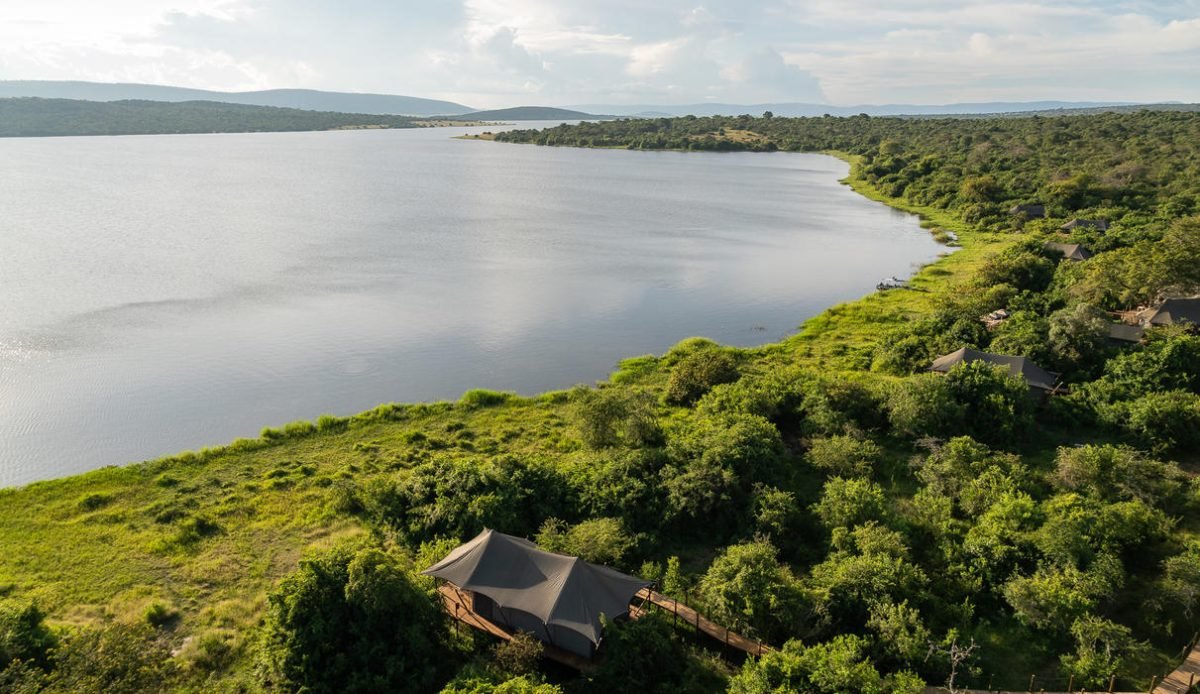
Set on the shores of Akagera National Park’s largest lake, Lake Ihema, Ruzizi Tented Lodge boasts spectacular views over the lake and a private comfortable retreat hosting only 20 guests per night.

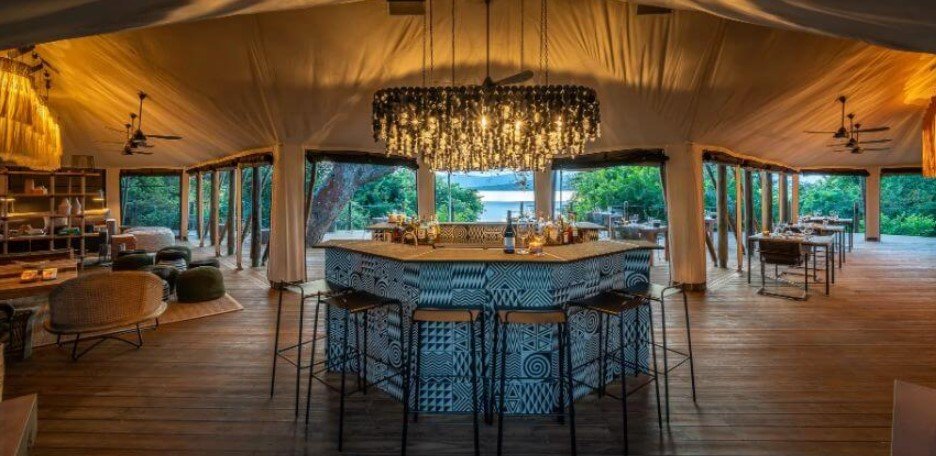
Ruzizi Tented Lodge is an eco-lodge with nine tents set back from the serene shores and hidden among swaying palms and fig trees. They flank a thatched reception and dining area, wooden walkways leading to a stunning deck raised over the lake. A central fire pit is the perfect spot for a morning coffee or an evening drink under the stars.

All tents at Akagera Game Lodge are en-suite and enjoy shaded verandas set with campaign chairs and a tree – trunk table.

This environmentally conscious lodge was designed to blend in with its surroundings to allow guests to connect with nature and is powered by solar energy. Some natural elements have been incorporated into the structure, and much of the décor and furniture were hand-crafted by local artisans and cooperatives. Designed, built and wholly operated by the park. Profits from Ruzizi Tented Lodge support the conservation initiatives of Akagera National Park

Magashi Luxury Camp

Located in the diverse north-eastern corner of Akagera National Park, overlooking the beautiful Lake Rwanyakazinga. Magashi Luxury Camp is a high –end accommodation establishment in Akagera National Park with 8 spacious tented suites perched in an intimate wilderness area surrounded by one of the most serene landscapes.

Magashi Luxury Camp
Tented Camp at Magashi Luxury Camp

Karenge Bush Camp

Named from the area where the camp was first establish, the name “Karenge” is a Kinyarwanda word meaning “small footprint”. The name expresses the camp’s simple charm and commitment to leaving a light ecological footprint and allowing guests to be immersed in nature.

Karenge Bush Camp’s main area comprises a dining tent with a lounge and outdoor firepit surrounded by chairs, all providing a view of the vast Kilala plains.

The camp features 6 canvas tents comfortably accommodating a maximum of 16 guests for an intimate wilderness experience. The seven charming canvas tents can be configured as twin or double tents and include a luxurious ensuite bathroom with flushing toilets, hot and cold water with stunning views of the Kilala Plains and Muhororo Hills. Also, each tent enjoys its own private outdoor shower.

Karenge Bush Camp is open year-round.

Karenge Bush Camp

Camping in Akagera National Park

Camping is available in Akagera National Park done at only designated camping sites, camping costs USD $25 per person and is available at Muyumbu, Mutumba, Shakani and Mihindi.

  • Muyumbu Campsite is situated on a ridge overlooking the lakes with Tanzania in the distance
  • Mutumba Campsite is further north and located in a game rich area of rolling hills
  • Shakani Campsite boasts a lakeshore camping experience along with grunting hippos and magnificent birdlife

These campsites offer basic facilities for overnight stay in the park. Tents are available for hire and firewood is provided on site but visitors should bring their own camping equipment and supplies.

Please Note: It is possible to stay outside Akagera National Park. Also note that park entry fees expire each time a visitor exits the park, regardless of having not exceeded the 24 hours.

Take note that fees for the first day are higher but keep reducing for the rest of the days stayed inside the park.

Chimpanzee Habituation Experience in Kibale Forest

Chimpanzee Habituation Experience in Kibale Forest

Chimpanzee Habituation Experience in Kibale Forest
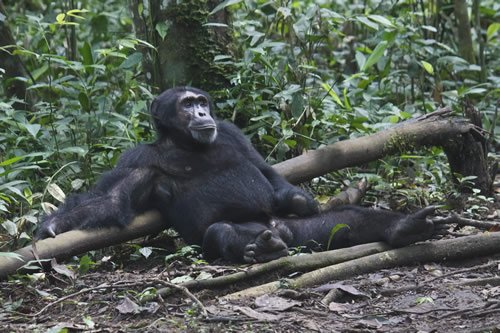
Chimpanzee

For visitors wish to experience more than one hour encounter with the chimpanzees of Uganda, you can join the chimpanzee habituation experience in Kibale Forest together with the habituation team and head out into Kibale Forest in search chimpanzees. On this experience, you search for chimpanzee groups that are less accustomed to human presence.

The chimpanzee habituation experience in Kibale Forest offers the chance to spend a full day in the presence of chimpanzees.

The chimpanzee habituation refers to a process through which chimpanzees are slowly introduced to humans so that they become more comfortable with their presence. In time, these groups of chimpanzees can be tracked on chimpanzee trekking experience. Also the habituation process gives the rangers a chance to learn more about the chimpanzee behavior.

The entire process takes at least three years to. As a visitor you can join the habituation team and learn more about the chimpanzees and the way they get accustomed to human presence.

You will spend an entire day dedicated to shadowing a troop of chimpanzees as they navigate their daily endeavors. From observing their spirited interactions to bearing witness to their ingenious approaches to challenges. Chimpanzee Habituation Experience in Kibale Forest gives you a rare opportunity to have a glimpse into the lives of our closest relatives. Under the guidance of expert rangers, researchers and their assistants, you will develop the ability, interpret their vocalizations, and directly perceive their remarkable intellect.

As you venture deeper into the forest, enveloped by the symphony of natural sights and sounds, you will also encounter other extraordinary species, including colobus monkeys, baboons, and abundance of vibrant birds. This incredible experiences offers a chance to forge a connection with Africa’s wilderness and cultivate a profound comprehension of the fragile ecosystems that nurture these exceptional creature.

Chimpanzee Habituation Experience in Kibale Forest

What is Chimpanzee Habituation?

Chimpanzee habituation refers to a gradual process where wild chimpanzees are trained to accept humans as neutral beings in their proximity. Usually the process takes 2 years. This prolonged period fosters an enhanced understanding not only for their behavior but also the ecology.

Also, it instils within us a profound sense of connection and appreciation for these remarkable creatures. Through patient observation and respectful interaction you gain insights into the complexities of chimpanzee society from their communication patterns to their foraging techniques.

Typical Day of Chimpanzee Habituation Experience

Chimpanzee Habituation Experience is available exclusively in Kibale National Park, the trek is more challenging than the standard trek because non-habituated troops live deeper in the forest away from the busier trails, and they move more quickly to new locations.

Chimpanzee Habituation Experience in Kibale starts from as early 6 am when the chimpanzees first get up and last until around 7 pm when they build new nests and settle down for the night. Throughout the day you see them carry out their day to day activities, feeding, hunting, patrolling the area, resting, and caring for the young ones.

The habituation experience is the best way to take incredible photographs of the chimpanzees, also it allows you to get close enough to identify individuals by their distinct markings and personalities and learn more about their group dynamics.

What is the Difference Between Chimpanzee Trekking and Chimpanzee Habituation?

Crowned the “Primate Capital of the World” Kibale Forest National Park offers both chimpanzee trekking and chimpanzee habituation experience, and these chimpanzee experience are very different from each other.

Chimpanzee trekking takes typically a few hours in length whilst chimpanzee habituation experience takes fully day. During the traditional chimpanzee trek, visitors have one hour of observing the chimpanzees after finding them and is offered in two sessions a day in Kibale Forest.

Chimpanzee Habituation Experience on the other hand is strictly one session since it last for a whole day. In terms of cost, chimpanzee habituation experience costs more than the standard chimpanzee trekking.

How Much is Chimpanzee Habituation Experience in Kibale Forest, Uganda

The cost of Chimpanzee Habituation Permits in Kibale F depends on your residency status as below

Category Price
Foreign non-residents USD 300 per person
Foreign Residents USD 250 per person
East African citizens UGX 200,000 per person


How to Book Chimpanzee Habituation Permits in Kibale Forest

Permits of chimpanzee habituation experience in Kibale Forest are issued by the Uganda Wildlife Authority and one can only book and acquire them through licensed tour operators. Therefore the best way is to book your chimpanzee habituation Experience permits in Kibale Forest with Wildlife Journeys.

We are able to secure your habituated permits and make the rest of the arrangements for your trip. You are advised to book in advance since permits are limited and yet the demand is high.

Book your chimpanzee habituation permit at least 2 months ahead of your safari that is if you cannot book 6 months in advance.

Best Time for Chimpanzee Habituation Experience in Kibale Forest

The best time to do a chimpanzee habituation experience in Kibale Forest is the dry season which typically occurs from June to September and December to February. During this period, rainfall is minimal and the trails are drier, making trekking easier and more comfortable.

Chimpanzee Habituation Experience in Kibale Forest
Other primates in Kibale Forest
What to Pack for Chimpanzee Habituation Experience in Kibale Forest

When preparing for a chimpanzee habituation experience in Kibale Forest, it is essential to pack appropriately. Here is what to pack

  • Sturdy hiking boots or walking shoes with good traction. The terrain is incredibly dense underfoot and excellent walking boots are a must
  • Rain gear for unexpected rain showers. A light weight waterproof jacket or poncho
  • Lightweight, long-sleeved rain showers – a lightweight waterproof jacket or ponch
  • Other essential items to carry include a camera with a zoom lens, binoculars, insect repellent, sunscreen, a wide-brimmed hat or a cap for protecting your face from the sun.


Guide to Bwindi Impenetrable National Park

Guide to Bwindi Impenetrable National Park

Guide to Bwindi Impenetrable National Park
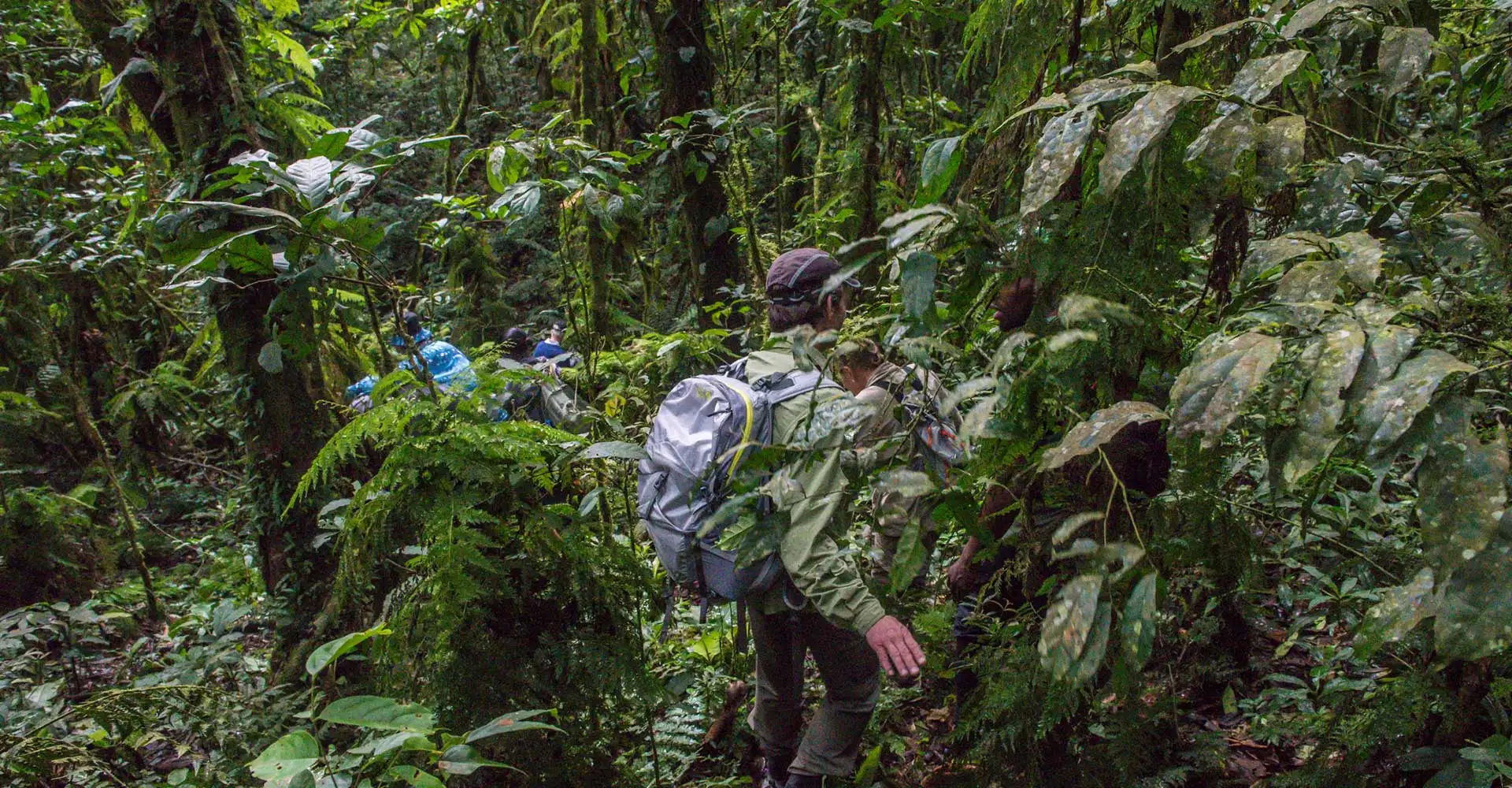
Bwindi Forest Canopy

Coming face to face with mountain gorillas in their natural habitat is one of the most powerful and humbling wildlife encounters in the world, and Bwindi Impenetrable National Park is the best place in the world to see these primates.

Home to half of the remaining population of mountain gorilla in the world, Bwindi Impenetrable National Park is a UNESCO World Heritage Site declared due to its remoteness, natural beauty and enthralling biodiversity.

Gorilla Trekking in Bwindi

Bwindi Impenetrable National Park is the best place in the world to see mountain gorillas with gorilla treks departing from one of the four trailheads; Buhoma, Nkuringo, Rushaga and Ruhija. As a visitor on a gorilla trekking safari in Bwindi Forest, join a group of a maximum of eight other visitors for a guided trek into the forest in search of one of the 21 habituated gorilla families.

Led by experience, specialized Uganda Wildlife Authority guides and armed rangers, you will be introduced to the ecology of Bwindi Forest and the changing landscape as you trek the gorillas. Your guides are in constant communication of the team of trackers who will have been following the gorillas since daybreak. The trackers direct your guide to where to take you to find the gorillas.

The trek is strenuous so you should expect to walk through a challenging terrain of steep ridges and valleys, following animal paths through tangled undergrowth for about three – five hours or more to find the gorillas.

Once contact has been made, you have up to one hour in which to observe the gorilla family from a distance of 7 meters. However, you should also be prepared for relaxed female gorillas or inquisitive young to close this gap considerably. The trackers will remain in charge of the contact, telling you what to do in order to remain safe and enjoy the experience to the full.

Each day, the number of gorilla permits issued is limited and so the peak season months of June to September and January and February sell out well in advance. Gorilla permits are non-refundable, but if you do not see a gorilla on your trek, the Uganda Wildlife Authority will refund 50% of the permit cost. However, this rarely happens.

Guide to Bwindi Impenetrable National Park
Couple on Gorilla Trekking in Bwindi Impenetrable National Park

Gorilla Habituation Experience

What is the difference between gorilla tracking in Uganda and Rwanda is a question often asked by visitors. The answer is that over the last few years, Uganda has provided an incredible opportunity to join a gorilla habituation team and spend up to four hours in the company of one gorilla family.

Gorilla habituation experience costs $ 1,500 per person, and is done in groups of only six people. It is an intense and unforgettable experience, perfect for individuals with a passion for gorillas or the urge to capture the perfect photographic record of the experience.

As humans, we might find it incredibly difficult to maintain concentration for more than an hour, so four hours is long to remain quiet and observant in a small area of the forest which makes the habituation experience not right for everyone. However, for some, it can be an ultimate travel highlight.

Gorilla Trekking Trailheads in Bwindi Impenetrable National Park 

Habituated gorilla families in Bwindi can be accessed from four trail heads; Buhoma, Ruhija, Rushaga and Nkuringo. Each trail head has its own characteristics, families and levels of difficulty.

The trailheads serve as launch points for treks to the fully habituated gorilla family groups. The standard treks depart in the morning and include up to one hour observing the gorillas from a distance of about seven meters.

The treks can be quite challenging and you need to be prepared to trek for up to 6 hours, although most sightings take place within 2-3 hours

Buhoma Sector

Gorilla trekking in Buhoma Sector began in 1993, the sector has the greatest number of accommodation options and is the home of the park’s headquarters. If you are coming into Bwindi from the north, the chances are you will be staying at Buhoma.

The topology around Buhoma provides some of the more accessible gorilla treks, especially as the Rushegura family is known to be found relatively close to the village (occasionally thrilling visitors to Gorilla Forest Camp).

Also, Buhoma is home to inspiring non-governmental organisations like Ride 4 a Woman, the Batwa Development Programme, plus local craftsmen, providing interesting and often inspiration experiences outside the forest.

Ruhija Sector

Situated 45 kilometers from Buhoma, Ruhija Sector is one of the most beautiful gorilla tracking areas in Bwindi Impenetrable National Park.

At 2,340 metres, Ruhija is also one of the most challenging. Opened for gorilla tracking in 2008, the local roads have now been improved to the extent that visitors often stay in Buhoma, enjoying the greater range of accommodation options, and then track in Ruhija where only three gorilla families are available.

Buhoma and Ruhija are the only trailheads in north of Bwindi Impenetrable National Park.

Nkuringo Sector

Nkuringo Sector was opened for gorilla trekking in 2004, found in the remote south of Bwindi. The trailhead is at an altitude of 2,100 metres on the Nteko Ridge, 600 meters above the Kashasha River Valley where the Nkuringo gorilla group like to roam.

This makes for a steep descent at the beginning of a trek and a very challenging return hike.

With no doubt Nkuringo is the most difficult tracking sector in Bwindi Impenetrable National Park. But it is beautiful with stunning panoramic views of the Virunga Volcanic Range.

Rushaga Sector

Rushaga Sector is the first of the trailheads in the South of the park. There are five gorilla families open for gorilla trekking in Rushaga, making 40 permits available daily. Additionally, six permits are available for the gorilla habituation trek.

The terrain in this sector is more open, providing stunning views of the mountains, rather than enveloping trekkers in forest, making it easier going than Ruhija.

While there are several accommodation options in Rushaga Sector, the sector is accessible to trekkers staying in Nkuringo, around Lake Mutanda, or even Kisoro.

When to visit Bwindi Forest

You can visit gorillas year-round, but always be prepared for rain. Due to Uganda’s equatorial location and an increasingly variable climate, the weather in Bwindi Impenetrable National Park can be unpredictable, and you should be prepared for rain when visiting Bwindi Forest.

However, the heaviest rainfall in Bwindi occurs from mid-March to the end of May and then again at the end of September to November are more often characterized by hours of soft drizzle.

Though gorillas can be tracked at any time of year, it can become harder when the trails are muddy and water is running down your neck, soaking you through. So the best time to track mountain gorillas in Bwindi is the drier months of June to mid-September and December, January and February.

Bwindi Forest Beyond the Gorillas

Mountain gorillas are the highlight of Bwindi Impenetrable National Park, but they are not the only attraction to see in this verdant park.

The physical variation, biodiversity, natural beauty and fascinating cultures found in and around Bwindi Impenetrable make it a great destination to visit. While the average stay is only two or three nights and the prime reason to visit is to track the endangered mountain gorillas. There is so much to do, and a longer stay is worthwhile.

Bwindi Impenetrable National Park offers incredible forest walks, the wildlife is staggering in its breadth and ranges far beyond just the gorillas, and spending time with the people of Bwindi, learning their history and relationship with the forest is captivating.

Guided Forest Walks through the Bwindi Forest

Guided treks are available in Bwindi Forest from each trailheads and one of the most popular is the transect trail from Buhoma to Nkuringo (or vice versa) where you walk from one side of the forest to the other.

The treks take between 3 or 5 hours, depending on the route you take, although slower walkers may end up taking much of a day. There is no rush, you move slowly through the forest, taking in the sights and sounds, observing the changes, stopping just to enjoy the sense of peace.

Also, it is sensible to keep an eye open for familiar tracks, steaming piles of dung and a black shape in the foliage. After all this is a gorilla territory.

Guide to Bwindi Impenetrable National Park
Forest Elephants in Bwindi Impenetrable National Park
Wildlife in Bwindi Impenetrable National Park

Bwindi Impenetrable National Park is more than mountain gorillas thriving in the thick bushes. The park’s altitudinal span, antiquity, remoteness and flora have contributed to creating one of the most biodiverse forests in Africa.

Bwindi is home to over 120 mammal species, more than to any other national park in Uganda with the exception of Queen Elizabeth National Park. There are more than 160 tree and 100 fern species.

Of the mammals in Bwindi Forest, the mountain gorilla is the most famous. However, there are over 10 primate species including chimpanzees (though unhabituated), olive baboons, black and white colobus monkeys, L’Hoest’s monkeys, red tailed monkey and blue monkeys. There are over 300 forest elephants in the south-east of the forests and six antelope species, bushbucks and five duiker species.

Additionally, Bwindi Forest is home to about 350 species of birds including 23 species that are endemic to the Albertine Rift and at least 14 species are recorded nowhere else in Uganda. The forest is also to home to at least 200 species, plus an incredible range of reptiles and amphibians.


Best Time to Visit the Gorillas in Uganda

Best Time to Visit the Gorillas in Uganda

Best Time to Visit the Gorillas in Uganda
Gorilla Trekking in Uganda

Generally, the best time to visit gorillas in Uganda is from June to August, and again from December to February. These are the driest months in Uganda which makes trekking much easier, although due to the equatorial climate, rain showers are possible at any time of year.

Gorilla trekking in Uganda can be done in both Bwindi Impenetrable National Park, and Mgahinga Gorilla National Park. However, Bwindi Impenetrable National Park is by far more popular option as it hosts many habituated gorilla families as well many gorilla trekking sectors.

Coming face to face with mountain gorillas in their natural habitat is one of the most powerful and humbling wildlife encounters in the world, and Uganda is the best place to see these endangered gentle giants. On your Uganda safari in either Bwindi or Mgahinga, you can always see trekkers who are returning from having been with the gorillas, even the strong and silent types are grinning and chattering like little birds.

Bwindi Impenetrable National Park

Ranked as the best place to see mountain gorillas in the world, Bwindi Impenetrable National Park is the most popular gorilla destination, home to the largest population of mountain gorillas. The park’s remoteness, natural beauty and enthralling biodiversity attracts millions of visitors. But the magnificent great apes – mountain gorillas have made Bwindi Impenetrable National Park Uganda’s single most important tourist destination.

Because of its remarkable biodiversity, Bwindi Impenetrable National Park was declared a UNESCO World Heritage Site in 1994. The park lies in the South western part of Uganda along the border with Democratic Republic of Congo next to the Greater Virunga National Park.

Gorilla trekking in Bwindi Impenetrable National Park – This onc-in-a-lifetime wildlife encounter departs from one of the four trailheads of Bwindi – Nkuringo, Buhoma, Rusha and Ruhija. Every day you can join one of the 21 habituated gorilla families in Bwindi.

For visitors interested in spend more time mountain gorillas in Uganda, join a gorilla habituation experience only offered in Bwindi and spend up to four hours in the company of a semi-habituated gorilla family.

Mgahinga Gorilla National Park

Tucked away in the south-western corner of Uganda, Mgahinga Gorilla National Park is part of the Greater Virunga Conservation Area, this small park spans just 34 square kilometres hosting an astonishing amount of biodiversity.

Mgahinga Gorilla National Park has a stunning scenery with three extinct volcanoes, Mount Sabinyo, Mount Muhavura and Mount Gahinga whose forested slopes are home to mountain gorillas.

Mgahinga Gorilla National Park is a renowned primate park hosting two primate species – mountain gorillas and golden monkeys. The park is home approximately 80 mountain gorillas, with only one habituated gorilla family – Nyakagyezi family. This family is the only gorilla family open for gorilla trekking in Mgahinga Gorilla National Park.

Best Time to Visit the Gorillas in Uganda
Gorilla Tracking in Mgahinga Gorilla National Park

When is the best time to visit the gorillas in Uganda?

The best time to visit the gorillas in Uganda is during the dry season from June to August, and from December to February.

Temperatures in Uganda are relatively consistent much year-round, staying between 24°C and 30°C. The most important factor to consider is the rains, there are two distinct rainy seasons from March to May and September to November.

The Dry Season

The peak season is from June to August and December to February. This is when conditions are most likely to be dry. The days are clear and sunny, making trekking more enjoyable. The drier vegetation is easier to hike through, and steep slopes are a lot less slippery.

These months coincides with peak tourism season in Uganda, gorilla permits for these months sell out well in advance, so planning at least 12 months in advance is recommended if you are looking to travel in peak season. Also, accommodations in the parks fill out quickly due to high demand, so book your accommodation well in advance.

While these months tend to be drier, downpours are possible at any time of year due to Uganda’s tropical climate.

The Rainy Season

The low season in Uganda spans from March to May and September to November. The wetter conditions can make trekking more challenging and uncomfortable, but it is becoming increasingly difficult to predict weather patterns, so you might get lucky.

Showers typically heavy downpours intermittently throughout the day, so you can still enjoy frequent sunny spells when the sky clears.

In this season, accommodation prices are typically lower and permits are easier to get a hold of, although you still need to purchase them quite far in advance.

Why Uganda should be your top choice for gorilla trekking.
  • Uganda has more than half of the Gorilla Population – Uganda is home to over half of the world’s remaining mountain gorillas, found in two different national parks that Bwindi Impenetrable National Park and Mgahinga Gorilla National Park, this means you have a higher chance of encountering these incredible creatures in Uganda than anywhere else in the world.
  • Uganda has five gorilla trekking centres – Bwindi Impenetrable National Park has four different sectors, Bwindi, Ruhija, Rushaga, Nkuringo and Rushaga and Mgahinga Gorilla National Park has one. So in Uganda you are assured of getting a gorilla permit in any sector that suits your lodging preferences and fitness level. Each sector offers unique landscapes, gorilla families and trekking challenges. In Uganda, no two gorilla treks in Uganda are the same.
  • Affordable gorilla permits – Comparing gorilla permits to neighbouring Rwanda, gorilla trekking permits in Uganda are more budget – friendly, $800 compared to Rwanda’s $1,500, making this extraordinary eco-adventure accessible to a wider range of travellers.
  • Accommodation for every budget – Uganda offers a wide selection of accommodation options near both Bwindi and Mgahinga. From cozy campsites and budget-friendly lodges to luxurious eco-lodges and private tented camps. In Bwindi you will find the perfect place to rest and recharge after your trek.

Gorilla trekking in undoubtedly is a once-in-a lifetime experience, and having this incredible experience in Uganda includes you among the conservation mix to save these precious primates. By purchasing a gorilla permit you support the conservation of mountain gorillas and giving them a chance to flourish in this tropical forest.


How to get gorilla trekking permits

How to get gorilla trekking permits

How to get gorilla trekking permits
Gorilla

To go gorilla trekking in Uganda, Rwanda and the DRC, you required to have a gorilla permit. It is not possible to track gorillas without a permit, and the system is highly regulated and strictly enforced.

The cost of a gorilla permit for a foreign non- residents is currently USD 1,500 in Rwanda, US$ 800 in Uganda and US$ 400 in the Democratic Republic of Congo. This fee includes park entrance, and all guiding and tracking services which are provided by the park, not by individual operators. However, it doesn’t include an optional porter to carry your day pack.

The most important thing you need to know about gorilla permits both in Uganda and Rwanda is that they are scarce. The availability of permits is limited by the number of habituated gorilla families and the number of visitors allowed per family.

  • Rwanda’s Volcanoes National Park has 12 habituated gorilla families, with a standard policy of 8 people per gorilla family (not including guides and porters), which means a maximum availability of 96 permits per day.
  • In Uganda, with 23 habituated gorilla families in Mgahinga Gorilla National Park and Bwindi Impenetrable National Park, and a maximum of eight visitors per group, there are a total of just 184 permits available per day.

Gorilla permits can set out in advance, so if you are traveling during peak season you must book about 3-6 months in advance.

How to book gorilla trekking permits

Besides the difference in gorilla permits prices, there are a few other small differences between the permit systems in Rwanda and Uganda. Here is what you need to know

Gorilla trekking permits in Rwanda

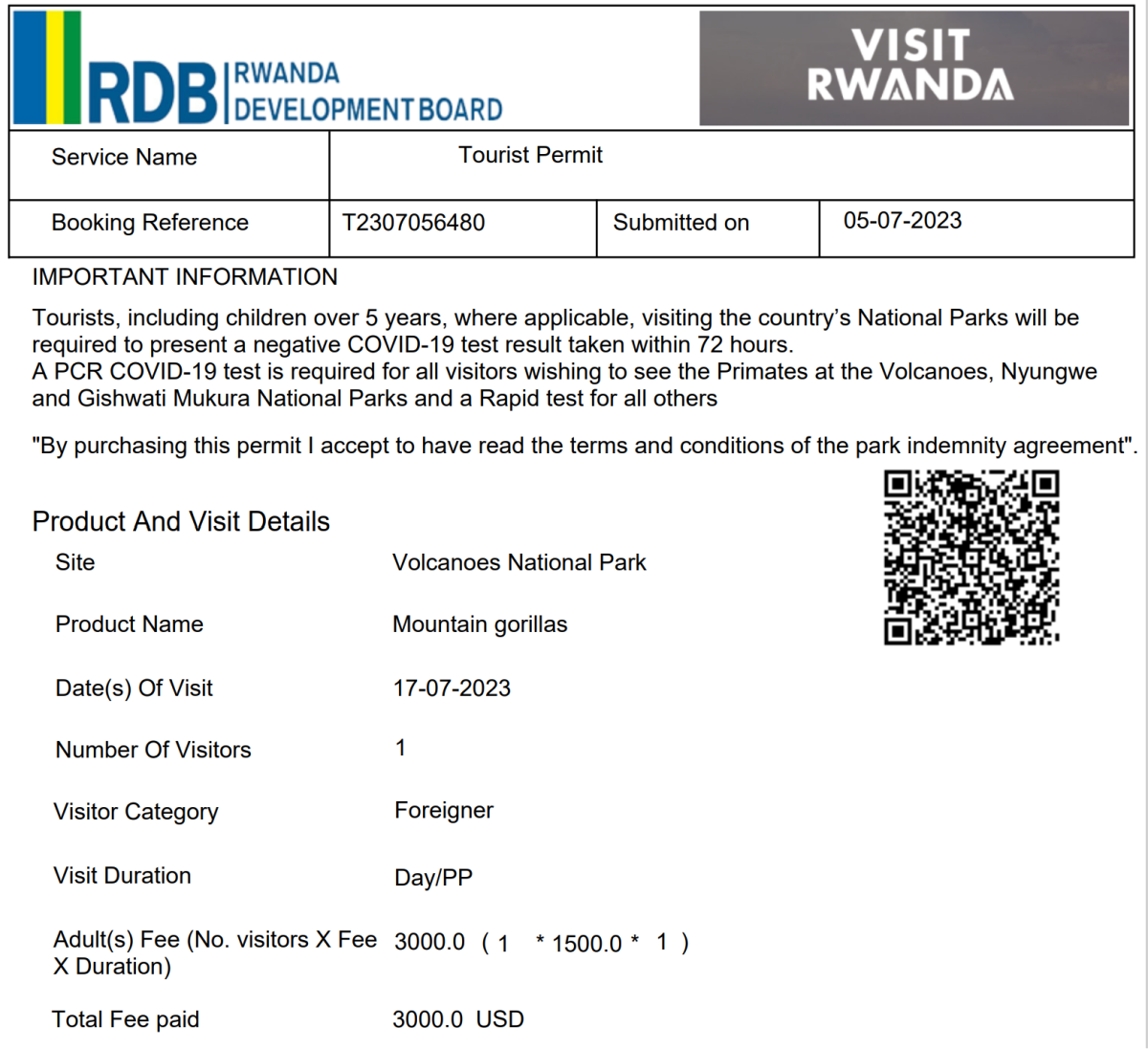
Gorilla permits in Rwanda cost USD $1,500 per person which is nearly twice the cost as in neighboring Uganda. The tourism authorities in Rwanda have made a deliberate effort to orient the country towards more exclusive, higher-spending, and lower volume tourism and the permit price reflects the strategy.

In Rwanda, unlike in Uganda, it is possible to organize a DIY gorilla trek by purchasing a permit directly from the Rwandan Development Board and then booking your own accommodation and transportation. Most lodges and hotels are happy to take direct bookings, and they may also be able to organize your transfers to/from the airport and to the park entrance on the morning of your trek.

How to get gorilla trekking permits
Rwanda Gorilla Permit

Depending on how intrepid you are feeling you can rent a vehicle in Kigali to get yourself around, or even travel on public transport.

If you decide to travel independently, arrive at Volcanoes National Park a day early because of you are late, that is it, you will miss your permit and you won’t get your money back.

Because permits are limited and non-transferable, if you have got your heart set on a particular lodge, it’s prudent to check availability first, then book your permit, and then confirm your accommodation booking.

Alternatively you can book the entire gorilla trek through a tour operator. They will arrange your gorilla trekking permit, book your accommodation and organize all the necessary logistics.

Travel Tip – Though it is easy to travel around Rwanda, things can go wrong that is why you need the invaluable support of Tour Operators.

Gorilla Trekking Permits in Uganda

At USD $800 per person per trek, gorilla permits in Uganda are far from cheap but still more accessible than in neighboring Rwanda. There is an option for an extended gorilla habituation experience permit which allows approximately four hours with the gorillas, rangers and researchers and costs $ 1,500 per person per trek.

Even though Uganda has nearly twice as many permits available, they still sell out quickly. A disadvantage of Rwanda near doubling of the price of their gorilla tracking permits has skyrocketed the demand of permits in Uganda.

To go gorilla trekking in Uganda, Rwanda and the DRC, you required to have a gorilla permit.
Uganda gorilla permit

Unlike in Rwanda, in Uganda international visitors must buy gorilla tracking permits via a tour operator. Only Ugandan residents can buy permits directly from Uganda Wildlife Authority office in Kampala.

Need to Know about Gorilla Trekking Permits

If you plan to travel during peak season or if you are in a large group, you should book your gorilla permits six months or even a year in advance. Peak seasons in Uganda and Rwanda are June to October and Christmas and the New Year. The earlier you book the more choice you have on where you stay and where you track.

Last minute bookings may be possible during low season or with smaller groups but there are no last-minute discounts, so you shouldn’t risk it.

Each permit is printed with a unique serial number and the travelers’ personal details. You will need to provide your passport when you book your permits and you will need to show this at the start of your tracking activity too.

If you need to postpone your gorilla trip and have booked through a tour operator they may be able to liaise with the authorities to transfer your permit to another traveler and book you a fresh permit. If you need to cancel, the authorities may refund some of your fee depending on how close you are to the trek date. But I wouldn’t rarely on either- make sure you have got travel insurance from the moment you purchase your permit.

In case you are not able to see the gorilla family during your trekking excursion, which hardly happen. You are given a complimentary permit to track again the next day. Since the introduction of monitoring of the gorillas assisted by GPS, seeing gorillas has become more thorough so you can safely assume that you will see the gorillas, although it is not officially guaranteed.

In conclusion, although the gorilla permits are costly, don’t forget they are a main source of funding for gorilla conservation and projects that benefit local communities. Both Rwanda and Uganda have made huge strides in restoring and protecting the gorilla habitats. Overall, gorilla trekking is a tourism success story that deserves to be heavily celebrated.

Gorilla Trekking Costs

How much does gorilla trekking cost in Uganda and Rwanda?

Gorilla Trekking Costs
Silverback Gorilla


Gorilla Trekking Prices: At a glance

A gorilla trekking trip can cost from USD $ 1,500 per person on a budget end to $ 5,000 and above on the luxury end.

The main cost of a gorilla trekking trip are the gorilla tracking permits, accommodation, transport, meals and tips, plus optional expenses like hiring a porter. Gorilla trekking costs are governed by three big factors that is where you go (Rwanda Vs Uganda), going in a group Vs private tour, and the class of accommodation you are looking for.

Most international visitors on a gorilla trek in Uganda and Rwanda book everything in an organized tour packages which is by far the easiest route.

Here is a breakdown on gorilla trekking costs in Uganda and Rwanda.

Most visitors use tour operators who will arrange a driver guide for the whole duration of the tour. Typically, the drive will welcome you at the airport, take you to your lodge and also accompany you to the starting point of the gorilla trekking experience. Majority of the visitors will extend their trip several days afterwards, with the same safari vehicle as well as driver.

Since the gorilla trek starts early in the morning, it is recommended you get an accommodation near your chosen gorilla park entrance. Also, it is recommended you arrive at your lodge the day before you trek and then spend a second night at the same lodge.

Majority of lodges in Uganda and Rwanda are independently owned. Some are owned by locals and others by international operators. Generally locally run establishments are cheaper. Some are commercially run, and others support local projects. High-end lodges often invest in corporate social responsibility projects around the lodges. Internationally owned establishments often have more years in the business and thus give a better overall experience, at a slightly high price.

Although your gorilla tracking permit does include a fee for the ranger guides, tips are greatly appreciated. Also, you will find it very useful to hire a porter so should allow a fee of $10 – $20 per person plus tip.

Gorilla Trekking Costs in Rwanda

In Rwanda, a gorilla trekking permit costs US$1,500 for international tourists. At the time of writing, there are 96 permits available per day and you can buy your permit up to two years in advance through the Rwanda Development Board or through a registered tour company.

Rwanda sales itself as the high-end gorilla trekking which is reflected in the higher price of the permit and the bigger range of high-end accommodation. Rwanda has some sensational luxury properties and a fair number of overpriced mid-range ones, so book with caution.

Gorilla Trekking Costs
Luxury Accommodation in Volcanoes National Park, Rwanda
Typical accommodation costs in Rwanda

Budget: $30 – $50 per person per night based on two sharing

Mid-range: $80 – $250 per person per night based on two sharing

Luxury: $300-$3,000 per person per night based on two sharing

Rwanda gorilla trekking destination is only two hours’ drive from Kigali City, making the gorillas far more accessible than in Uganda. This means you can save on transportation as well as accommodation by doing gorilla trekking in Rwanda since it is a shorter trip.

It is possible to do a one-day gorilla trek in Rwanda from around USD $ 1,800 per person. A two-day gorilla tour will start from $ 2,000. A three day luxury gorilla safari in Rwanda may cost $ 2,000 to $ 5,000 per person. These gorilla trekking costs include one gorilla tracking permit, private transport, English-speaking guide, accommodation and meals. Charter plane and helicopter transfers are additional options.

Travel Tip – Slow down your gorilla trip and don’t rush in and out just to track the gorillas, you will be doing yourself and your hosts a great disservice.

Gorilla trekking costs in Uganda

A gorilla permit in Uganda costs $800 per person. Also, there is an option for an extended “habituation experience” permit which allows approximately four hours with the gorillas, ranger and researchers and cost $ 1,500.

Tip – as an incentive for visitors to explore less-visited corners of Uganda, gorilla permit holders are entitled to a day’s free entrance to either Mount Elgon National Park in eastern Uganda or Toro-Semiliki Wildlife Reserve in Western Uganda. This fee doesn’t cover activity fees, only park entrance.

Uganda has a total of 23 habituated gorilla families found in Bwindi Impenetrable National Park and Mgahinga Gorilla National Park, so with a maximum of eight visitors per group, there are a total of 184 permits available per day.

Gorilla permit are issued by the Uganda Wildlife Authority and can be purchased up two years in advance through a registered tour company.

Uganda has more budget and mid-range accommodation options than Rwanda plus a number of luxury lodges.

Gorilla Trekking Costs
Aerial view of Volcanoes Bwindi Lodge
Typical accommodation costs in Uganda.

Budget: $50-$70 per person per night based on two sharing

Mid-range: $80-$120 per person per night based on two sharing

Luxury: $300-$3,000 per person per night based on two sharing

The most affordable three-day gorilla trek in Uganda will cost around $13,000 per person and will include one gorilla tracking permit, private transport an English – speaking guide, accommodation and meals. A three-day luxury gorilla safari may cost upwards of $ 3,000 per person. Higher – priced tours may include flights to one of the small airstrips a half-hour drive from the gorilla tracking region.

Budget Gorilla Trekking

Although a gorilla permit in Uganda and Rwanda is non-negotiable, it is possible to cut other costs by traveling independently. This is regarded as perfectly safe and is a great way to experience local culture unfiltered by the tourist industry.

Using public transport, the most accessible gorilla tracking goals are Buhoma and Rushaga in Bwindi, both of which are accessible by bush and have a fair choice of affordable accommodation. If you are self-driving, any park in Uganda or Rwanda is a realistic goal.

Note: In Uganda you can only secure a permit via an authorized tour operator, but you are free to make all the other travel arrangements yourself. Just be very careful that the family you have the permit for is close to where you book your lodge.


When to Go Gorilla Trekking

When to Go Gorilla Trekking

When to Go Gorilla Trekking
Gorilla Trekking in Rwanda

Gorilla trekking is a life changing wildlife experience offering you an opportunity to have a face to face encounter with some of the remaining mountain gorillas up-close.

Mountain gorillas are only found in three countries that is Rwanda, Uganda and the Democratic Republic of Congo and live in only four national parks, including Bwindi Impenetrable National Park and Mgahinga Gorilla National Park in Uganda, Volcanoes National Park in Rwanda and Virunga National Park.

When to go gorilla trekking is one of the frequently asked questions about gorilla trekking experience, in this blog we go through different periods of the year detailing their climatic conditions and seasons to help you choose the best time to go gorilla trekking.

Overview

The best times to see gorillas in Rwanda and Uganda are during the dry (but hot) seasons, experienced between June – September, and December – February.

High/Peak Season: June – August

Low Season: April – May and September to November

Best Weather: Between June – September, and between December – February

Worst Weather: Between March-May and September – November

When to Go Gorilla Trekking in Uganda and Rwanda (Climate, Seasons and best months to visit)

Uganda and Rwanda have more or less the same climate, gorilla trekking conditions as well as tourism seasons. Gorilla trekking is a year-round activity, however there are some important considerations when timing your gorilla trekking trip in Africa.

The overall best weather for gorilla trekking is during the two dry seasons, which run from June – September, and December – February. Still you can expect some rain during these periods, but conditions are generally more comfortable and the trails less muddy.

Of the two seasons, June – September are the driest, with light showers during December – February.

The rainy seasons, from March – May and September to November, can be very soggy. March – May brings the heaviest rains, and the trek can be tough, especially in Uganda’s Bwindi Impenetrable Forest, which is generally steeper, muddier and more dense than in Rwanda’s Volcanoes National Park.

However, gorilla tourism remains open year-round, and during the rainy/off season, it is much quieter and you might find some good deals on accommodations.

Travel Tip – The best time to go gorilla trekking is during the shoulder period, either side of the rain season, when prices are lower, crowds are lighter or the rains might be easing off.

When to go gorilla trekking in Rwanda

Gorilla trekking in Rwanda can be done year round, however rainfall is heavier in September – November and March – May, in these periods the trails become muddy and difficult to hike.

Always remember that you are visiting a rainforest, it will definitely be wet all year round. Still there is a marked difference between the dry and rainy seasons. The weather is generally drier and hotter between June and September, and again from December to February. These are the most preferred months for gorilla trekking in Rwanda.

From March and May, and again from September to November you can expect more frequent and heavier rain showers. Muddy roads and trails through the forest can be tricky to handle.

At higher altitudes, temperatures are fixed year round between 21°C (70 F) and 30°C (86 F), dropping to 10°C (50 F). At night it gets to be chilly, however the exertion of hiking and climbing will keep you warm during the day.

The advantages of gorilla trekking during the dry season are less muddy paths, easier hiking and clearer views of the wildlife. The disadvantage is that this is peak tracking season and therefore permit availability is lower. Still, you will need to book well in advance.

Peak season in Rwanda and When to book Gorilla Permits

Peak tourism seasons in Rwanda are June to August and around Christmas and New Year. If you plan to go gorilla trekking in Rwanda during peak season or if you are traveling in a large group, you should book six months or more in advance. The earlier you book the more choice you have on where you trek gorillas and where you stay.

Last minute bookings may be possible during low season or with smaller groups.

A side from more choice in gorilla permits and accommodation availability, there are some other advantages to visiting during rainy season.

If you have little time for a safari, it is possible to see mountain gorillas in Rwanda in just one day that is if you fly in early in morning. However, for an immersive Rwanda Safari Experience, I strongly recommend to spend at least two or three days in the region. The altitude and exertion of the climb can be unpleasant when rushed, and it is worth spending some time acclimatizing. Also, there is so much more to Rwanda than just one hour with the gorillas.

 Gorilla trekking in Uganda
Gorilla trekking in Uganda

When to go gorilla trekking in Uganda

The best time to go gorilla trekking in Uganda is during the dry months that is June to October and December to February.

Peak Season in Uganda and When to book Gorilla Permits

The dry season months in Uganda coincide with peak tourism season in Uganda and Christmas and the New Year. So, if you are planning to visit during these months. The earlier you book the more choice you have on where you stay and where you track. Last-minute bookings may be possible during low season or with smaller groups, but cannot be guaranteed.

In Uganda, gorillas can be tracked throughout the year, however rainfall is heavier in November and April/May. During those times, it can be very muddy underfoot. The upside is the permits are a little easier to obtain plus you may find fewer tourists on your trail.

Gorilla Permit availability

During the peak season months of June – August, gorilla permits and accommodation sell out a long way in advance. If you are looking on visiting during the peak months you may need to book at least a year in advance.

In conclusion, the best time to visit Uganda to see gorillas is between July and October and December to February, during the optimal dry seasons.

Nyungwe Forest National Park

Nyungwe Forest National Park

Nyungwe Forest National Park
Nyungwe Forest Canopy

Located in southwestern region of Rwanda, Nyungwe Forest National Park is one of 4 national parks of Rwanda protecting one of the oldest protected areas in the country. The park is particularly famous for its populations of primates, hosting 13 species including chimpanzees and black and white colobus monkeys which is why it is the best place to see chimpanzees in the wild.

Nyungwe Forest National Park is particularly famous for its population of primates, hosting 13 species including over 500 chimpanzee and over 350 black and white colobus monkeys endemic to the Albertine Rift.

History of Nyungwe Forest National Park

Nyungwe Forest National Park’s history dates back thousands of years, with evidence of human presence for about 50,000 years. Initially declared a forest reserve in 1903 by the colonialists, throughout the mid-20th Century, the area faced significant threats from deforestation and poaching. However, conservation efforts have since revitalized the park’s ecosystem and tourism potential.

Today, Nyungwe Forest is an important conservation area and a major attraction for ecotourism in Rwanda. The park’s unique wildlife and stunning landscapes attracts millions of visitors and through tourism the park contributes to Rwanda’s economy and plays a crucial role in preserving the region’s natural heritage.

Biodiversity in Nyungwe Forest National Park

Nyungwe Forest National Park is famed for its stunning landscapes and exceptional biodiversity. Its rich array of plant and animal life makes it an important area for conservation and a prime destination for ecotourism in Rwanda.

Flora in Nyungwe Forest

Nyungwe Forest National Park is home to over 1,068 plant species including approximately 200 tree species such as Mahogany and Miliantus holstii, around 248 orchid species.

The park features various vegetation types including montane forests, bamboo thickets, and sub-alpine vegetation, with some species found at elevations exceeding 2,950 meters. The diverse altitudes create unique microhabitats that support an array of flora, making Nyungwe Forest one of the richest botanical sites in the Albertine Rift Region.

Nyungwe Forest National Park
Primates in Nyungwe Forest

Wildlife in Nyungwe Forest National Park

Nyungwe Forest National Park is home to about 85 mammal species including 13 primate species including chimpanzees, black and white colobus monkeys, golden monkeys, L’Hoest’s monkeys, Grey-cheeked mangabeys, Red-tailed monkey, Owl-faced monkey, Crowned monkey, Dent’s mona monkey, Velvet monkey, Olive baboon, and Angolan Colobus monkeys. Several of these primate species are classified as threatened by the IUCN.

Other mammal species in Nyungwe Forest include duikers, golden cats, bushbucks and elephants among others.

Birdlife in Nyungwe Forest National Park

Nyungwe Forest National Park is a birder’s paradise with over 300 bird species including 29 species endemic to the Albertine Rift, such as the Rwenzori turaco and the Albertine owlet.

Birds found in Nyungwe Forest include Chestnut Owlet, Olive and Elliot’s Woodpeckers, Great Blue and Ruwenzori Turacos, White-headed Wood-hoopoe, Barred Long-tailed Cuckoo, , Stripe-breasted Tit, the remarkable Red-collared Babbler, Archer’s Robin Chat, White-bellied Robin Chat, Doherty’s Bush-Shrike, Handsome Francolin Mountain Masked, Black-faced, Chapin’s Flycatcher, Purple-breasted and Regal Sun-birds, Chestnut-throated, Collared Apalis, Rwenzori Batis, Neumann’s Short-tailed Warbler and White-tailed Blue-flycatcher among others.

Rwanda Safari Activities to Do in Nyungwe Forest National Park

Chimpanzee trekking

Nyungwe Forest National Park is one of the prime chimpanzee trekking destinations in Africa with two wild chimpanzee communities that are habituated for chimpanzee tourism, one in Cyamudongo section of Nyungwe Forest and the other around Uwinka area of the forest.

Nyungwe Forest is home about 400 chimpanzees and while viewing chimpanzees is not guaranteed, you will enjoy learning about these creatures and their natural habitats from your guides.

You are expected to be at the briefing area as early as 05:00 am in the morning, this is because chimpanzees are mostly like to be seen early in the morning and they tend to move about which requires one to be active as you follow after them. Chimpanzee tracking can take 2 to 6 hours, the activity is physically demanding as chimpanzees are highly mobile and often venture into thick forest areas. Visitors should be prepared for challenging terrain.

Once the chimpanzee are found, visitors can spend about one hour observing the chimpanzees, watching their social interactions such as grooming, playing, and feeding. Their behavior often mirrors human social dynamics.

Chimpanzee trekking permit costs US$ 100 per person per trek, the permit can be obtained from the Rwanda Development Board or through licensed tour operators.

Birdwatching

Nyungwe Forest National Park is one of the Important Birding Areas in Rwanda, home to about 300 species of birds with 16 endemics, 27 Albertine rift endemics and 121 forest species.

On a bird watching safari in Nyungwe include Chestnut Owlet, Olive and Elliot’s Woodpeckers, Great Blue and Ruwenzori Turacos, White-headed Wood-hoopoe, Barred Long-tailed Cuckoo, , Stripe-breasted Tit, the remarkable Red-collared Babbler, Archer’s Robin Chat, White-bellied Robin Chat, Doherty’s Bush-Shrike, Handsome Francolin Mountain Masked, Black-faced, Chapin’s Flycatcher, Purple-breasted and Regal Sun-birds, Chestnut-throated, Collared Apalis, Rwenzori Batis, Neumann’s Short-tailed Warbler and White-tailed Blue-flycatcher among others.

Nature and Hiking walks in Nyungwe Forest

With over 130 km of hiking trails, Nyungwe Forest National Park’s hiking trails in Rwanda range from short walks to full-day treks. These trails lead through diverse habitats, including waterfalls and viewpoints, and they are categorized into three main groups based on their starting points; those between Kitabi and Uwinka, those starting from Uwinka, and those that begin at Gisakura.

Notable nature hiking trails in Nyungwe Forest National Park include

Igishigishigi Trail – This trail is 2.1 km, 1.5 hours and is easy to hike, it leads to the canopy walkway and offers views of giant tree ferns, monkeys, and diverse flora. This trail is suitable for first-time hikers.

Bigugu Trail – This trail is 13.2 km taking 6 hours and is difficult to hike. This steep trail ascends to Bigugu Peak, the highest point in Nyungwe. Hikers are rewarded with panoramic views of the surrounding landscapes.

Kamiranzovu Marsh Trail – This trail is 13.2 km taking 3-4 hours is moderate to difficult. This trail traverse a caldera depression, offering sightings of water birds and unique swamp vegetation. It is challenging to hike and is not recommended for beginners.

Congo – Nile Divide Trail – This trail is a 42 kilometer, multi day hike of 3-4 days. Hiking on this trail is difficult.

The trail runs along the divide between the Nile and Congo River basins, providing stunning views and opportunities for camping

Other trails used for hiking in Nyungwe Forest include Rukuzi Trail, Ngabwe Trail, Umuyove Trail and Umuyove Trail.

Nyungwe Forest National Park
Canopy Walk in Nyungwe Forest

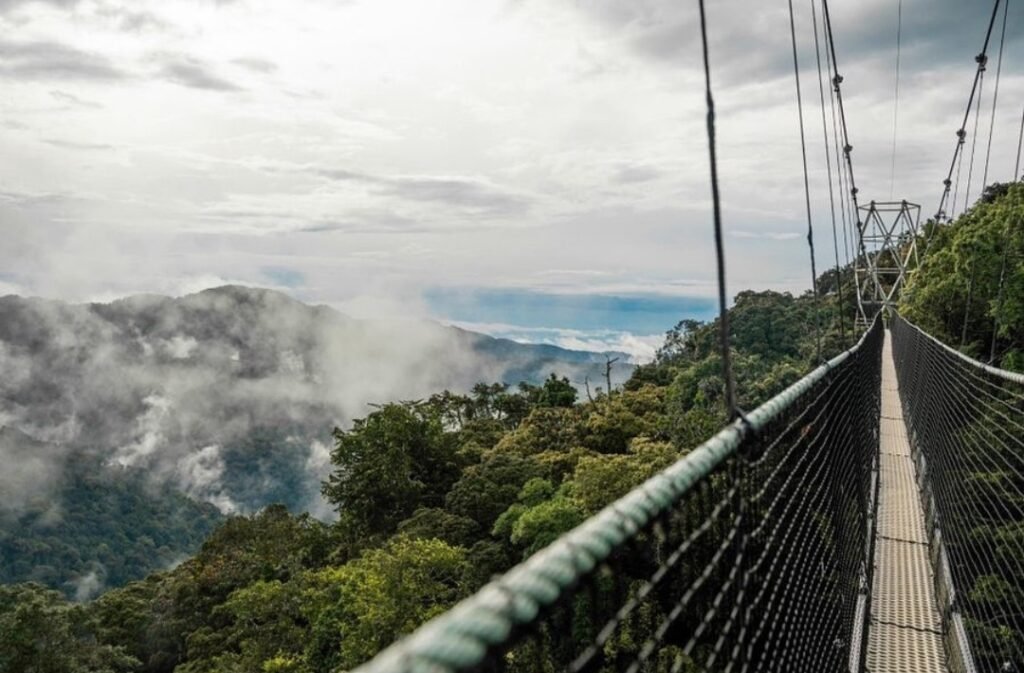
Nyungwe Forest National Park has the first canopy walkway in East Africa, stretching 1 km long an standing 70m above the ground. This walkway provides stunning views of the forest canopy and is a popular attraction of visitors on a Rwanda safari.

Nyungwe canopy walkway is approximately 160 meters long and is suspended 60 to 70 meters above the forest floor, making it one of the highest and longest canopy walkways in Africa. The canopy walkway consists of several sections, with the longest span being around 90 meters.

The canopy is accessed via the Igishighshigi trail, which is about 2.1km long. The hike to the canopy begins at the Uwinka Visitor Centre, where visitors receive a briefing before embarking on the trail. All canopy experiences are guided, ensuring safety and enhancing the education aspect of the visit.

Canopy walk in Nyungwe Forest offers visitors the opportunity to observe various wildlife species inhabiting the treetops, including monkeys such as colobus and L’Hoest’s monkeys and numerous bird species.

How to Get to Nyungwe Forest National Park
By Road

Nyungwe is located approximately 226 kilometers from Kigali, the capital city of Rwanda, the drive typically takes around 5 to 7 hours depending on traffic and the road conditions. The journey involves traveling southwest through scenic landscapes including rolling hills and various towns such as Huye and Nyanza.

By Air

There are domestic flights flying from Kamembe International Airport, about 40km from Nyungwe. RwandaAir operates multiple flights weekly from Kigali to Kamembe. For a quicker flight, helicopter flights are available from Kigali to Nyungwe Forest National Park taking about 45 minutes.

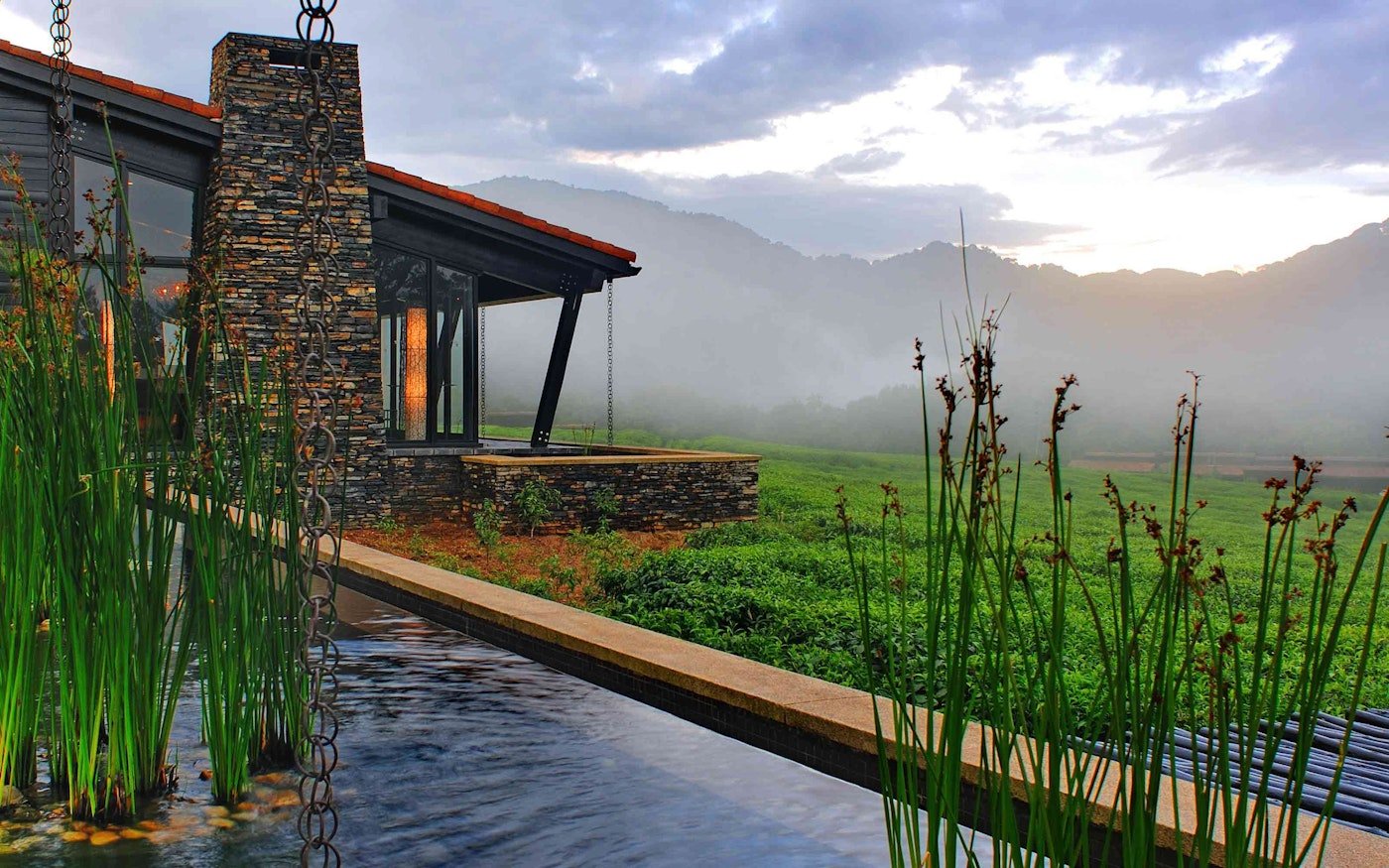
Nyungwe House
Nyungwe House
Accommodation in Nyungwe Forest National Park

There are several accommodation options in Nyungwe Forest National Park ranging from budget, midrange to luxury. These include

  • One&Only Nyungwe House
  • Kitabi Eco-Centre
  • Nyungwe Top View Hill Hotel
  • Gisakura Guesthouse
  • Nyungwe Nziza Ecolodge